

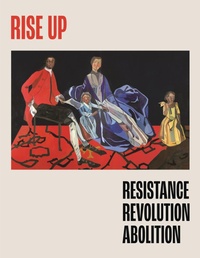
Rise Up
Resistance, Revolution, Abolition
Published on 21. February 2025
Book
Paperback/Softback
208 pages
978-1-78130-135-7 (ISBN)
Description
A beautifully illustrated catalogue to a major exhibition at the Fitzwilliam Museum, Cambridge, exploring enslavement, rebellion, revolution and Abolitionism through art, 1750-1850.
Drawing on new research, Rise Up and the accompanying exhibition look at the period from 1750 to 1850 when Britain became the world's first industrialised nation and one of history's largest empires. At the same time, it played a central role in the Atlantic slave trade, trafficking more captive African people than any other European power. Millions were forcibly abducted and transported to work on British-owned plantations in the Caribbean and the Americas.
In Britain, Black and white anti-slavery groups and individuals campaigned for abolition, with Cambridge playing a leading role in the 1780s. Despite opposition, laws were gradually enacted to abolish the slave trade in 1807, and enslavement in 1833. However, other exploitative systems, including apprenticeship and indentured labour, took their place. Financial compensation was awarded to former enslavers, while the formerly enslaved received nothing.
This is the multifaceted story of the fight to end Atlantic slavery, of its aftermath and ongoing legacies. It is told through the stories of individuals and communities from across the Caribbean, Europe and the Americas, and through an interrogation of historic objects and artworks, in conversation with works by contemporary artists.
Despite the passing of almost two centuries since Britain outlawed slavery, for peoples of the global majority, the struggles for autonomy, equality and social justice continue today.
Drawing on new research, Rise Up and the accompanying exhibition look at the period from 1750 to 1850 when Britain became the world's first industrialised nation and one of history's largest empires. At the same time, it played a central role in the Atlantic slave trade, trafficking more captive African people than any other European power. Millions were forcibly abducted and transported to work on British-owned plantations in the Caribbean and the Americas.
In Britain, Black and white anti-slavery groups and individuals campaigned for abolition, with Cambridge playing a leading role in the 1780s. Despite opposition, laws were gradually enacted to abolish the slave trade in 1807, and enslavement in 1833. However, other exploitative systems, including apprenticeship and indentured labour, took their place. Financial compensation was awarded to former enslavers, while the formerly enslaved received nothing.
This is the multifaceted story of the fight to end Atlantic slavery, of its aftermath and ongoing legacies. It is told through the stories of individuals and communities from across the Caribbean, Europe and the Americas, and through an interrogation of historic objects and artworks, in conversation with works by contemporary artists.
Despite the passing of almost two centuries since Britain outlawed slavery, for peoples of the global majority, the struggles for autonomy, equality and social justice continue today.
More details
Language
English
Place of publication
London
United Kingdom
Target group
Professional and scholarly
Illustrations
Beautifully illustrated with over 150 colour images
Dimensions
Height: 242 mm
Width: 187 mm
Thickness: 19 mm
Weight
782 gr
ISBN-13
978-1-78130-135-7 (9781781301357)
Copyright in bibliographic data and cover images is held by Nielsen Book Services Limited or by the publishers or by their respective licensors: all rights reserved.
Schweitzer Classification
Persons
Victoria Avery is Keeper of European Sculpture and Decorative Arts at the Fitzwilliam Museum and Professor of European Sculpture at Cambridge University. Her recent publications include Black Atlantic: Power, People, Resistance (2023), Feast & Fast: The Art of Food in Europe, 1500-1800 (2019) and Michelangelo: Sculptor in Bronze (2018).
Wanja Kimani is a visual artist, writer and curator whose research explores diasporic cultural histories and the evolving relationship between the body and the land. She has curated and collaborated on international exhibitions with artists, primarily from East Africa. In 2022, she represented Kenya at the 59th Venice Biennale and is currently pursuing a practice-led PhD at Chelsea College of Arts, UAL.
Wanja Kimani is a visual artist, writer and curator whose research explores diasporic cultural histories and the evolving relationship between the body and the land. She has curated and collaborated on international exhibitions with artists, primarily from East Africa. In 2022, she represented Kenya at the 59th Venice Biennale and is currently pursuing a practice-led PhD at Chelsea College of Arts, UAL.
Content
Foreword - Luke Syson, Director of the Fitzwilliam Museum
Introduction
Dark finance: the intertwined history of slavery and abolition at the University of Cambridge - Sabine F. Cadeau
Introducing Olaudah Equiano, or Gustavus Vassa, The African - Victoria Avery
1. OPPRESSION AND RESISTANCE
Seeing against the grain - Mathelinda Nabugodi
Olaudah Equiano's roots
The 'Africa Trade'
Life on British Caribbean plantations
Forms of resistance
2. THE BRITISH ANTI-SLAVE TRADE CAMPAIGN
Breaking through: Black Georgian voices
Cambridge connections
Olaudah Equiano and Cambridge - Victoria Avery
Ongoing abolition campaigning
3. BRITAIN'S COLONIES IN NOVA SCOTIA AND SIERRA LEONE
Nova Scotia: northern exposure
Sierra Leone: the 'province of freedom'?
4. REVOLUTIONS IN THE CARRIBEAN
Creation of Haiti: republic and kingdom
Cambridge and Haiti: slavery, the Haitian Revolution and British abolitionism - Sabine F. Cadeau
Tipping points: Barbados, Guyana and Jamaica
5. ENDING BRITISH SLAVERY
Women's activism
Freedom at last?
Celebrating Black Cambridge history
MOVING FORWARD
I'll think of a title after I write - Wanja Kimani
Touching the void: on becoming an art historian and reckoning with slavery at Cambridge - Temi Odumosu
Contributors
Acknowledgements
Picture credits
Index
Introduction
Dark finance: the intertwined history of slavery and abolition at the University of Cambridge - Sabine F. Cadeau
Introducing Olaudah Equiano, or Gustavus Vassa, The African - Victoria Avery
1. OPPRESSION AND RESISTANCE
Seeing against the grain - Mathelinda Nabugodi
Olaudah Equiano's roots
The 'Africa Trade'
Life on British Caribbean plantations
Forms of resistance
2. THE BRITISH ANTI-SLAVE TRADE CAMPAIGN
Breaking through: Black Georgian voices
Cambridge connections
Olaudah Equiano and Cambridge - Victoria Avery
Ongoing abolition campaigning
3. BRITAIN'S COLONIES IN NOVA SCOTIA AND SIERRA LEONE
Nova Scotia: northern exposure
Sierra Leone: the 'province of freedom'?
4. REVOLUTIONS IN THE CARRIBEAN
Creation of Haiti: republic and kingdom
Cambridge and Haiti: slavery, the Haitian Revolution and British abolitionism - Sabine F. Cadeau
Tipping points: Barbados, Guyana and Jamaica
5. ENDING BRITISH SLAVERY
Women's activism
Freedom at last?
Celebrating Black Cambridge history
MOVING FORWARD
I'll think of a title after I write - Wanja Kimani
Touching the void: on becoming an art historian and reckoning with slavery at Cambridge - Temi Odumosu
Contributors
Acknowledgements
Picture credits
Index