

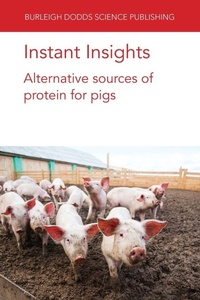
Instant Insights: Alternative Sources of Protein for Pigs
Alternative sources of protein for pigs
Published on 19. August 2025
Book
Paperback/Softback
100 pages
978-1-83545-012-3 (ISBN)
Description
This book features four peer-reviewed reviews on the development of alternative sources of protein as feed for pigs.
The first chapter summarises the nutritional attributes of macroalgae in terms of macro and micronutrients as a source of protein and other compounds in pig nutrition. The chapter also discusses the benefits of macroalgae or macroalgal derived extracts in feed.
The second chapter considers the application of corn fermented protein in feed formulations for pigs. The chapter reviews the challenges in producing corn fermented protein and includes a selection of case studies which detail the effects of adding corn fermented protein into the diets of pigs.
The third chapter provides an overview of the current state of insect production for pig feed globally and reviews the nutritional, economic and environmental benefits of using insects as feed. The chapter also summarises current research on insects as antimicrobials and life cycle assessments of their rearing.
The final chapter discusses the use of black soldier fly (BSF) as an alternative protein source to conventional proteins, such as soya bean meal or fishmeal, in the diets of pigs. The chapter also reviews the benefits and challenges of using BSF in pig diets and highlights what data is still lacking for widespread use of this novel protein.
The first chapter summarises the nutritional attributes of macroalgae in terms of macro and micronutrients as a source of protein and other compounds in pig nutrition. The chapter also discusses the benefits of macroalgae or macroalgal derived extracts in feed.
The second chapter considers the application of corn fermented protein in feed formulations for pigs. The chapter reviews the challenges in producing corn fermented protein and includes a selection of case studies which detail the effects of adding corn fermented protein into the diets of pigs.
The third chapter provides an overview of the current state of insect production for pig feed globally and reviews the nutritional, economic and environmental benefits of using insects as feed. The chapter also summarises current research on insects as antimicrobials and life cycle assessments of their rearing.
The final chapter discusses the use of black soldier fly (BSF) as an alternative protein source to conventional proteins, such as soya bean meal or fishmeal, in the diets of pigs. The chapter also reviews the benefits and challenges of using BSF in pig diets and highlights what data is still lacking for widespread use of this novel protein.
More details
Series
Language
English
Place of publication
Cambridge
United Kingdom
Target group
College/higher education
Professional and scholarly
University and other researchers in swine and veterinary science, animal nutritionists, feed manufacturers, advisors consulting swine farmers on aspects of health and nutrition, as well as government and private sector agencies supporting global pig production
Product notice
Paperback (trade)
Illustrations
Color tables, photos and figures
Dimensions
Height: 229 mm
Width: 152 mm
Thickness: 6 mm
Weight
170 gr
ISBN-13
978-1-83545-012-3 (9781835450123)
DOI
10.19103/9781835450130
Copyright in bibliographic data and cover images is held by Nielsen Book Services Limited or by the publishers or by their respective licensors: all rights reserved.
Schweitzer Classification
Other editions
Additional editions
Marta Lopez-Alonso | Marco Garcia-Vaquero | Marta Miranda
Instant Insights: Alternative Sources of Protein for Pigs
E-Book
08/2025
Burleigh Dodds Science Publishing Limited
€48.99
Available for download
Persons
Dr Kristy DiGiacomo graduated with a Bachelor of Animal Science and Management (honours) from The University of Melbourne. Kristy is a senior lecturer in production animal nutrition and physiology at The University of Melbourne and is a Veski sustainable agriculture fellow. Dr DiGiacomo's current research involves a variety of production animal species including sheep, dairy cattle, dairy goats and pigs. Her research focuses on livestock nutrition, physiology and adaptation to the external environment.
Content
Chapter 1 - Developing seaweed/macroalgae as feed for pigs: Marta Lopez-Alonso, Universidade de Santiago de Compostela, Spain; Marco Garcia-Vaquero, University College Dublin, Ireland; and Marta Miranda, Universidade de Santiago de Compostela, Spain;
1 Introduction
2 Challenges in using macroalgae for feed applications
3 Composition of macroalgae
4 Biological functions and health-promoting effects of macroalgae and macroalgal-derived extracts in pig nutrition
5 Conclusion and future trends
6 Where to look for further information
7 Acknowledgements
8 References
Chapter taken from: Chapter taken from: Lei, X. G. (ed.), Seaweed and microalgae as alternative sources of protein, Burleigh Dodds Science Publishing, Cambridge, UK, 2021, (ISBN: 978 1 78676 620 5)
Chapter 2 - High protein corn fermentation products for swine derived from corn ethanol production: Peter Williams, AG-BIO Ltd, UK;
1 Introduction
2 Distillers dried grains with solubles
3 Corn fermented protein
4 Challenges in producing corn fermented protein
5 Case study: standardized ileal digestibility of CFP for pigs
6 Case study: concentrations of digestible and metabolizable energy in CFP products fed to pigs
7 Case study: effects of adding phytase on availability of calcium and phosphorus in corn-fermented products
8 Case study: effects on performance of pigs of inclusion of corn-fermented protein in the diet
9 Conclusion
10 References
Wiseman, J. (ed.), Advances in pig nutrition, Burleigh Dodds Science Publishing, Cambridge, UK, 2024, (ISBN: 978 1 80146 694 3)
Chapter 3 - Developing alternative sources of protein in pig nutrition: insects: Kristy DiGiacomo, University of Melbourne, Australia;
1 Introduction
2 Why insects
3 Current state of insect production
4 Potential insects and current production volumes
5 Production and health responses in pigs
6 Competition for resources
7 Rearing insects on manure
8 Current research
9 Future trends in research
10 Barriers to uptake/challenges to production
11 Conclusion
12 Where to look for further information
13 References
Wiseman, J. (ed.), Advances in pig nutrition, Burleigh Dodds Science Publishing, Cambridge, UK, 2024, (ISBN: 978 1 80146 694 3)
Chapter 4 - Use of protein from black soldier flies in pig feed: Sarah Struthers and Jos Houdijk, Scotland's Rural College (SRUC), UK; and Heidi Hall, Anpario PLC and CABI, UK;
1. Introduction
2. Nutritional composition of black soldier fly
3. Production performance in pigs fed black soldier fly
4. Benefits of using black soldier fly
5. Challenges
6. Applications
7. Conclusions
8. Acknowledgements
9. References
Chapter taken from: Casillas, A., Insects as alternative sources of protein for food and feed pp. 3-28, Burleigh Dodds Science Publishing, Cambridge, UK, 2025, (ISBN: 978 1 80146 584 7)
1 Introduction
2 Challenges in using macroalgae for feed applications
3 Composition of macroalgae
4 Biological functions and health-promoting effects of macroalgae and macroalgal-derived extracts in pig nutrition
5 Conclusion and future trends
6 Where to look for further information
7 Acknowledgements
8 References
Chapter taken from: Chapter taken from: Lei, X. G. (ed.), Seaweed and microalgae as alternative sources of protein, Burleigh Dodds Science Publishing, Cambridge, UK, 2021, (ISBN: 978 1 78676 620 5)
Chapter 2 - High protein corn fermentation products for swine derived from corn ethanol production: Peter Williams, AG-BIO Ltd, UK;
1 Introduction
2 Distillers dried grains with solubles
3 Corn fermented protein
4 Challenges in producing corn fermented protein
5 Case study: standardized ileal digestibility of CFP for pigs
6 Case study: concentrations of digestible and metabolizable energy in CFP products fed to pigs
7 Case study: effects of adding phytase on availability of calcium and phosphorus in corn-fermented products
8 Case study: effects on performance of pigs of inclusion of corn-fermented protein in the diet
9 Conclusion
10 References
Wiseman, J. (ed.), Advances in pig nutrition, Burleigh Dodds Science Publishing, Cambridge, UK, 2024, (ISBN: 978 1 80146 694 3)
Chapter 3 - Developing alternative sources of protein in pig nutrition: insects: Kristy DiGiacomo, University of Melbourne, Australia;
1 Introduction
2 Why insects
3 Current state of insect production
4 Potential insects and current production volumes
5 Production and health responses in pigs
6 Competition for resources
7 Rearing insects on manure
8 Current research
9 Future trends in research
10 Barriers to uptake/challenges to production
11 Conclusion
12 Where to look for further information
13 References
Wiseman, J. (ed.), Advances in pig nutrition, Burleigh Dodds Science Publishing, Cambridge, UK, 2024, (ISBN: 978 1 80146 694 3)
Chapter 4 - Use of protein from black soldier flies in pig feed: Sarah Struthers and Jos Houdijk, Scotland's Rural College (SRUC), UK; and Heidi Hall, Anpario PLC and CABI, UK;
1. Introduction
2. Nutritional composition of black soldier fly
3. Production performance in pigs fed black soldier fly
4. Benefits of using black soldier fly
5. Challenges
6. Applications
7. Conclusions
8. Acknowledgements
9. References
Chapter taken from: Casillas, A., Insects as alternative sources of protein for food and feed pp. 3-28, Burleigh Dodds Science Publishing, Cambridge, UK, 2025, (ISBN: 978 1 80146 584 7)