

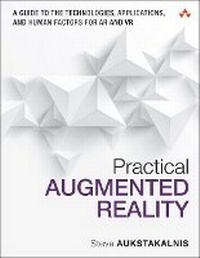
Practical Augmented Reality
A Guide to the Technologies, Applications, and Human Factors for AR and VR
Published on 10. November 2016
Book
Paperback/Softback
448 pages
978-0-13-409423-6 (ISBN)
Description
The most comprehensive and up-to-date guide to the technologies, applications and human factors considerations of Augmented Reality (AR) and Virtual Reality (VR) systems and wearable computing devices.
Practical Augmented Reality is ideal for practitioners and students concerned with any application, from gaming to medicine. It brings together comprehensive coverage of both theory and practice, emphasizing leading-edge displays, sensors, and DIY tools that are already available commercially or will be soon. Beginning with a Foreword by NASA research scientist Victor Luo, this guide begins by explaining the mechanics of human sight, hearing and touch, showing how these perceptual mechanisms (and their performance ranges) directly dictate the design and use of wearable displays, 3-D audio systems, and tactile/force feedback devices.
Steve Aukstakalnis presents revealing case studies of real-world applications from gaming, entertainment, science, engineering, aeronautics and aerospace, defense, medicine, telerobotics, architecture, law enforcement, and geophysics. Readers will find clear, easy-to-understand explanations, photos, and illustrations of devices including the Atheer AiR, HTC Vive, DAQRI Smart Helmet, Oculus (Facebook) CV1, Sony PlayStation VR, Vuzix M300, Google Glass, and many more. Functional diagrams and photographs clearly explain how these devices operate, and link directly to relevant theoretical and practical content.
Practical Augmented Reality thoroughly considers the human factors of these systems, including sensory and motor physiology constraints, monocular and binocular depth cues, elements contributing to visually-induced motion sickness and nausea, and vergence-accommodation conflicts. It concludes by assessing both the legal and societal implications of new and emerging AR, VR, and wearable technologies as well as provides a look next generation systems.
Practical Augmented Reality is ideal for practitioners and students concerned with any application, from gaming to medicine. It brings together comprehensive coverage of both theory and practice, emphasizing leading-edge displays, sensors, and DIY tools that are already available commercially or will be soon. Beginning with a Foreword by NASA research scientist Victor Luo, this guide begins by explaining the mechanics of human sight, hearing and touch, showing how these perceptual mechanisms (and their performance ranges) directly dictate the design and use of wearable displays, 3-D audio systems, and tactile/force feedback devices.
Steve Aukstakalnis presents revealing case studies of real-world applications from gaming, entertainment, science, engineering, aeronautics and aerospace, defense, medicine, telerobotics, architecture, law enforcement, and geophysics. Readers will find clear, easy-to-understand explanations, photos, and illustrations of devices including the Atheer AiR, HTC Vive, DAQRI Smart Helmet, Oculus (Facebook) CV1, Sony PlayStation VR, Vuzix M300, Google Glass, and many more. Functional diagrams and photographs clearly explain how these devices operate, and link directly to relevant theoretical and practical content.
Practical Augmented Reality thoroughly considers the human factors of these systems, including sensory and motor physiology constraints, monocular and binocular depth cues, elements contributing to visually-induced motion sickness and nausea, and vergence-accommodation conflicts. It concludes by assessing both the legal and societal implications of new and emerging AR, VR, and wearable technologies as well as provides a look next generation systems.
Reviews / Votes
"A valuable addition to the library of anyone setting out on their virtual journey."-Dr Rab Scott Head of VR, Nuclear AMRC
"A well-presented introduction to advanced visualization technologies, which will provide readers with an informed overview of this fast-paced, high-tech industry."
-Chris Freeman, Augmented Reality Technical Fellow, University of Sheffield AMRC
"Filled with excellent, imaginative information that will inform both experienced and first-time readers alike. Practical Augmented Reality is worth reading not only for its wealth of data and research, but also for its insights into the markets and opportunities ahead of us. If you have an interest in this exciting new technology, this is a must-have resource and an enjoyable exploration into this brave new world."
-Roy Taylor Corporate Vice President for Content and Technology, AMD (Advanced Micro Devices)
"Steven Aukstakalnis stands on the ever-changing edge of the virtual and augmented reality world. Drawing from a rich history in the industry, he is able to share a clear understanding of the technologies, products, and ideas that will reshape the way we work and play. May the knowledge he shares empower you to help create a truly fantastic new future!"
More details
Other editions
Additional editions
Steve Aukstakalnis
Practical Augmented Reality
A Guide to the Technologies, Applications, and Human Factors for AR and VR
E-Book
09/2016
1st Edition
Addison Wesley
from
€55.28
Available for download
Steve Aukstakalnis
Practical Augmented Reality
A Guide to the Technologies, Applications, and Human Factors for AR and VR
E-Book
09/2016
1st Edition
Addison Wesley
from
€35.99
Available for download
Person
Steve Aukstakalnis is a former research scientist and Director of the Virtual Environment and Interactive Systems Program at the National Science Foundation's Engineering Research Center for Computational Field Simulation. There, his work focused on the application of advanced visual displays and interactive techniques in such areas as architecture, engineering, scientific visualization and national defense. He has served on the research staff at the University of Washington as well as the faculty of Mississippi State University. Steve has served an invited lecturer, instructor and researcher on the topic of virtual reality and advanced visual simulation for such organizations as the Dept. of Defense, U.S. Army, Naval Oceanographic Office, Nat'l Reconnaissance Office, University of Michigan, Pepperdine University, Purdue, Dartmouth, Nat'l Taiwan University, the Smithsonian Institution and a host of other universities, corporations and government agencies across N. America and around the world.
Content
Preface
Part 1 Introduction to Augmented and Virtual Reality
Chapter 1 Computer Generated Worlds
Chapter 2 Understanding Space
Part 2 Understanding the Human Senses and Their Relationship to Output / Input Devices
Chapter 3 The Mechanics of Sight
Chapter 4 Component Technologies of Head-Mounted Displays
Chapter 5 Google Glass and Related Augmenting Displays
Chapter 6 Fully Immersive Displays
Chapter 7 The Mechanics of Hearing
Chapter 8 Audio Displays
Chapter 9 The Mechanics of Feeling
Chapter 10 Tactile and Force Feedback Devices
Chapter 11 Sensors for Tracking Position, Orientation and Motion
Chapter 12 Devices to Enable Interaction with Data
Part 3 Applications of Augmented and Virtual Reality
Chapter 13 Gaming and
Chapter 14 Architecture and
Chapter 15 Science and Engineering
Chapter 16 Health and Medicine
Chapter 17 Aerospace and
Chapter 18 Education
Chapter 19 Information Control
Chapter 20 Telerobotics and Teleprescence
Part 4 Human Factors, Legal and Social Considerations
Chapter 21 Human Factors Considerations
Chapter 22 Legal and Social
Chapter 23 The Future
Appendix A Bibliography
Appendix B Resources
Part 1 Introduction to Augmented and Virtual Reality
Chapter 1 Computer Generated Worlds
Chapter 2 Understanding Space
Part 2 Understanding the Human Senses and Their Relationship to Output / Input Devices
Chapter 3 The Mechanics of Sight
Chapter 4 Component Technologies of Head-Mounted Displays
Chapter 5 Google Glass and Related Augmenting Displays
Chapter 6 Fully Immersive Displays
Chapter 7 The Mechanics of Hearing
Chapter 8 Audio Displays
Chapter 9 The Mechanics of Feeling
Chapter 10 Tactile and Force Feedback Devices
Chapter 11 Sensors for Tracking Position, Orientation and Motion
Chapter 12 Devices to Enable Interaction with Data
Part 3 Applications of Augmented and Virtual Reality
Chapter 13 Gaming and
Chapter 14 Architecture and
Chapter 15 Science and Engineering
Chapter 16 Health and Medicine
Chapter 17 Aerospace and
Chapter 18 Education
Chapter 19 Information Control
Chapter 20 Telerobotics and Teleprescence
Part 4 Human Factors, Legal and Social Considerations
Chapter 21 Human Factors Considerations
Chapter 22 Legal and Social
Chapter 23 The Future
Appendix A Bibliography
Appendix B Resources