

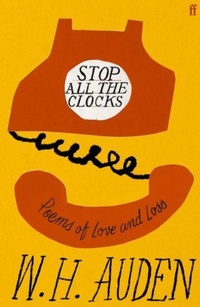
Stop All the Clocks
Poems of Love and Loss
Published on 20. November 2025
Book
Hardback
56 pages
978-0-571-39682-5 (ISBN)
Description
Stop all the clocks, cut off the telephone,
Prevent the dog from barking with a juicy bone . . .
W. H. Auden was the consummate poet of love and heartbreak. Stop All the Clocks presents a selection of his best known, most lucid poems, poems that pitch human frailty against a persisting desire for love and belonging.
Here are the anxieties that beset our waking and sleeping hours: the delirium of desire, the torture of unrequited love, the trauma of loss and displacement. And here, in these resonant, dazzling poems, is the understanding we might be looking for.
'W. H. Auden had the greatest gifts of any of our poets in the twentieth century.' James Fenton, New York Review of Books
Prevent the dog from barking with a juicy bone . . .
W. H. Auden was the consummate poet of love and heartbreak. Stop All the Clocks presents a selection of his best known, most lucid poems, poems that pitch human frailty against a persisting desire for love and belonging.
Here are the anxieties that beset our waking and sleeping hours: the delirium of desire, the torture of unrequited love, the trauma of loss and displacement. And here, in these resonant, dazzling poems, is the understanding we might be looking for.
'W. H. Auden had the greatest gifts of any of our poets in the twentieth century.' James Fenton, New York Review of Books
More details
Edition
Main
Language
English
Place of publication
London
United Kingdom
Dimensions
Height: 180 mm
Width: 116 mm
Thickness: 11 mm
Weight
142 gr
ISBN-13
978-0-571-39682-5 (9780571396825)
Copyright in bibliographic data and cover images is held by Nielsen Book Services Limited or by the publishers or by their respective licensors: all rights reserved.
Schweitzer Classification
Person
W. H. Auden was born in York in 1907. His first full-length collection, Poems, was published by T. S. Eliot at Faber and Faber in 1930. The many volumes he published thereafter included poetry, plays, essays and libretti, and his ceaseless experimentation, consummate craftsmanship and originality established him as one of the most influential poets of the twentieth century. He died in 1973.