

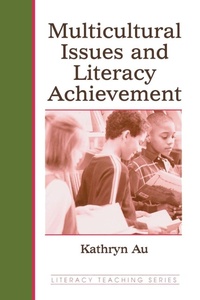
Multicultural Issues and Literacy Achievement
1st Edition
Published on 26. September 2005
Book
Paperback/Softback
230 pages
978-0-8058-4401-6 (ISBN)
Description
This book is a sequel to the author's earlier volume entitled, Literacy Instruction in Multicultural Settings. In addition to extensive updating of earlier material, this book extends the content coverage to include issues of power, attitudes, and systemic change through the application of discourse theory and critical theory. In doing so, however, the author has tried to maintain the brevity, stylistic clarity, and classroom focus of the earlier volume.
Key features of this important new book include:
*Teaching Flexibility. Although written with the classroom needs of pre-service teachers in mind, theory and research are treated in sufficient depth to make the book suitable for graduate courses and for teacher study groups.
*Issues Organization. Each chapter is organized around familiar issues that characterize schools and classrooms with diverse student populations and explores these issues through new lenses that most teachers have not previously encountered.
*Social Constructivist Perspective. Critical theory, discourse theory, and historical perspective are introduced in order to sensitize readers to the need to recognize negative, socially sustained patterns that hamper literacy achievement and replace them with positive patterns. To this end each chapter asks students to maintain a running list of negative patterns along with alternative positive patterns.
Key features of this important new book include:
*Teaching Flexibility. Although written with the classroom needs of pre-service teachers in mind, theory and research are treated in sufficient depth to make the book suitable for graduate courses and for teacher study groups.
*Issues Organization. Each chapter is organized around familiar issues that characterize schools and classrooms with diverse student populations and explores these issues through new lenses that most teachers have not previously encountered.
*Social Constructivist Perspective. Critical theory, discourse theory, and historical perspective are introduced in order to sensitize readers to the need to recognize negative, socially sustained patterns that hamper literacy achievement and replace them with positive patterns. To this end each chapter asks students to maintain a running list of negative patterns along with alternative positive patterns.
Reviews / Votes
"A book such as 'Multicultural Issues and Literacy Achievement', by Kathryn Au, would be an excellent resource for teacher education and could also serve as valuable teacher's lounge reading material. Au integrates valuable research with clear application and does so in a lucid manner. Her book is a clearly written academic work, which reflects the author's personal experience and interactions with involved colleagues....she seeks to look at familiar issues in education through new lenses and to stimulate thinking, discussion, and reflection among her readers....she succeeds in doing so remarkably well with this clear, understandable, jargon-free book."-PsycCRITIQUES
More details
Series
Language
English
Place of publication
New York
United States
Publishing group
Taylor & Francis Inc
Target group
College/higher education
Professional and scholarly
Dimensions
Height: 229 mm
Width: 152 mm
Thickness: 13 mm
Weight
340 gr
ISBN-13
978-0-8058-4401-6 (9780805844016)
Copyright in bibliographic data and cover images is held by Nielsen Book Services Limited or by the publishers or by their respective licensors: all rights reserved.
Schweitzer Classification
Other editions
Additional editions
E-Book
09/2013
1st Edition
Routledge
€52.49
Available for download
E-Book
09/2013
1st Edition
Routledge
€52.49
Available for download
Book
09/2005
1st Edition
Lawrence Erlbaum Associates Inc
€178.27
Article exhausted; check different version
Person
Au, Kathryn
Content
Contents: Preface.Students of Diverse Backgrounds and the Literacy Achievement Gap. Understanding the Gap: Explanations and Solutions. Discourses and Literacy in the Home and Community. Workshop Approaches to Literacy Learning. Ownership and Building a Classroom Community. Providing Instruction in Reading Comprehension Strategies. Culturally Responsive Instruction in Multiethnic Classrooms. Second Language Learners, Multiliteracy, and the Language of Power. Effective Instruction of Phonics and Other Skills. Schoolwide Change to Improve Literacy Achievement.