

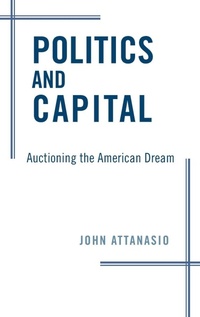
Politics and Capital
Auctioning the American Dream
Published on 31. May 2018
Book
Hardback
304 pages
978-0-19-084702-9 (ISBN)
Description
This book is about good government-especially ethical and fair government. Using both theoretical methods and practical political analysis, John Attanasio shows how recent Supreme Court decisions and campaign finance regulations map onto a pernicious and growing inequality in America. He puts forward a novel solution grounded in a new principle of personal autonomy.
Looking at the transformation of wealth and political influence in America, this book demonstrates that the defining campaign finance cases such as Buckley v. Valeo and Citizens United have created a new constitutional arrangement that correlates with the dramatic rise in U.S. wealth and income inequality since the 1970s. The book goes on to show that this distorted income allocation has adversely affected demand, which may be spawning American economic stagnation.
The solution Attanasio proposes is the principle of "distributive autonomy," sharply contrasting it with the individualism of modern libertarian ideas, which have given rise to the radical inequality that reduces, rather than enhances, autonomy. Good governance must be centrally concerned with the distribution of freedom for all: if my autonomy matters, so does yours. Valuing the autonomy of others is authentic autonomy. Distributive autonomy is necessary to ensure that participatory democracy retains its truly democratic elements, which may be a necessary condition for long-term, prosperous capitalism.
A profound synthesis of theory and practice, Politics and Capital is crucial to understanding the ominous political and economic problems besetting twenty-first century America.
Looking at the transformation of wealth and political influence in America, this book demonstrates that the defining campaign finance cases such as Buckley v. Valeo and Citizens United have created a new constitutional arrangement that correlates with the dramatic rise in U.S. wealth and income inequality since the 1970s. The book goes on to show that this distorted income allocation has adversely affected demand, which may be spawning American economic stagnation.
The solution Attanasio proposes is the principle of "distributive autonomy," sharply contrasting it with the individualism of modern libertarian ideas, which have given rise to the radical inequality that reduces, rather than enhances, autonomy. Good governance must be centrally concerned with the distribution of freedom for all: if my autonomy matters, so does yours. Valuing the autonomy of others is authentic autonomy. Distributive autonomy is necessary to ensure that participatory democracy retains its truly democratic elements, which may be a necessary condition for long-term, prosperous capitalism.
A profound synthesis of theory and practice, Politics and Capital is crucial to understanding the ominous political and economic problems besetting twenty-first century America.
Reviews / Votes
John Attanasio has been named a Lifetime Achiever as a leader in the law and education industries by Marquis Who's Who. John Attanasio has constructed a highly persuasive argument against the standard libertarian opposition to any governmental restraint on the uses of private property. It's an unusual argument, since it starts from the same commitment to individual autonomy that drives libertarianism but ends up in a very different place. It works especially well in taking apart the claim that any restriction on the use of money in political campaigns violates the free speech of the donors. Attanasio's book illustrates the important maxim that there are many paths to the right political and moral position. * Michael Walzer, Professor Emeritus, Institute for Advanced Study * In this important new book, leading constitutional expert John Attanasio makes a compelling case that Supreme Court decisions allowing rich people to give money to influence politics have caused the growing income inequality in America that Thomas Piketty comprehensively quantified. * E. Donald Elliott, Professor (Adjunct) of Law, Yale Law School * Our political system is in grave crisis. Economic, political, and social inequality suggests it is broken. This important and extremely thoughtful book explains how we have gotten to this point by exploring economics, law, and political theory. Perhaps most important, it offers significant thoughts about how we get out of the current chaos. * Arthur R. Miller, University Professor, New York University School of Law * The philosophical argument in this book could become centrally important to the development of a centrist legal position on the law of campaign financing and on constitutional law more generally. This book has the potential to have the same sort of impact on constitutional theory that John Ely's great book, Democracy and Distrust, had some 35 years ago. * William E. Nelson, New York University School of Law *More details
Language
English
Place of publication
New York
United States
Target group
Professional and scholarly
Dimensions
Height: 240 mm
Width: 161 mm
Thickness: 21 mm
Weight
622 gr
ISBN-13
978-0-19-084702-9 (9780190847029)
Copyright in bibliographic data and cover images is held by Nielsen Book Services Limited or by the publishers or by their respective licensors: all rights reserved.
Schweitzer Classification
Other editions
Additional editions
E-Book
04/2018
1st Edition
OUP eBook
€25.49
Available for download
E-Book
03/2018
1st Edition
OUP eBook
€19.99
Available for download
Person
John Attanasio has advised courts, legislatures, ministers, and constitutional commissions on democracy, economics, and rule of law for over 30 years. He has mediated sensitive international disputes, and lectured widely around the world. Attanasio is President of the International Academic Institute of Legal Process and Procedure. He served as dean of two law schools and taught at two others. He was the first Fulbright lecturer to teach courses on American constitutional law in the Soviet Union. He was Director of the Rule of Law Forum which organized bilateral meetings of high-ranking government officials under the auspices of the State Department. He organized Supreme Court Summits and other meetings involving many of the most important highest courts in the world.
Content
Preface
Acknowledgments
PART I
CHALLENGES TO MODERN LIBERTARIANISM
Chapter I
Distributive Autonomy and the Foundational Problem of Campaign Finance
A. The Idea of Distributive Autonomy
B. The Lens of Campaign Finance
C. Property Interests v. Participatory Democracy
D. The Discourse
Chapter II
Distributive Autonomy: an Introductory Essay
A. What Is Liberty? What Is Autonomy? And Why Do They Matter?
B. Baseline Autonomy
C. Bounded Autonomy?
D. Distributive Autonomy: A First Approximation
E. What Counts as an Infringement of Distributive Autonomy?
F. The Disconnect of Modern Liberty and Autonomy Theory from Founding Fathers Mill and Kant
PART II
THE DECLINE OF LIBERTARIAN PROTECTION
OF PROPERTY RIGHTS
Chapter III
Substantive Due Process, Federalism, And The Protection Of Property Rights
Chapter IV
The Carolene Products Paradigm of Participatory Democracy
A. The Carolene Products Constitutional Settlement
B. Voice and Vote as Pillars of Participatory Democracy
C. Property Rights versus Property Interests
D. The Weak Libertarian Paradigm of Free Speech Jurisprudence and Participatory Democracy
PART III
THE RISE OF CONSTITUTIONAL LIBERTARIAN PROTECTION FOR PROPERTY INTERESTS:
CAMPAIGN FINANCE
Chapter V
The Buckley Constitution And The Strong Libertarian Paradigm of American Politics
A. Foundations: The Absolutist Speech Protection of Justices Black and Douglas
B. The Strong Libertarian Paradigm, Campaign Finance and the Constriction of Democracy in America
C. Austin and McConnell: A Brief Turn Back Toward the Participatory Paradigm
Chapter VI
A Stronger Libertarian Paradigm
and the Death of the New Deal Constitution
A. Protecting Contributions by Corporations and Unions
B. Invalidating Reciprocal Public Funding
C. Purchasing Entire Election Cycles: Invalidating Limits on Aggregate Contributions
D. The Stronger Libertarian Archetype: Transforming the Playing Field Again
E. Protecting the Rule of Law: Upholding Limits on Judicial Fund-Raising
F. The Death of the New Deal Constitution
G. The Constitutional Content of Distributive Autonomy
PART IV
DISTRIBUTIVE AUTONOMY:
EQUALITY, LIBERTY, AND CAMPAIGN FINANCE
Chapter VII
Philosophical Ruminations: The Tension between Liberty and Equality
A. Doctrinal Wrong Turns: Equating Spending Money with Speaking
B. Philosophical Expressions of the Tension between Liberty and Equality
Chapter VIII
The Principle of Distributive Autonomy
A. Traditional Libertarianism: The Influential Theory of Robert Nozick
B. The Contrasting Libertarian Ideas of Nozick and Mill
C. Kantian Autonomy Theory and Libertarianism
D. The Liberty/ Order Paradox: The Weakness of Strong Libertarian Theories
E. The Rawlsian Quest to Reconcile Liberty and Equality
F. Campaign Finance: Illuminating the Tension between Liberty and Equality
Chapter IX
Distributive Autonomy, Campaign Finance and Voting Rights
A. A Distributive Autonomy Critique of the Campaign Finance Cases
B. Distributive Autonomy and the Free Speech Theories of Meiklejohn and Emerson
C. Yin and Yang: Libertarian Campaign Financing Versus Egalitarian One Person, One Vote
PART V
DISTRIBUTIVE AUTONOMY:
CAPITAL AND CAMPAIGN FINANCE
Chapter X
Distributive Autonomy, Democracy, and Capital
A. Disparate Voice in Elections Has Ballooned Disparate Wealth
B. Buckley and Piketty: The Astonishing Temporal Correlations
Chapter XI
Income and Wealth Disparities, and the Demand Curve
A. The Shrinking, Anemic Middle Class
B. Sellers Need Buyers and Buyers Need Sellers (Employers)
C. The 2016 Election
D. Tax Cuts and the National Debt
E. Epilogue: Distributive Autonomy, Libertarianism and Democracy
Index
Acknowledgments
PART I
CHALLENGES TO MODERN LIBERTARIANISM
Chapter I
Distributive Autonomy and the Foundational Problem of Campaign Finance
A. The Idea of Distributive Autonomy
B. The Lens of Campaign Finance
C. Property Interests v. Participatory Democracy
D. The Discourse
Chapter II
Distributive Autonomy: an Introductory Essay
A. What Is Liberty? What Is Autonomy? And Why Do They Matter?
B. Baseline Autonomy
C. Bounded Autonomy?
D. Distributive Autonomy: A First Approximation
E. What Counts as an Infringement of Distributive Autonomy?
F. The Disconnect of Modern Liberty and Autonomy Theory from Founding Fathers Mill and Kant
PART II
THE DECLINE OF LIBERTARIAN PROTECTION
OF PROPERTY RIGHTS
Chapter III
Substantive Due Process, Federalism, And The Protection Of Property Rights
Chapter IV
The Carolene Products Paradigm of Participatory Democracy
A. The Carolene Products Constitutional Settlement
B. Voice and Vote as Pillars of Participatory Democracy
C. Property Rights versus Property Interests
D. The Weak Libertarian Paradigm of Free Speech Jurisprudence and Participatory Democracy
PART III
THE RISE OF CONSTITUTIONAL LIBERTARIAN PROTECTION FOR PROPERTY INTERESTS:
CAMPAIGN FINANCE
Chapter V
The Buckley Constitution And The Strong Libertarian Paradigm of American Politics
A. Foundations: The Absolutist Speech Protection of Justices Black and Douglas
B. The Strong Libertarian Paradigm, Campaign Finance and the Constriction of Democracy in America
C. Austin and McConnell: A Brief Turn Back Toward the Participatory Paradigm
Chapter VI
A Stronger Libertarian Paradigm
and the Death of the New Deal Constitution
A. Protecting Contributions by Corporations and Unions
B. Invalidating Reciprocal Public Funding
C. Purchasing Entire Election Cycles: Invalidating Limits on Aggregate Contributions
D. The Stronger Libertarian Archetype: Transforming the Playing Field Again
E. Protecting the Rule of Law: Upholding Limits on Judicial Fund-Raising
F. The Death of the New Deal Constitution
G. The Constitutional Content of Distributive Autonomy
PART IV
DISTRIBUTIVE AUTONOMY:
EQUALITY, LIBERTY, AND CAMPAIGN FINANCE
Chapter VII
Philosophical Ruminations: The Tension between Liberty and Equality
A. Doctrinal Wrong Turns: Equating Spending Money with Speaking
B. Philosophical Expressions of the Tension between Liberty and Equality
Chapter VIII
The Principle of Distributive Autonomy
A. Traditional Libertarianism: The Influential Theory of Robert Nozick
B. The Contrasting Libertarian Ideas of Nozick and Mill
C. Kantian Autonomy Theory and Libertarianism
D. The Liberty/ Order Paradox: The Weakness of Strong Libertarian Theories
E. The Rawlsian Quest to Reconcile Liberty and Equality
F. Campaign Finance: Illuminating the Tension between Liberty and Equality
Chapter IX
Distributive Autonomy, Campaign Finance and Voting Rights
A. A Distributive Autonomy Critique of the Campaign Finance Cases
B. Distributive Autonomy and the Free Speech Theories of Meiklejohn and Emerson
C. Yin and Yang: Libertarian Campaign Financing Versus Egalitarian One Person, One Vote
PART V
DISTRIBUTIVE AUTONOMY:
CAPITAL AND CAMPAIGN FINANCE
Chapter X
Distributive Autonomy, Democracy, and Capital
A. Disparate Voice in Elections Has Ballooned Disparate Wealth
B. Buckley and Piketty: The Astonishing Temporal Correlations
Chapter XI
Income and Wealth Disparities, and the Demand Curve
A. The Shrinking, Anemic Middle Class
B. Sellers Need Buyers and Buyers Need Sellers (Employers)
C. The 2016 Election
D. Tax Cuts and the National Debt
E. Epilogue: Distributive Autonomy, Libertarianism and Democracy
Index