

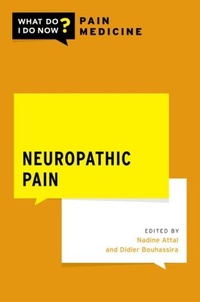
Neuropathic Pain
Published on 3. May 2023
Book
Paperback/Softback
288 pages
978-0-19-761634-5 (ISBN)
Description
Neuropathic pain is one of the most common, debilitating, costly, and difficult to treat categories of chronic pain conditions characterized by a lesion or disease of the somatosensory nervous system. Neuropathic Pain, part of the What Do I Do Now? Pain Medicine series, brings together in one volume 45 cases which expertly explore the diagnoses, assessment, management, and treatment of various types of neuropathic pain including less common and complex cases.
Treatment of neuropathic pain requires skillful assessment and management. Neuropathic Pain provides an engaging collection of thought-provoking cases which clinicians can utilize when they encounter challenging situations. The volume is also a self-assessment tool that tests the reader's ability to answer the question, "What do I do now?"
Treatment of neuropathic pain requires skillful assessment and management. Neuropathic Pain provides an engaging collection of thought-provoking cases which clinicians can utilize when they encounter challenging situations. The volume is also a self-assessment tool that tests the reader's ability to answer the question, "What do I do now?"
Reviews / Votes
This is an excellent handbook regarding management of neuropathic pain for a variety of providers written in accessible language and digestible format. The succinct chapters make it easy to learn something new with short periods of time, and for using the resources included as references for specific clinical questions. * Heping Sheng, MD, Thomas Jefferson University, Doody Enterprises * Reading this book widens the horizon of clinicians, including those treating patients with neuromuscular disorders, in a way that is very close to our clinical daily life and has the potential to significantly improve the quality of patient care. * Elena Enax-Krumova, Neuromuscular Disorders 35 *More details
Series
Language
English
Place of publication
New York
United States
Target group
Professional and scholarly
Product notice
Paperback (trade)
Unsewn / adhesive bound
Dimensions
Height: 236 mm
Width: 157 mm
Thickness: 15 mm
Weight
417 gr
ISBN-13
978-0-19-761634-5 (9780197616345)
Copyright in bibliographic data and cover images is held by Nielsen Book Services Limited or by the publishers or by their respective licensors: all rights reserved.
Schweitzer Classification
Other editions
Additional editions
Nadine Attal | Didier Bouhassira
Neuropathic Pain
E-Book
03/2023
1st Edition
OUP eBook
€32.99
Available for download
Nadine Attal | Didier Bouhassira
Neuropathic Pain
E-Book
03/2023
OUP eBook
€32.99
Available for download
Persons
Nadine Attal, MD, PhD, is a neurologist, Professor of Therapeutics and Pain Medicine at Paris Saclay University, head of The Pain Center at Hopital Ambroise Pare, Boulogne-Billancourt, France and associate director of the U 987 INSERM research Unit. She has played a leading role in translational research in pain and has published in leading journals. She is section editor for BJA and PainReports and Councilmember of the International Association for the Study of Pain. She was appointed "chevalier de la letion d'honneur" in 2016, and received awards from the French Science Academy (2017) and the Rynd Award from the Irish Society of Anesthesiologists (2022).
Dr. Didier Bouhassira (MD, PhD) has been trained in neurology and neurophysiology in Paris. He has been involved in both basic and clinical research on pain and is currently Director of Research at the National Institut for Health and Medical Research (Inserm). He is associate attending neurologist in the Pain Clinic at Ambroise Pare hospital in Boulogne-Billancourt and director of the laboratory of "Pathophysiology and Clinical Pharmacology of Pain" (Inserm U-987). Didier Bouhassira was president of the French Pain Society (2013-2016) and is an active member of several international associations or societies. He has been field editor for the European Journal of Pain (2008-2021) and associate editor for several scientific journals including Pain. He has co-authored over 220 articles in peer reviewed journals and has written a number of book chapters devoted to the pharmacology and pathophysiology of pain.
Dr. Didier Bouhassira (MD, PhD) has been trained in neurology and neurophysiology in Paris. He has been involved in both basic and clinical research on pain and is currently Director of Research at the National Institut for Health and Medical Research (Inserm). He is associate attending neurologist in the Pain Clinic at Ambroise Pare hospital in Boulogne-Billancourt and director of the laboratory of "Pathophysiology and Clinical Pharmacology of Pain" (Inserm U-987). Didier Bouhassira was president of the French Pain Society (2013-2016) and is an active member of several international associations or societies. He has been field editor for the European Journal of Pain (2008-2021) and associate editor for several scientific journals including Pain. He has co-authored over 220 articles in peer reviewed journals and has written a number of book chapters devoted to the pharmacology and pathophysiology of pain.
Content
SECTION I: CLINICAL CASES, DIAGNOSIS AND MANAGEMENT
1. Is this neuropathic pain?
2. How do I implement therapeutic management?
3. Back and leg pain
4. Paresthesia of the hand
5. Itch and herpes zoster
6. Painful legs and diabetes, case 1
7. Painful legs and diabetes, case 2
8. Groin pain after hernia repair
9. Pain after surgery for hand fracture
10. Pain and amputation
11. Pain and breast cancer surgery
12. Cold evoked symptoms after chemotherapy
13. Cervicobrachial pain and cancer
14. My body is boiling
15. Pain and Covid 19
16. Pelvic pain
17. Burning mouth
18. Orofacial pain
19. A lightning in the face
20. Brachial plexus avulsion
21. Pain and paraplegia l
22. Pain and multiple sclerosis
23. Sudden onset facial pain
24. Pain and Parkinson
25. Burning hands
26. Neuropathic pain in a child
SECTION II: THERAPEUTIC OPTIONS IN PRIMARY CARE
27. Antidepressants and antiepileptics
28. Topical therapy
29. The case of opioids
30. Physical therapy
31. Psychotherapies
32. Complementary medicine
33. Transcutaneous electrical nerve stimulation
SECTION III: SPECIALIZED ASSESSMENT AND THERAPY
34. Management of high risk patients
35. Management of patients with comorbididies
36. Management of neuropathic pain: role of patient reported outcome measures
37. Management of neuropathic pain: role of quantitative sensory testing
38. Complementary investigations
39. The case of cannabinoids
40. Nerve blocks and drug infusions
41. Noninvasive brain stimulation
42. When do I refer for invasive therapies?
43. Peripheral nerve stimulation and radiofrequency
44. Spinal cord stimulation
45. Invasive brain stimulation and intrathecal therapy
1. Is this neuropathic pain?
2. How do I implement therapeutic management?
3. Back and leg pain
4. Paresthesia of the hand
5. Itch and herpes zoster
6. Painful legs and diabetes, case 1
7. Painful legs and diabetes, case 2
8. Groin pain after hernia repair
9. Pain after surgery for hand fracture
10. Pain and amputation
11. Pain and breast cancer surgery
12. Cold evoked symptoms after chemotherapy
13. Cervicobrachial pain and cancer
14. My body is boiling
15. Pain and Covid 19
16. Pelvic pain
17. Burning mouth
18. Orofacial pain
19. A lightning in the face
20. Brachial plexus avulsion
21. Pain and paraplegia l
22. Pain and multiple sclerosis
23. Sudden onset facial pain
24. Pain and Parkinson
25. Burning hands
26. Neuropathic pain in a child
SECTION II: THERAPEUTIC OPTIONS IN PRIMARY CARE
27. Antidepressants and antiepileptics
28. Topical therapy
29. The case of opioids
30. Physical therapy
31. Psychotherapies
32. Complementary medicine
33. Transcutaneous electrical nerve stimulation
SECTION III: SPECIALIZED ASSESSMENT AND THERAPY
34. Management of high risk patients
35. Management of patients with comorbididies
36. Management of neuropathic pain: role of patient reported outcome measures
37. Management of neuropathic pain: role of quantitative sensory testing
38. Complementary investigations
39. The case of cannabinoids
40. Nerve blocks and drug infusions
41. Noninvasive brain stimulation
42. When do I refer for invasive therapies?
43. Peripheral nerve stimulation and radiofrequency
44. Spinal cord stimulation
45. Invasive brain stimulation and intrathecal therapy