

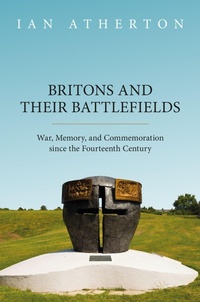
Britons and their Battlefields
War, Memory, and Commemoration since the Fourteenth Century
Published on 19. September 2024
Book
Hardback
352 pages
978-0-19-891285-9 (ISBN)
Description
While much attention has been paid to the commemoration of conflict in the twentieth century, this book is the first to consider conflict memory in the long term, arguing that modern practices were not created out of the mud of the trenches, but evolved from much longer practices. From the fourteenth century to the present day, this work analyses the changing commemoration and memories of British battlefields at home and overseas, from Bannockburn (1314) to Bosworth (1485) to Basra (2003-9).
Across these seven centuries, there has been a series of recurring post-battle rituals that have shaped and continue to shape memories of conflict. Three distinct but overlapping periods of memory can be delineated. In the later Middle Ages battlefields were consecrated by the burial of the fallen and often by the erection of a battlefield cross, or chapel or chantry to pray for the dead. The second phase began with the Protestant Reformation in the 1530s, when pilgrimage and prayers for the dead were abolished, and battlefield chantries were dissolved and many battlefield crosses were demolished. Memories shifted from the dead to the living, especially the bodies of surviving veterans who commemorated the conflict by their wounds, and from soil and stone to print and ink. The third phase began in the eighteenth century when antiquaries and others established new monuments on past battlefields. Monuments to survivors and the dead were established on contemporary battlefields such as Waterloo, once again hailed as sacred ground hallowed by bloodshed, fit destinations for a pilgrimage. Not just officers but ordinary soldiers began to be memorialized by name on the battlefield, culminating in the cult of the names of the dead enshrined by the creation of the War Graves Commission in 1917, and the idea that battlefields should be preserved unchanged as seen in modern heritage management.
Drawing on a wide variety of literary and historical sources and taking a uniquely longue duree approach, the book explores and links memory-making practices from across the period to reconsider the ways in which battlefields are commemorated and re-commemorated. In so doing, it makes a unique contribution to a wide range of historiographical fields: British history since the fourteenth century, memory studies, heritage studies, landscape history, conflict archaeology, and military history.
Across these seven centuries, there has been a series of recurring post-battle rituals that have shaped and continue to shape memories of conflict. Three distinct but overlapping periods of memory can be delineated. In the later Middle Ages battlefields were consecrated by the burial of the fallen and often by the erection of a battlefield cross, or chapel or chantry to pray for the dead. The second phase began with the Protestant Reformation in the 1530s, when pilgrimage and prayers for the dead were abolished, and battlefield chantries were dissolved and many battlefield crosses were demolished. Memories shifted from the dead to the living, especially the bodies of surviving veterans who commemorated the conflict by their wounds, and from soil and stone to print and ink. The third phase began in the eighteenth century when antiquaries and others established new monuments on past battlefields. Monuments to survivors and the dead were established on contemporary battlefields such as Waterloo, once again hailed as sacred ground hallowed by bloodshed, fit destinations for a pilgrimage. Not just officers but ordinary soldiers began to be memorialized by name on the battlefield, culminating in the cult of the names of the dead enshrined by the creation of the War Graves Commission in 1917, and the idea that battlefields should be preserved unchanged as seen in modern heritage management.
Drawing on a wide variety of literary and historical sources and taking a uniquely longue duree approach, the book explores and links memory-making practices from across the period to reconsider the ways in which battlefields are commemorated and re-commemorated. In so doing, it makes a unique contribution to a wide range of historiographical fields: British history since the fourteenth century, memory studies, heritage studies, landscape history, conflict archaeology, and military history.
Reviews / Votes
This is an important and, in places, challenging book. It should be required reading for anyone interested in battlefield commemoration and memory and how this has changed over time ... an excellent book which will make you reconsider the nature of battlefield memory, how we and our ancestors engage and have engaged with battlefields, and what the future might hold. If you are at all interested in these issues, you should buy this book, which is worth every pound of its price. * Simon Marsh, Battlefield * This is not a book about tactics or topography and is not a book solely about the First World War. Ian Atherton's book is about how battlefields take on a life of their own after the military - and military historians - have retreated from the fray. The author looks at the treatment of the battlefield itself, both in the immediate aftermath of the fighting and in the years that follow. * Andrea Hetherington, The Western Front Association * Atherton's book is thoroughly researched,cogently argued, and stuffed with important findings large and small. * Sophie Ambler, Current World Archaeology * This ambitious and highly original book analyses changes in the ways that the British peoples have commemorated their battles and battlefield sites over the longue duree of seven centuries. The production of a book as broad, readable and concise as this is a major achievement and a tribute to Atherton's impressive powers as a researcher, scholar and writer. * Andrew Hopper, Midland History * Britons and Their Battlefields largely succeeds at what it sets out to do, and its chapters on the late Middle Ages and early modern Britain provide a much-needed correction to what has long been a gap in the study of war and memory. It is not, however, quite as groundbreaking as it claims to be in all cases and would be a great deal stronger if it engaged withthe most recent historiography. * Luke Reynolds, American Historical Review *More details
Language
English
Place of publication
Oxford
United Kingdom
Target group
Professional and scholarly
Product notice
sewn/stitched
Cloth over boards
Illustrations
2 Tables
Dimensions
Height: 239 mm
Width: 163 mm
Thickness: 25 mm
Weight
685 gr
ISBN-13
978-0-19-891285-9 (9780198912859)
Copyright in bibliographic data and cover images is held by Nielsen Book Services Limited or by the publishers or by their respective licensors: all rights reserved.
Schweitzer Classification
Other editions
Additional editions
Ian Atherton
Britons and their Battlefields
War, Memory, and Commemoration since the Fourteenth Century
E-Book
08/2024
OUP eBook
€32.99
Available for download
Ian Atherton
Britons and their Battlefields
War, Memory, and Commemoration since the Fourteenth Century
E-Book
08/2024
OUP eBook
€32.99
Available for download
Person
Dr Ian Atherton is Senior Lecturer in History at Keele University. His research has covered politics and religion in early modern Britain, particularly the English Civil Wars, the commemoration of conflict, and the history of cathedrals and religious change.
Content
Preface
1: Introduction: Battlefields and Memory over Time
Part One. Continuing Customs
2: The Aftermath of Battle
3: The Naming of Parts: Battlefield Naming and Memory
Part Two. Chronological Change
4: Burial and the Battlefield War Memorial in the Late Middle Ages
5: The Reformation of the Battlefield in Early Modern Britain
6: The Rediscovery of the Battlefield in the Eighteenth Century
7: The Nineteenth-Century Invention of the Modern Battlefield
8: 'We Will Remember Them': Battlefield Remembrance and the Cult of the Fallen since 1914
9: Conclusion: The Future of the Past and the Past of the Future
1: Introduction: Battlefields and Memory over Time
Part One. Continuing Customs
2: The Aftermath of Battle
3: The Naming of Parts: Battlefield Naming and Memory
Part Two. Chronological Change
4: Burial and the Battlefield War Memorial in the Late Middle Ages
5: The Reformation of the Battlefield in Early Modern Britain
6: The Rediscovery of the Battlefield in the Eighteenth Century
7: The Nineteenth-Century Invention of the Modern Battlefield
8: 'We Will Remember Them': Battlefield Remembrance and the Cult of the Fallen since 1914
9: Conclusion: The Future of the Past and the Past of the Future