

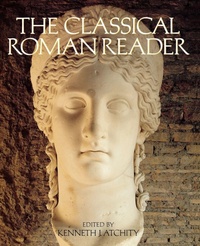
The Classical Roman Reader
New Encounters with Ancient Rome
Published on 27. May 1999
Book
Paperback/Softback
480 pages
978-0-19-512740-9 (ISBN)
Description
Western civilization is in many ways an outgrowth of the Roman Empire. The Classical Roman Reader, which contains a collection of some of the finest and most important writing of the Roman period, brings the modern reader into direct contact with the literature, political thought, science, art and architecture, and psychology of classical Rome.
Here are the wonders of the Roman world presented in a modern, accessible manner. Each selection is preceded by an introduction that identifies the author and provides information that allows modern readers to consider these texts in a new light. What we discover might be surprising. For instance, in Cicero's orations and Marcus Aurelius' meditations, we hear echoes of todays political forums and popular-psychology talk-show hosts. Virgil's ironic dramatization of the founding myth in the Aeneid prepared the way for America's deeply embedded ambivalence toward the presidency. The Roman preference for practicality over philosophy, leading to a network of superhighways that joined Europe, Asia, Asia Minor, and Africa, literally paved the way for the "global village" of the contemporary world.
From Plautus' wildly comic plays to Cato's instructions on farming, and from Catullus' erotic poems to Petronius' descriptions of the decadent splendor of the declining empire, The Classical Roman Reader provides access to the literary, artistic, social, religious, political, scientific, and philosophical texts that shaped Roman thinking and helped form the backbone of Western culture.
Here are the wonders of the Roman world presented in a modern, accessible manner. Each selection is preceded by an introduction that identifies the author and provides information that allows modern readers to consider these texts in a new light. What we discover might be surprising. For instance, in Cicero's orations and Marcus Aurelius' meditations, we hear echoes of todays political forums and popular-psychology talk-show hosts. Virgil's ironic dramatization of the founding myth in the Aeneid prepared the way for America's deeply embedded ambivalence toward the presidency. The Roman preference for practicality over philosophy, leading to a network of superhighways that joined Europe, Asia, Asia Minor, and Africa, literally paved the way for the "global village" of the contemporary world.
From Plautus' wildly comic plays to Cato's instructions on farming, and from Catullus' erotic poems to Petronius' descriptions of the decadent splendor of the declining empire, The Classical Roman Reader provides access to the literary, artistic, social, religious, political, scientific, and philosophical texts that shaped Roman thinking and helped form the backbone of Western culture.
Reviews / Votes
"This reader for students new to the Roman world meets with moderate success. Atchity deserves commendations for including authors not normally found in English translation surveys.... The diversity of voices and topics, drawn from 700 years of Roman history, allows for a fairly complete overview not afforded by most Latin readers....This book is recommended for all undergraduate libraries."--Religious Studies Review, David Christiansen, Truman StateUniversity "As in the case of "The Classical Greek Reader," I found this collection interesting and well-balanced. The student will not become an expert in Rome through this book alone, yet by the time he/she
finishes the book, he/she will have a reliable understanding of the Roman thought in a variety of fields. The book itself is attractive and inviting."--Ippokratis Kantzios, Richard Stockton College of New Jersey
"Excellent, much needed anthology."--C.S.Kraszewski, King's College
"The variety of authors is wonderful. It provides the opportunity to introduce students both to well known names and to completely new individuals."--T. Davina McClain, Loyola University, New Orleans
"The selections give an excellent overview of Roman life and letters. This book will make enlightening reading for the serious undergraduate student of Roman civilization."--Patricia Matsen, University of South Carolina
More details
Language
English
Place of publication
New York
United States
Illustrations
49 Fotos bzw. Rasterbilder
49 halftones
Dimensions
Height: 235 mm
Width: 191 mm
Thickness: 25 mm
Weight
877 gr
ISBN-13
978-0-19-512740-9 (9780195127409)
Copyright in bibliographic data and cover images is held by Nielsen Book Services Limited or by the publishers or by their respective licensors: all rights reserved.
Schweitzer Classification
Person
Kenneth J. Atchity, a former professor at Occidental College and Fulbright Professor at the University of Bologna, is the author and editor of many books, including The Renaissance Reader, Homer's Iliad, Homer: Critical Essays, and The Classical Greek Reader.
Content
Preface
Introduction
PART I
Early Rome (509 -- 65 B.C.)
Plautus / The Rope
Ennius / Annals
Cato the Elder / On Farm Management
Terence / The Brothers
Lucilius / Epigrams
Varro / On Agriculture
PART II
The Late Republic (64-27 B.C)
Cicero / The First Oration Against Catiline and Letters to His Wife and Family in Rome and to Caesar in Gaul
Caesar / The Gallic War
Publilius / Maxims
Laberius / An Old Actor Addresses Julius Caesar
Propertius / Elegies
Sulpicia / Lyrics
Lucretius / On the Nature of Things
Catullus / Lyrics
Sallust / History of Rome
Virgil / Aeneid
Horace / Ars Poetica
PART III
The Empire (27 B.C. -- A.D. 476)
Livy / Early History of Rome
Tibullus / Elegies
Seneca the Elder / Suasoriae
Augustus / Acts
Vitruvius / On Architecture
Ovid / Metamorphoses and The Art of Love
Seneca the Younger / Pumpkinification of Claudius
Celsus / On Medicine
Valerius Maximus / Noteworthy Words and Deeds
Pliny the Elder / Natural History
Silius Italicus / Punica
Quintilian / Education of an Orator
Josephus / The Jewish War
Lucan / Pharsalia
Martial / Epigrams
Frontinus / On the Conveyance of Water
Statius / Thebaid
Pliny the Younger / Letters
Juvenal / Satires
Petronius / Satyricon
Tacitus / Annals: The Mutiny of the Pannonian Legions
Suetonius / from The Lives of the Twelve Caesars: Julius Caesar
Hadrian / To His Soul
Soranus / Gynecology
Fronto / Correspondence with Marcus Aurelius
Gellius / Attic Nights
Gaius / Institutes
Marcus Aurelius / Meditations
Apuleius / The Golden Ass
Paulus / Opinions
Julian the Apostate / Hymn to the Mother of the Gods
Ausonius / Lyrics
Claudian / The Rape of Proserpine
Avianus / Fables
Macrobius / Commentary on the Dream of Scipio
Vegetius / Military Institutions of the Romans
Anonymous / The Vigil of Venus
Justinian / Institutes
Roman Gods/Heroes and Their Greek Counterparts
Landmarks of Roman History
Glossary
Sources & Recommendations
Acknowledgements
Illustration Credits
Index
Introduction
PART I
Early Rome (509 -- 65 B.C.)
Plautus / The Rope
Ennius / Annals
Cato the Elder / On Farm Management
Terence / The Brothers
Lucilius / Epigrams
Varro / On Agriculture
PART II
The Late Republic (64-27 B.C)
Cicero / The First Oration Against Catiline and Letters to His Wife and Family in Rome and to Caesar in Gaul
Caesar / The Gallic War
Publilius / Maxims
Laberius / An Old Actor Addresses Julius Caesar
Propertius / Elegies
Sulpicia / Lyrics
Lucretius / On the Nature of Things
Catullus / Lyrics
Sallust / History of Rome
Virgil / Aeneid
Horace / Ars Poetica
PART III
The Empire (27 B.C. -- A.D. 476)
Livy / Early History of Rome
Tibullus / Elegies
Seneca the Elder / Suasoriae
Augustus / Acts
Vitruvius / On Architecture
Ovid / Metamorphoses and The Art of Love
Seneca the Younger / Pumpkinification of Claudius
Celsus / On Medicine
Valerius Maximus / Noteworthy Words and Deeds
Pliny the Elder / Natural History
Silius Italicus / Punica
Quintilian / Education of an Orator
Josephus / The Jewish War
Lucan / Pharsalia
Martial / Epigrams
Frontinus / On the Conveyance of Water
Statius / Thebaid
Pliny the Younger / Letters
Juvenal / Satires
Petronius / Satyricon
Tacitus / Annals: The Mutiny of the Pannonian Legions
Suetonius / from The Lives of the Twelve Caesars: Julius Caesar
Hadrian / To His Soul
Soranus / Gynecology
Fronto / Correspondence with Marcus Aurelius
Gellius / Attic Nights
Gaius / Institutes
Marcus Aurelius / Meditations
Apuleius / The Golden Ass
Paulus / Opinions
Julian the Apostate / Hymn to the Mother of the Gods
Ausonius / Lyrics
Claudian / The Rape of Proserpine
Avianus / Fables
Macrobius / Commentary on the Dream of Scipio
Vegetius / Military Institutions of the Romans
Anonymous / The Vigil of Venus
Justinian / Institutes
Roman Gods/Heroes and Their Greek Counterparts
Landmarks of Roman History
Glossary
Sources & Recommendations
Acknowledgements
Illustration Credits
Index