

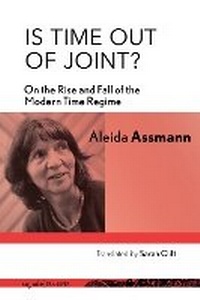
Is Time Out of Joint?
On the Rise and Fall of the Modern Time Regime
Published on 15. February 2020
Book
Hardback
264 pages
978-1-5017-4243-9 (ISBN)
Description
Is, as Hamlet once complained, time out joint? Have the ways we understand the past and the future-and their relationship to the present-been reordered? The past, it seems, has returned with a vengeance: as aggressive nostalgia, as traumatic memory, or as atavistic origin narratives rooted in nation, race, or tribe. The future, meanwhile, has lost its utopian glamor, with the belief in progress and hope for a better future eroded by fears of ecological collapse.
In this provocative book, Aleida Assmann argues that the apparently solid moorings of our temporal orientation have collapsed within the span of a generation. To understand this profound cultural crisis, she reconstructs the rise and fall of what she calls "time regime of modernity" that underpins notions of modernization and progress, a shared understanding that is now under threat. Is Time Out of Joint? assesses the deep change in the temporality of modern Western culture as it relates to our historical experience, historical theory, and our life-world of shared experience, explaining what we have both gained and lost during this profound transformation.
In this provocative book, Aleida Assmann argues that the apparently solid moorings of our temporal orientation have collapsed within the span of a generation. To understand this profound cultural crisis, she reconstructs the rise and fall of what she calls "time regime of modernity" that underpins notions of modernization and progress, a shared understanding that is now under threat. Is Time Out of Joint? assesses the deep change in the temporality of modern Western culture as it relates to our historical experience, historical theory, and our life-world of shared experience, explaining what we have both gained and lost during this profound transformation.
Reviews / Votes
Superbly translated by Sarah Clift, Is Time out of Joint? produces an evocative picture of the temptations and vices of modern historical time, assembled from an intriguingly wide and eclectic range of cultural sources.(Cambridge University Press) Assmann's book stands not only as a forensic examination of the emergence and demise of the 'Modern Time Regime', but also as a thorough survey and critique of theorizations of time predominantly in Germanophone philosophy and literature
(Journal of European Studies) Aleida Assmann's study tells an expansive story of the shifting forms of time consciousness since the eighteenth century, representing both a culmination of her previous work on cultural memory and a bold intervention into contemporary debates on modern temporality. In doing so, Is Time Out of Joint? combines pithiness with creativity.
(International Journal of Politics, Culture, and Society) Aleida Assmann's Is Time out of Joint? has already become a classic in its national academic environment (and in segments of global humanities that can access German speaking scholarship). There is little doubt that the book will now quickly become a standard reference point in a far broader conversation about the temporal constitution of present societies.
(Memory Studies)
More details
Series
Language
English
Place of publication
Ithaca
United States
Publishing group
Cornell University Press
Target group
College/higher education
Product notice
Paper over boards
Dimensions
Height: 229 mm
Width: 152 mm
Thickness: 25 mm
Weight
907 gr
ISBN-13
978-1-5017-4243-9 (9781501742439)
Copyright in bibliographic data and cover images is held by Nielsen Book Services Limited or by the publishers or by their respective licensors: all rights reserved.
Schweitzer Classification
Other editions
Additional editions
E-Book
02/2020
Cornell University Press and Cornell University Library
€30.99
Available for download
Persons
Aleida Assmann was until 2014 Chair of English Literature and Literary Theory at the University of Konstanz. She is the author of several books that have been translated into English, including most recently, Cultural Memory and Western Civilization. With her husband Jan, she was awarded the prestigious 2017 Balzan Prize for Collective Memory and the 2018 Peace Prize of the German Book Trade.
Sarah Clift is Assistant Professor of Contemporary Studies at the University of King's College, Halifax.
Sarah Clift is Assistant Professor of Contemporary Studies at the University of King's College, Halifax.
Content
Preface
Introduction
1. Time and the Modern
Baudelaire's Discovery of the Present
How Long Does the Present Last?
2. Work on the Modern Myth of History
Transformations in the Idea of Progress
The Theory of Time Underlying Modern Historiography
Modernization Theory and Theories of Modernity
When Does the Modern Begin? Phases of Modernization in Western History
The Golden Door of the Future: Modernization as Culture (Using the Example of the United States)
3. Five Aspects of the Modern Temporal Regime
Temporal Rupture
The Fiction of Beginning
Creative Destruction
Destroying and Preserving: The Invention of the Historical
Acceleration
4. Concepts of Time in Late Modernity
Compensation Theory
Compensation Theory and Memory Theory: Two Different Approaches to the Past
5. Is Time out of Joint?
Total Recall: The Rhetoric of Catastrophe and the Broad Present
Connections between the Past, Present, and Future
6. The Past Is Not Past; or, On Repairing the Modern Time Regime
Three New Categories: Culture, Identity, Memory
The Past Is Not Past: Historical Wounds and the Idea of Reversible Time
Identity Politics: Intersections between History and Memory
Two Trends in the Politics of History
Conclusion
Works Cited
Index
Introduction
1. Time and the Modern
Baudelaire's Discovery of the Present
How Long Does the Present Last?
2. Work on the Modern Myth of History
Transformations in the Idea of Progress
The Theory of Time Underlying Modern Historiography
Modernization Theory and Theories of Modernity
When Does the Modern Begin? Phases of Modernization in Western History
The Golden Door of the Future: Modernization as Culture (Using the Example of the United States)
3. Five Aspects of the Modern Temporal Regime
Temporal Rupture
The Fiction of Beginning
Creative Destruction
Destroying and Preserving: The Invention of the Historical
Acceleration
4. Concepts of Time in Late Modernity
Compensation Theory
Compensation Theory and Memory Theory: Two Different Approaches to the Past
5. Is Time out of Joint?
Total Recall: The Rhetoric of Catastrophe and the Broad Present
Connections between the Past, Present, and Future
6. The Past Is Not Past; or, On Repairing the Modern Time Regime
Three New Categories: Culture, Identity, Memory
The Past Is Not Past: Historical Wounds and the Idea of Reversible Time
Identity Politics: Intersections between History and Memory
Two Trends in the Politics of History
Conclusion
Works Cited
Index