

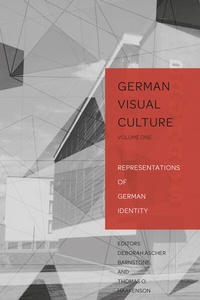
Representations of German Identity
2nd Edition
Published on 29. December 2017
Book
Paperback/Softback
304 pages
978-1-78874-255-9 (ISBN)
Description
Who is «German»? What defines «Germanness»? These questions about national identity have continued to confound both Germans and foreign observers in light of Germany's complex history: its changing borders between 1871 and 1989 make even a geographic definition of the nation complex, let alone allowing for a clear definition of the national character. Questions about German identity continue to play out not only in political discussions but also in visual cultural forms. This essay collection examines the multi-faceted nature of German identity through the lens of myriad forms of visual representation. The contributors explore the nature of German national identity in different historical periods from the Middle Ages to the present and consider how conceptions of that identity have been depicted across the broad spectrum of visual culture: from painting to sculpture, advertising to architecture, television and film to installation art. Because of the unusual approach, the essays address broad questions about identity formation, authenticity, and affirmation in the German context. Together, the essays in this volume demonstrate the complexities of identity construction and offer new insights into the «German Question» from the perspective of visual culture.
More details
Series
Edition
2nd Revised edition
Language
English
Place of publication
Oxford
United Kingdom
Target group
Professional and scholarly
Edition type
Revised edition
Illustrations
26 Illustrations
Dimensions
Height: 225 mm
Width: 150 mm
Thickness: 18 mm
Weight
443 gr
ISBN-13
978-1-78874-255-9 (9781788742559)
Schweitzer Classification
Other editions
Additional editions
Deborah Ascher Barnstone | Thomas O. Haakenson
Representations of German Identity
Book
02/2013
Peter Lang Verlag
€118.35
Shipment within 7-9 days
Deborah Ascher Barnstone | Thomas O. Haakenson
Representations of German Identity
The Myth of August the Strong in German Literature, Art and Media
E-Book
12/2012
250th Edition
Peter Lang Verlag
€140.09
Available for download
Previous edition
Deborah Ascher Barnstone | Thomas O. Haakenson
Representations of German Identity
Book
02/2013
Peter Lang Verlag
€118.35
Shipment within 7-9 days
Persons
Deborah Ascher Barnstone is Professor of Architecture at University of Technology Sydney. She is a licensed architect as well as an historian. She has published two recent monographs: The Break with the Past: Avant-Garde Architecture in Germany, 1910-1925 (2017) and Beyond the Bauhaus: Cultural Modernity in Breslau, 1918-1933 (2016). Her primary research interests are in the origins of classical modernism and exploring the relationships between art, architecture, and culture more broadly. Thomas O. Haakenson is Associate Professor of Critical Studies and Visual Studies at California College of the Arts. He earned his doctorate from the Department of Cultural Studies and Comparative Literature at the University of Minnesota. He has published articles in New German Critique, German Quarterly, and the anthologies Legacies of Modernism and Memorialization in Germany Since 1945.
Content
Deborah Ascher Barnstone/Thomas O. Haakenson: Introduction: Why Visual Culture Matters - Gabriella Szalay: A Painting Fit for a Nation: The Dombild and its Legacy in Nineteenth-Century Germany - Samuel Adams: Blasting Wagner out of the Continuum of History: Deutschtum Transposed in the Los Angeles Ring - Robert C. Kunath: German Art and the Spirit of 1914: Identity, Modernism, and the Case of Ludwig Dettmann - Thomas O. Haakenson: The Architectonics of Public Science: German Identity and the Berlin Museum of Pathology - Kevin S. Amidon: Intersexes and Mixed Races: Visuality, Narrative, and <<Bastard>> Identity in Early Twentieth-Century Germany - Deborah Ascher Barnstone: The 1929 Breslau Werkbund Exhibition: Constructing German Identity in Architecture and Urban Design - Elizabeth Cronin: The Problem of German Identity in 1930s Austria and the Influence of Austrian Heimat Photography - Wendy Westphal: Good Bye, DDR!: Where East German Material Culture Meets Film - Mareike Herrmann: Imagined Homes: Negotiating German Identity in the Eastern Provinces in Thomas Arslan's Ferien and Dominik Graf's Komm mir nicht nach - Erin Hanas: Raus mit der Sprache. Rein ins Leben: The Exposed Tongue - Christina Schmid: Pathetic Parodies: German National Identity in Bjorn Melhus' Weit Weit Weg.