

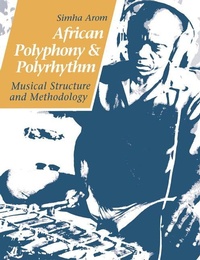
African Polyphony and Polyrhythm
Musical Structure and Methodology
Published on 2. December 2004
Book
Paperback/Softback
700 pages
978-0-521-61601-0 (ISBN)
Description
In this detailed study Simha Arom takes a new and original approach to the understanding of the complex and sophisticated patterns of polyphony and polyrhythm that characterise African music. Considering in particular the harp, sanza, xylophone and percussion music of Central Africa, Simha Arom develops a rigorous method for the analysis of the music and for the recording and deciphering of the many strands of polyphony and polyrhythm. Through a systematic breakdown of the many layers of apparently improvised rhythm he reveals the essential structure which underlies this rich and complex music. Inspired also by linguistic techniques, Professor Arom regards the music very much as a grammatical system.
More details
Language
English
Place of publication
Cambridge
United Kingdom
Target group
College/higher education
Product notice
Paperback (trade)
Illustrations
Worked examples or Exercises
Dimensions
Height: 246 mm
Width: 189 mm
Thickness: 38 mm
Weight
1330 gr
ISBN-13
978-0-521-61601-0 (9780521616010)
Copyright in bibliographic data and cover images is held by Nielsen Book Services Limited or by the publishers or by their respective licensors: all rights reserved.
Schweitzer Classification
Other editions
Additional editions
Book
07/1991
Cambridge University Press
€160.94
Article exhausted; check for reprint
Previous edition
Book
07/1991
Cambridge University Press
€160.94
Article exhausted; check for reprint
Persons
Content
List of illustrations; Foreword Gyorgy Ligeti; Preface; Acknowledgements; Map; Book I. The Music of the Central African Republic: 1. General introduction; 2. The general features of traditional music; 3. Typology; Book II. African Polyphonic Music: Introduction; 1. A classification of African polyphonies; 2. Previous studies: the present state of the subject; Book III. Technical Tools: Methods of Recording Polyphonic Music For Transcription: 1. The need for transcription; 2. The difficulties of transcription; 3. Earlier methods; 4. Towards a new method; 5. Theoretical assumptions; 6. Technical equipment: description and use; 7. From recording to transcription; 8. Checking the results; 9. Potentialities; 10. Anthropological acceptability; Book IV. Theoretical Tools: 1. The notion of relevance; 2. Description and analysis; 3. The question of transcription; Book V. The Organisation of Time In African Music: 1. A brief survey of Western rhythmics; 2. Towards precise terminology; 3. African rhythmics; Book VI. Structural Principles And Their Applications: 1. Typology; 2. Analytical notions; 3. Strict polyrhythmics; 4. Polyrhythmics as a way to polyphony: Hocket; 5. Polyphony produced by melodic instruments; 6. The association of polyphony and polyrhythmics; Conclusion; Bibliography; Discography; Index.