

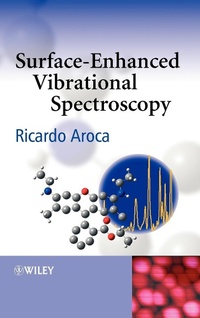
Surface-Enhanced Vibrational Spectroscopy
1st Edition
Published on 31. March 2006
Book
Hardback
260 pages
978-0-471-60731-1 (ISBN)
Description
Surface Enhanced Vibrational Spectroscopy (SEVS) has reachedmaturity as an analytical technique, but until now there has beenno single work that describes the theory and experiments of SEVS.This book combines the two important techniques of surface-enhancedRaman scattering (SERS) and surface-enhanced infrared (SEIR) intoone text that serves as the definitive resource on SEVS.
* Discusses both the theory and the applications of SEVS andprovides an up-to-date study of the state of the art
* Offers interpretations of SEVS spectra for practicinganalysts
* Discusses interpretation of SEVS spectra, which can often bevery different to the non-enhanced spectrum - aids the practicinganalyst
* Discusses both the theory and the applications of SEVS andprovides an up-to-date study of the state of the art
* Offers interpretations of SEVS spectra for practicinganalysts
* Discusses interpretation of SEVS spectra, which can often bevery different to the non-enhanced spectrum - aids the practicinganalyst
Reviews / Votes
"I would strongly recommend this book to anyone who is interestedin SEVS." (Physical Sciences Educational Reviews, December2007)"...provides a healthy balance of theory andexperiment...recommended." (CHOICE, December 2006)
"...this book is a solid investment and an excellentresource for the novice or expert who is interested in awell-developed and acute understanding of the concepts andchallenges surrounding surface-enhanced vibrational spectroscopy."(Journal of the American Chemical Society, December 20,2006)
"The book is well written, easy to read and richly illustrated."(Journal of Solid State Electrochemistry, 2006)
More details
Language
English
Place of publication
New York
United States
Target group
Professional and scholarly
Product notice
Unsewn / adhesive bound
Paper over boards
Dimensions
Height: 235 mm
Width: 157 mm
Thickness: 19 mm
Weight
534 gr
ISBN-13
978-0-471-60731-1 (9780471607311)
Copyright in bibliographic data and cover images is held by Nielsen Book Services Limited or by the publishers or by their respective licensors: all rights reserved.
Schweitzer Classification
Other editions
Additional editions
Ricardo Aroca
Surface-Enhanced Vibrational Spectroscopy
E-Book
05/2006
1st Edition
Wiley
€145.99
Available for download
Person
Professor Ricardo Aroca is based in the School of Physical Sciences, University of Windsor, Canada. He has almost 250 publications and his research interest are i) single molecule detection, ii) nanostructures for surface-enhanced spectroscopy and iii) in hydrogen storage materials.
Content
Preface.
Acknowledgments.
Glossary.
1. Theory of Molecular Vibrations. The Origin of Infrared andRaman Spectra.
1.1 Electronic, Vibrational, Rotational and TranslationalEnergy.
1.2 Separation of Nuclear and Electronic Motions.
1.3 Vibrations in Polyatomic Molecules.
1.4 Equilibrium Properties. Dipole Moment andPolarizability.
1.5 Fundamental Vibrational Transitions in the Infrared andRaman Regions.
1.6 Symmetry of Normal Modes and Vibrational States.
1.7 Selection Rules.
1.8 The Example of ab initio Computation of the Raman andInfrared Spectra.
1.9 Vibrational Intensities.
1.10 Definition of Cross-Section.
1.11 The Units of Energy and Force Constants.
References.
2. The Interaction of Light with Nanoscopic Metal Particlesand Molecules on Smooth Reflecting Surfaces.
2.1 Electric Permittivity and Refractive Index.
2.2 Propagation of Electromagnetic Waves and the OpticalProperties of Materials.
2.3 Scattering and Absorption by Nanoscopic Particles.
2.4 Reflection-Absorption Infrared Spectroscopy on SmoothMetal Surfaces.
References.
3. Surface-Enhanced Raman Scattering (SERS).
3.1 Electromagnetic Enhancement Mechanism.
References.
4. Chemical Effects and the SERS Spectrum.
4.1 Physical and Chemical Adsorption.
4.2 SERS/SERRS of Physically Adsorbed Molecules.
4.3 SERS of Chemically Adsorbed Molecules without ElectronicResonance Excitation.
4.4 SERS of Chemically Adsorbed Molecules with Charge TransferExcitation.
4.5 Metal-Molecule or Molecule-Metal ChargeTransfer.
4.6 SERRS from a Surface Complex.
References.
5. Is SERS Molecule Specific?
References.
6. SERS/SERRS, the Analytical Tool.
6.1 Average SERS on Metal Colloids. Preparation andProperties.
6.2 Metal Colloids. The Background SERS.
6.3 Metal Colloids. Maximizing the Average SERS in Solution.
6.4 Average SERS on Metal Island Films.
6.5 Average SERS on Rough Electrodes.
6.6 Ultrasensitive SERS Analysis and Single MoleculeDetection.
6.7 Uniqueness of Ultrasensitive Chemical Analysis. The MovingTarget.
6.8 Applications and Outlook.
References.
7. Surface-Enhanced Infrared Spectroscopy.
7.1 Overview.
7.2 Theoretical Models for SEIRA.
7.3 SEIRA-Active Substrates.
7.4 Interpretation of the Observed SEIRA Spectra.
7.5 Applications of SEIRA.
References.
Index.
Acknowledgments.
Glossary.
1. Theory of Molecular Vibrations. The Origin of Infrared andRaman Spectra.
1.1 Electronic, Vibrational, Rotational and TranslationalEnergy.
1.2 Separation of Nuclear and Electronic Motions.
1.3 Vibrations in Polyatomic Molecules.
1.4 Equilibrium Properties. Dipole Moment andPolarizability.
1.5 Fundamental Vibrational Transitions in the Infrared andRaman Regions.
1.6 Symmetry of Normal Modes and Vibrational States.
1.7 Selection Rules.
1.8 The Example of ab initio Computation of the Raman andInfrared Spectra.
1.9 Vibrational Intensities.
1.10 Definition of Cross-Section.
1.11 The Units of Energy and Force Constants.
References.
2. The Interaction of Light with Nanoscopic Metal Particlesand Molecules on Smooth Reflecting Surfaces.
2.1 Electric Permittivity and Refractive Index.
2.2 Propagation of Electromagnetic Waves and the OpticalProperties of Materials.
2.3 Scattering and Absorption by Nanoscopic Particles.
2.4 Reflection-Absorption Infrared Spectroscopy on SmoothMetal Surfaces.
References.
3. Surface-Enhanced Raman Scattering (SERS).
3.1 Electromagnetic Enhancement Mechanism.
References.
4. Chemical Effects and the SERS Spectrum.
4.1 Physical and Chemical Adsorption.
4.2 SERS/SERRS of Physically Adsorbed Molecules.
4.3 SERS of Chemically Adsorbed Molecules without ElectronicResonance Excitation.
4.4 SERS of Chemically Adsorbed Molecules with Charge TransferExcitation.
4.5 Metal-Molecule or Molecule-Metal ChargeTransfer.
4.6 SERRS from a Surface Complex.
References.
5. Is SERS Molecule Specific?
References.
6. SERS/SERRS, the Analytical Tool.
6.1 Average SERS on Metal Colloids. Preparation andProperties.
6.2 Metal Colloids. The Background SERS.
6.3 Metal Colloids. Maximizing the Average SERS in Solution.
6.4 Average SERS on Metal Island Films.
6.5 Average SERS on Rough Electrodes.
6.6 Ultrasensitive SERS Analysis and Single MoleculeDetection.
6.7 Uniqueness of Ultrasensitive Chemical Analysis. The MovingTarget.
6.8 Applications and Outlook.
References.
7. Surface-Enhanced Infrared Spectroscopy.
7.1 Overview.
7.2 Theoretical Models for SEIRA.
7.3 SEIRA-Active Substrates.
7.4 Interpretation of the Observed SEIRA Spectra.
7.5 Applications of SEIRA.
References.
Index.