

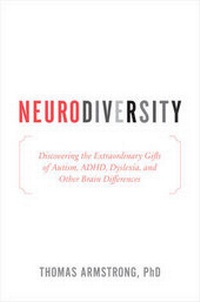
Neurodiversity
Discovering the Hidden Strengths of Autism, ADHD, Dyslexia, and Other Brain Differences
Published on 24. May 2010
Book
Hardback
288 pages
978-0-7382-1354-5 (ISBN)
Description
In this title, bestselling author and psychologist Armstrong reframes the debate about neurodiversity, offering up-to-date research on brain differences while pinpointing the gifts and abilities of people with neuropsychological. In "The Gift of Neurodiversity", Armstrong argues that we have been too quick to pathologise brain differences. Indeed, in recent years, we have re-classified these differences, labeling many of them 'disorders'. While it is true that many do suffer from clinical disorders that call for, among other things, medical treatment, many people who are seen as disordered are highly functioning. What science actually suggests is that there are many different ways for our brains to be wired, and that there are actual 'gifts' or 'strengths' attached to some of these differences. For example, a highly functioning person with Asperger's may be blessed with a tremendous ability to focus and analytical skills. Silicon Valley's success stories have been built on the collective efforts of many such individuals who are ideally suited to work at computer screens in cubicles, and do not necessarily need to interface that much with others.
Similarly, as has been chronicled in Kay Jamison's superb chronicle of her struggle as a renowned psychiatrist and medical researcher with manic depression, many highly accomplished artists, performers, and thought leaders such as Jamison have drawn from the energy cycles of their illness to make breakthroughs or create great art. At once a popular course on brain differences, a manifesto on neurodiversity that presents the brain as an ecosystem that adapts to different environments and a compilation of up-to-date research on the gifts and abilities of individuals with neuropsychological disorders, Armstrong's book will reframe the debate about neurodiversity in a very positive and concrete way. Adults with these disorders, in the age of the Internet, are speaking out, whether contributing videos to YouTube about what it feels like to have a disorder (or organising around message boards and blogs to give voice to the positive aspects of their brain differences.
Similarly, as has been chronicled in Kay Jamison's superb chronicle of her struggle as a renowned psychiatrist and medical researcher with manic depression, many highly accomplished artists, performers, and thought leaders such as Jamison have drawn from the energy cycles of their illness to make breakthroughs or create great art. At once a popular course on brain differences, a manifesto on neurodiversity that presents the brain as an ecosystem that adapts to different environments and a compilation of up-to-date research on the gifts and abilities of individuals with neuropsychological disorders, Armstrong's book will reframe the debate about neurodiversity in a very positive and concrete way. Adults with these disorders, in the age of the Internet, are speaking out, whether contributing videos to YouTube about what it feels like to have a disorder (or organising around message boards and blogs to give voice to the positive aspects of their brain differences.
More details
Language
English
Place of publication
United States
Publishing group
Hachette Books
Target group
Professional and scholarly
Dimensions
Height: 229 mm
Width: 152 mm
ISBN-13
978-0-7382-1354-5 (9780738213545)
Copyright in bibliographic data and cover images is held by Nielsen Book Services Limited or by the publishers or by their respective licensors: all rights reserved.
Schweitzer Classification
Person
Thomas Armstrong, Ph.D. is an award-winning author and speaker with over thirty years of teaching experience from the primary through the doctoral level, and over one million copies of his books in print on issues related to learning and human development. He is the author of thirteen books including The Human Odyssey, The Best Schools, Multiple Intelligences in the Classroom, Awakening Your Child's Natural Genius, 7 Kinds of Smart, The Myth of the A.D.D. Child, ADD/ADHD Alternatives in the Classroom, and Awakening Genius in the Classroom.. He lives in Northern California.