

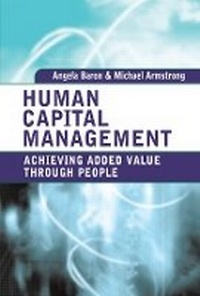
Human Capital Management
Achieving Added Value Through People
1st Edition
Published on 3. February 2007
Book
Hardback
240 pages
978-0-7494-4938-4 (ISBN)
Description
Human Capital Management (HCM) has been described as a high-level strategic issue that seeks to analyse, measure and evaluate how people policies and practices create value. Put simply, HCM is about creating and demonstrating the value that great people and great people management add to an organization.
This unique book describes how HCM provides a bridge between human resource management and business strategy. It also demonstrates how organizations can use the concepts of human resource management and the processes involved to enhance the value they obtain from people while continuing to meet their aspirations and needs.
Armstrong and Baron explain how to achieve these objectives using various approaches including: Describing the concepts of HCM and how the process works; Examining the practice of HCM with regard to measurement and reporting; Discussing the various applications of HCM with regard to HR strategy formulation, learning and development, knowledge management, performance management, reward management and talent management; and examining the role of HR in HCM and the future of the concept.
It also contains an appendix a toolkit which organizations can use to develop their own HCM policies and practices.
This unique book describes how HCM provides a bridge between human resource management and business strategy. It also demonstrates how organizations can use the concepts of human resource management and the processes involved to enhance the value they obtain from people while continuing to meet their aspirations and needs.
Armstrong and Baron explain how to achieve these objectives using various approaches including: Describing the concepts of HCM and how the process works; Examining the practice of HCM with regard to measurement and reporting; Discussing the various applications of HCM with regard to HR strategy formulation, learning and development, knowledge management, performance management, reward management and talent management; and examining the role of HR in HCM and the future of the concept.
It also contains an appendix a toolkit which organizations can use to develop their own HCM policies and practices.
Reviews / Votes
"baron and armstrong's book is to be commended for its good intensions and contribution to this key area of enabling organisations' people to help those organisations achieve their objectives more effectively and efficiently." h.c.m human capital management "a highly readable book that debunks much of the mystique surrounding human capital and fills an identified gap in the literature on the subject. for readers seeking an introduction to hcm and insights into its relevance to organisational performance, this book is to be strongly recommended for it breadth and depth of coverage but, above all, for making a complex subject accessible. individuals who are more familiar with the topic and the debates that surround it will welcome a comprehensive text on a subject which they can use to develop organisational strategies that take account of the value people, contribute to the business." people management 'this book will be useful to those interested in exploring hcm for their organisation, it does provide practical advice with a background understanding of hcm, its origins and its challenges' training journal, nov 2007More details
Language
English
Place of publication
London
United Kingdom
Product notice
Cloth over boards
Dimensions
Height: 1 mm
Width: 1 mm
Thickness: 1 mm
Weight
1 gr
ISBN-13
978-0-7494-4938-4 (9780749449384)
Copyright in bibliographic data and cover images is held by Nielsen Book Services Limited or by the publishers or by their respective licensors: all rights reserved.
Schweitzer Classification
Other editions
New editions
Book
08/2008
1st Edition
Kogan Page Ltd
€58.90
Shipment within 10-20 days
Additional editions
E-Book
02/2007
1st Edition
Kogan Page Ltd
from
€80.99
Available for download
Person
Michael Armstrong is a fellow of the CIPD and former Chief Examiner. An internationally respected writer on management topics, his publications include Performance Management, Reward Management , A Handbook of Management and Leadership, A Handbook of Employee Reward, and Strategic Human Resource Management all published by Kogan Page.
Angela Baron is a chartered member of the CIPD, for whom she is currently an adviser on organisation and resourcing. She has been responsible for numerous research programmes ranging for corporate culture to recruitment practice.
Angela Baron is a chartered member of the CIPD, for whom she is currently an adviser on organisation and resourcing. She has been responsible for numerous research programmes ranging for corporate culture to recruitment practice.
Content
part 1 the essence of hcm 1 the concept of human capital intellectual capital; human capital; social capital; organizational capital; practical implications of intellectual capital theory; conclusions 2 the concept of hcm hcm defined; aims of hcm; rationale for hcm; hcm and hrm; the concept of human capital advantage and resource-based strategy; conclusions 3 the process of hcm hcm drivers; the hcm journey; human capital measurement; human capital reporting; drawing conclusions; getting into action; putting it all together; developing hcm part 2 the practice of hcm 4 human capital data overall considerations; types of data; problems with data collection; a guide to data management; conclusions 5 measuring human capital measurement issues; classification of measures; developing measures; approaches to analysis; analytical models; examples of approaches to measurement; conclusions 6 human capital reporting internal reporting; external reporting; conclusions 7 applications of hcm the link between hcm and strategic hrm; hcm and talent management; hcm and learning and development; knowledge management; performance management as a source of human capital data; reward management; supporting and developing line managers part 3 the role and future of hcm 8 the role of hr in hcm the business partner concept and hcm; hr's role in developing, analysing and using human capital data; the role of hr in enhancing job engagement and commitment; the strategist role; making the business case; working with the other functions 9 the skills hr specialists need for hcm closing the skills gap; developing a new template for hr; hr versus line manager skills; conclusions 10 the future of hcm the virtues of hcm; question marks about hcm; the link between hcm and business strategy; establishing the link between hr practice and business performance; understanding and fulfilling the needs of the investment community for better information on intangible value; convincing senior management; enlisting the interest and involvement of line management; convincing hr specialists; staged development of hcm; developing the hcm skills of hr specialists; the meaning of added value; what is meant by regarding people as assets; selecting the measures; analysing and evaluating the data; the future of external reporting; conclusions appendix: the hcm toolkit purpose of the toolkit; what is an hcm approach?; do we need to adopt an hcm approach?; how do we adopt an hcm approach?; introducing hcm; decide hcm goals; decide areas to be covered by hcm; identify measures required and available; develop internal reports; develop external reports; how
Part 1 The essence of HCM
1 The concept of human capital
Intellectual capital; Human capital; Social capital; Organizational capital; Practical implications of intellectual capital theory; Conclusions
2 The concept of HCM
HCM defined; Aims of HCM; Rationale for HCM; HCM and HRM; The concept of human capital advantage and resource-based strategy; Conclusions
3 The process of HCM
HCM drivers; The HCM journey; Human capital measurement; Human capital reporting; Drawing conclusions; Getting into action; Putting it all together; Developing HCM
Part 2 The practice of HCM
4 Human capital data
Overall considerations; Types of data; Problems with data collection; A guide to data management; Conclusions
5 Measuring human capital
Measurement issues; Classification of measures; Developing measures; Approaches to analysis; Analytical models; Examples of approaches to measurement; Conclusions
6 Human capital reporting
Internal reporting; External reporting; Conclusions
7 Applications of HCM
The link between HCM and strategic HRM; HCM and talent management; HCM and learning and development; Knowledge management; Performance management as a source of human capital data; Reward management; Supporting and developing line managers
Part 3 The role and future of HCM
8 The role of HR in HCM
The business partner concept and HCM; HR's role in developing, analysing and using human capital data; The role of HR in enhancing job engagement and commitment; The strategist role; Making the business case; Working with the other functions
9 The skills HR specialists need for HCM
Closing the skills gap; Developing a new template for HR; HR versus line manager skills;
Conclusions
10 The future of HCM
The virtues of HCM; Question marks about HCM; The link between HCM and business strategy; Establishing the link between HR practice and business performance; Understanding and fulfilling the needs of the investment community for better information on intangible value; Convincing senior management; Enlisting the interest and involvement of line management; Convincing HR specialists; Staged development of HCM; Developing the HCM skills of HR specialists; The meaning of added value; What is meant by regarding people as assets; Selecting the measures; Analysing and evaluating the data; The future of external reporting; Conclusions
Appendix: The HCM toolkit
Purpose of the toolkit; What is an HCM approach?; Do we need to adopt an HCM approach?; How do we adopt an HCM approach?; Introducing HCM; Decide HCM goals; Decide areas to be covered by HCM; Identify measures required and available; Develop internal reports; Develop external reports; How do we operate HCM?;
1 The concept of human capital
Intellectual capital; Human capital; Social capital; Organizational capital; Practical implications of intellectual capital theory; Conclusions
2 The concept of HCM
HCM defined; Aims of HCM; Rationale for HCM; HCM and HRM; The concept of human capital advantage and resource-based strategy; Conclusions
3 The process of HCM
HCM drivers; The HCM journey; Human capital measurement; Human capital reporting; Drawing conclusions; Getting into action; Putting it all together; Developing HCM
Part 2 The practice of HCM
4 Human capital data
Overall considerations; Types of data; Problems with data collection; A guide to data management; Conclusions
5 Measuring human capital
Measurement issues; Classification of measures; Developing measures; Approaches to analysis; Analytical models; Examples of approaches to measurement; Conclusions
6 Human capital reporting
Internal reporting; External reporting; Conclusions
7 Applications of HCM
The link between HCM and strategic HRM; HCM and talent management; HCM and learning and development; Knowledge management; Performance management as a source of human capital data; Reward management; Supporting and developing line managers
Part 3 The role and future of HCM
8 The role of HR in HCM
The business partner concept and HCM; HR's role in developing, analysing and using human capital data; The role of HR in enhancing job engagement and commitment; The strategist role; Making the business case; Working with the other functions
9 The skills HR specialists need for HCM
Closing the skills gap; Developing a new template for HR; HR versus line manager skills;
Conclusions
10 The future of HCM
The virtues of HCM; Question marks about HCM; The link between HCM and business strategy; Establishing the link between HR practice and business performance; Understanding and fulfilling the needs of the investment community for better information on intangible value; Convincing senior management; Enlisting the interest and involvement of line management; Convincing HR specialists; Staged development of HCM; Developing the HCM skills of HR specialists; The meaning of added value; What is meant by regarding people as assets; Selecting the measures; Analysing and evaluating the data; The future of external reporting; Conclusions
Appendix: The HCM toolkit
Purpose of the toolkit; What is an HCM approach?; Do we need to adopt an HCM approach?; How do we adopt an HCM approach?; Introducing HCM; Decide HCM goals; Decide areas to be covered by HCM; Identify measures required and available; Develop internal reports; Develop external reports; How do we operate HCM?;