

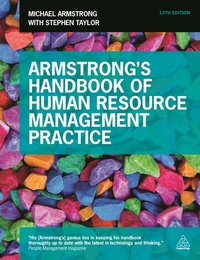
Armstrong's Handbook of Human Resource Management Practice
13th Edition
Published on 3. April 2014
Book
Paperback/Softback
880 pages
978-0-7494-6964-1 (ISBN)
Description
Armstrong's Handbook of Human Resource Management Practice is the classic text for all students and practitioners of HRM. Providing a complete resource for understanding and implementing HR in relation to the needs of the business as a whole, it contains in-depth coverage of all the key areas essential to the HR function, including performance, reward, employee engagement and HR policy. This fully revised and updated thirteenth edition contains an entirely new part covering the increasingly important subject of international human resource management. Other new chapters have been added on rewarding special groups and on employment law, and the chapters on HRM, motivation and engagement have been completely revised.
Armstrong's Handbook of Human Resource Management Practice has also been brought up to date by reference to the findings of a number of significant research projects and other investigations of how HRM operates in practice. Comprehensive online support material for the instructor, student and practitioner is provided, offering a complete resource for teaching and self-learning. Online supporting resources include
lecture slides, an instructor's manual, a student's manual complete with multiple-choice practice questions and case studies and a glossary of terms.
Armstrong's Handbook of Human Resource Management Practice has also been brought up to date by reference to the findings of a number of significant research projects and other investigations of how HRM operates in practice. Comprehensive online support material for the instructor, student and practitioner is provided, offering a complete resource for teaching and self-learning. Online supporting resources include
lecture slides, an instructor's manual, a student's manual complete with multiple-choice practice questions and case studies and a glossary of terms.
Reviews / Votes
"Topical, comprehensive, well-informed and student-friendly" * Dr Izabela Robinson, Senior Lecturer Human Resource Management, Northampton Business School * "The gold standard when it comes to HRM texts" * Connie Nolan, Senior Lecturer at Canterbury Christ Church University * "Armstrong's approach to HRM is sufficiently academic but tempered with good practice and common sense." * Dr Janet Astley, Senior Lecturer, York St John Business School * "Praise for the previous edition:Human resources professionals will find Michael Armstrong's book practical, helpful and relevant. It discusses all facets of current practice, including such relatively new developments as e-learning and recruiting, and it discusses how you can help your organization implement change. The book would make an excellent college text, since it covers HRM's evolution, principles, theories, practice, research, job descriptions and more. ...[T]hose in the field will derive a great deal of value from this book.
" * getAbstract, Inc. *
More details
Edition
13th Revised edition
Language
English
Place of publication
London
United Kingdom
Target group
College/higher education
Professional and scholarly
Edition type
Revised edition
Product notice
Paperback (trade)
Dimensions
Height: 245 mm
Width: 190 mm
Thickness: 33 mm
Weight
1421 gr
ISBN-13
978-0-7494-6964-1 (9780749469641)
Copyright in bibliographic data and cover images is held by Nielsen Book Services Limited or by the publishers or by their respective licensors: all rights reserved.
Schweitzer Classification
Other editions
New editions
Michael Armstrong | Stephen Taylor
Armstrong's Handbook of Human Resource Management Practice
A Guide to the Theory and Practice of People Management
Book
01/2026
17th Edition
Kogan Page Ltd
€62.50
Available immediately
Michael Armstrong | Stephen Taylor
Armstrong's Handbook of Human Resource Management Practice
Book
02/2017
14th Edition
Kogan Page Ltd
€75.79
Article exhausted; check for reprint
Previous edition
Michael Armstrong
Armstrong's Handbook of Human Resource Management Practice
Book
05/2012
12th Edition
Kogan Page Ltd
€69.59
Article exhausted; check for reprint
Persons
Michael Armstrong is a former chief examiner of the Chartered Institute of Personnel and Development (CIPD), Managing Partner of E-Reward and an independent management consultant. He has spent 25 years as an HR practitioner, including 12 as HR director of a publishing company. He has sold over 500,000 books on the subject of HRM, and is the author of a suite of several best-selling HR books, also published by Kogan Page.
Stephen Taylor is a senior lecturer in Human Resource Management at the University of Exeter Business School and a chief examiner for the CIPD. Before his academic career he worked in a variety of management roles in the hotel industry and in the NHS. He is also a widely published author.
Stephen Taylor is a senior lecturer in Human Resource Management at the University of Exeter Business School and a chief examiner for the CIPD. Before his academic career he worked in a variety of management roles in the hotel industry and in the NHS. He is also a widely published author.
Content
Section - ONE: The practice of human resource management;
Chapter - 01: The essence of human resource management (HRM);
Chapter - 02: Strategic HRM;
Chapter - 03: Delivering HRM - systems and roles;
Chapter - 04: HRM and performance;
Chapter - 05: Human capital management;
Chapter - 06: Knowledge management;
Chapter - 07: Competency-based HRM;
Chapter - 08: The ethical dimension of HRM;
Chapter - 09: Corporate social responsibility;
Section - TWO: People and organizations;
Chapter - 10: Organizational behaviour;
Chapter - 11: Work, organization and job design;
Chapter - 12: Organization development;
Section - THREE: Factors affecting employee behaviour;
Chapter - 13: Motivation;
Chapter - 14: Commitment;
Chapter - 15: Employee engagement;
Section - FOUR: People resourcing;
Chapter - 16: Strategic resourcing;
Chapter - 17: Workforce planning;
Chapter - 18: Recruitment and selection;
Chapter - 19: Resourcing practice;
Chapter - 20: Talent management;
Section - FIVE: Learning and development;
Chapter - 21: Strategic learning and development;
Chapter - 22: The process of learning and development;
Chapter - 23: The practice of learning and development;
Chapter - 24: Leadership and management development;
Section - SIX: Performance and reward;
Chapter - 25: Performance management;
Chapter - 26: Reward management - strategy and systems;
Chapter - 27: The practice of reward management;
Chapter - 28: Managing reward for special groups;
Section - SEVEN: Employee relations;
Chapter - 29: Strategic employee relations;
Chapter - 30: The employment relationship;
Chapter - 31: The psychological contract;
Chapter - 32: The practice of industrial relations;
Chapter - 33: Employee voice;
Chapter - 34: Employee communications;
Section - EIGHT: Employee well-being;
Chapter - 35: The practice of employee well-being;
Chapter - 36: Health and safety;
Section - NINE: International HRM;
Chapter - 37: The international HRM framework;
Chapter - 38: The practice of international HRM;
Chapter - 39: Managing expatriates;
Section - TEN: HRM policy and practice;
Chapter - 40: HR policies;
Chapter - 41: HR procedures;
Chapter - 42: HR information systems;
Chapter - 43: Employment law;
Section - ELEVEN: HR skills;
Chapter - 44: Strategic HRM skills;
Chapter - 45: Business skills;
Chapter - 46: Problem-solving skills;
Chapter - 47: Analytical and critical skills;
Chapter - 48: Research skills;
Chapter - 49: Statistical skills;
Chapter - 50: Selection interviewing skills;
Chapter - 51: Job, role and skills analysis and competency modelling;
Chapter - 52: Learning and development skills;
Chapter - 53: Negotiating skills;
Chapter - 54: Leading and facilitating change;
Chapter - 55: Leadership skills;
Chapter - 56: Influencing skills;
Chapter - 57: Handling people problems;
Chapter - 58: Managing conflict;
Chapter - 59: Political skills;
Section - TWELVE: HRM toolkits;
Chapter - 60: Strategic HRM toolkit;
Chapter - 61: Human capital management toolkit;
Chapter - 62: Organization design toolkit;
Chapter - 63: Organization development toolkit;
Chapter - 64: Employee engagement toolkit;
Chapter - 65: Workforce planning toolkit;
Chapter - 66: Talent management toolkit;
Chapter - 67: Planning and delivering learning events toolkit;
Chapter - 68: Performance management toolkit;
Chapter - 69: Strategic reward toolkit;
Chapter - 70: Total rewards toolkit;
Chapter - 71: Job evaluation toolkit;
Chapter - 72: Grade and pay structure design toolkit;
Chapter - 73: Attitude surveys toolkit
Chapter - 01: The essence of human resource management (HRM);
Chapter - 02: Strategic HRM;
Chapter - 03: Delivering HRM - systems and roles;
Chapter - 04: HRM and performance;
Chapter - 05: Human capital management;
Chapter - 06: Knowledge management;
Chapter - 07: Competency-based HRM;
Chapter - 08: The ethical dimension of HRM;
Chapter - 09: Corporate social responsibility;
Section - TWO: People and organizations;
Chapter - 10: Organizational behaviour;
Chapter - 11: Work, organization and job design;
Chapter - 12: Organization development;
Section - THREE: Factors affecting employee behaviour;
Chapter - 13: Motivation;
Chapter - 14: Commitment;
Chapter - 15: Employee engagement;
Section - FOUR: People resourcing;
Chapter - 16: Strategic resourcing;
Chapter - 17: Workforce planning;
Chapter - 18: Recruitment and selection;
Chapter - 19: Resourcing practice;
Chapter - 20: Talent management;
Section - FIVE: Learning and development;
Chapter - 21: Strategic learning and development;
Chapter - 22: The process of learning and development;
Chapter - 23: The practice of learning and development;
Chapter - 24: Leadership and management development;
Section - SIX: Performance and reward;
Chapter - 25: Performance management;
Chapter - 26: Reward management - strategy and systems;
Chapter - 27: The practice of reward management;
Chapter - 28: Managing reward for special groups;
Section - SEVEN: Employee relations;
Chapter - 29: Strategic employee relations;
Chapter - 30: The employment relationship;
Chapter - 31: The psychological contract;
Chapter - 32: The practice of industrial relations;
Chapter - 33: Employee voice;
Chapter - 34: Employee communications;
Section - EIGHT: Employee well-being;
Chapter - 35: The practice of employee well-being;
Chapter - 36: Health and safety;
Section - NINE: International HRM;
Chapter - 37: The international HRM framework;
Chapter - 38: The practice of international HRM;
Chapter - 39: Managing expatriates;
Section - TEN: HRM policy and practice;
Chapter - 40: HR policies;
Chapter - 41: HR procedures;
Chapter - 42: HR information systems;
Chapter - 43: Employment law;
Section - ELEVEN: HR skills;
Chapter - 44: Strategic HRM skills;
Chapter - 45: Business skills;
Chapter - 46: Problem-solving skills;
Chapter - 47: Analytical and critical skills;
Chapter - 48: Research skills;
Chapter - 49: Statistical skills;
Chapter - 50: Selection interviewing skills;
Chapter - 51: Job, role and skills analysis and competency modelling;
Chapter - 52: Learning and development skills;
Chapter - 53: Negotiating skills;
Chapter - 54: Leading and facilitating change;
Chapter - 55: Leadership skills;
Chapter - 56: Influencing skills;
Chapter - 57: Handling people problems;
Chapter - 58: Managing conflict;
Chapter - 59: Political skills;
Section - TWELVE: HRM toolkits;
Chapter - 60: Strategic HRM toolkit;
Chapter - 61: Human capital management toolkit;
Chapter - 62: Organization design toolkit;
Chapter - 63: Organization development toolkit;
Chapter - 64: Employee engagement toolkit;
Chapter - 65: Workforce planning toolkit;
Chapter - 66: Talent management toolkit;
Chapter - 67: Planning and delivering learning events toolkit;
Chapter - 68: Performance management toolkit;
Chapter - 69: Strategic reward toolkit;
Chapter - 70: Total rewards toolkit;
Chapter - 71: Job evaluation toolkit;
Chapter - 72: Grade and pay structure design toolkit;
Chapter - 73: Attitude surveys toolkit