

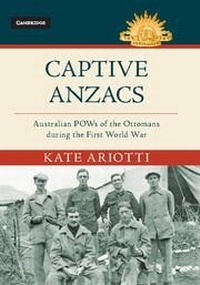
Captive Anzacs
Australian POWs of the Ottomans during the First World War
Published on 1. May 2018
Book
Hardback
238 pages
978-1-107-19864-7 (ISBN)
Description
During the First World War, 198 Australians became prisoners of the Ottomans. Overshadowed by the grief and hardship that characterised the post-war period, and by the enduring myth of the fighting Anzac, these POWs have long been neglected in the national memory of the war. Captive Anzacs explores how the prisoners felt about their capture and how they dealt with the physical and psychological strain of imprisonment, as well as the legacy of their time as POWs. More broadly, it explores public perceptions of the prisoners, the effects of their captivity on their families, and how military, government and charitable organisations responded to the POWs both during and after the War. Intertwining rich detail from letters, diaries and other personal papers with official records, Kate Ariotti offers a comprehensive, nuanced account of this aspect of Australian war history.
More details
Series
Language
English
Place of publication
Cambridge
United Kingdom
Target group
Professional and scholarly
Product notice
sewn/stitched
Cloth over boards
Illustrations
Worked examples or Exercises; 2 Maps; 16 Halftones, black and white
Dimensions
Height: 235 mm
Width: 161 mm
Thickness: 20 mm
Weight
522 gr
ISBN-13
978-1-107-19864-7 (9781107198647)
Copyright in bibliographic data and cover images is held by Nielsen Book Services Limited or by the publishers or by their respective licensors: all rights reserved.
Schweitzer Classification
Other editions
Additional editions
E-Book
05/2018
Cambridge University Press
€44.49
Available for download
E-Book
03/2018
Cambridge University Press
€53.49
Available for download
Person
Kate Ariotti is a Lecturer in History at the University of Newcastle, New South Wales. She specialises in the effects of war on Australian society and culture, particularly prisoners of war, grief and mourning, and memory and commemoration.
Content
Introduction; 1. Becoming prisoners of war; 2. The circumstances of confinement; 3. Shaping camp life; 4. Outside connections; 5. Reactions at home; 6. After the Armistice; 7. 'Repat' and remembrance; Conclusion.