

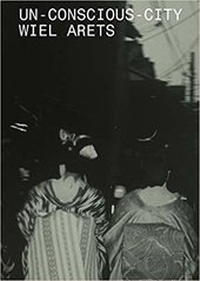
Un-Conscious-City
Published on 22. April 2019
Book
Paperback/Softback
278 pages
978-1-945150-65-4 (ISBN)
Description
No one demands that people move to cities; people tend to do so, on their own. People choose to move to cities for opportunity. Such choices are often made unconsciously, as they are based on rules, traditions, and local communities-or a combination of all three. Un-Conscious-City explores and unravels Dutch architect Wiel Arets' kaleidoscopic viewpoints on the ways the collective, unconscious decisions taken by the world's citizens throughout time-a process that remains invisible to the naked eye-are now working to transform and shift the physical, sensory, and emotional experiences of human beings, as they navigate and live in today's metropolises as well as the countryside. People tend to only belong to one religion, one society, or one club-which completely defines their existence. One day most human beings will live in a globalnomadic-urban-condition; this will soon be amplified to unknown heights. Un-Conscious-City raises questions, predicaments, and ideals regarding the future of our cities, while recognizing their limitations. Wiel Arets-renowned architect, writer, and thinker-identifies this condition as the Un-Conscious-City.
More details
Other editions
Additional editions
Person
Wiel Arets is a Dutch architect, architectural theorist, urbanist, industrial designer and the former Dean of the College of Architecture at the Illinois Institute of Technology in Chicago. Arets studied at the Technical University of Eindhoven, graduating in 1983. He founded Wiel Arets Architects, a multidisciplinary architecture and design studio, today with studios in Amsterdam, Maastricht, Munich, and Zürich. From 1995-2002 he was the Dean of the Berlage Institute in Rotterdam, where he introduced the idea of 'progressive-research' and co-founded the school's architectural journal named HUNCH.