

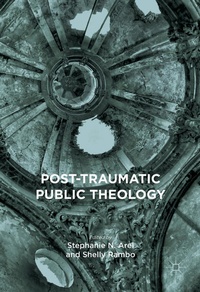
Post-Traumatic Public Theology
Published on 11. November 2016
Book
Hardback
XIV, 312 pages
978-3-319-40659-6 (ISBN)
Description
This book imagines new modes of religious response to trauma, moving beyond simple answers to the 'why' of human suffering toward discussions of profound expressions of faith in the aftermath of trauma. Engaging current realities such as war, race, and climate change, chapters feature specific locations from which theology is done and draw on the resources of Christian faith in order to respond. This volume recognizes religious leaders as first-responders to trauma and offers theological reflections that can stand up in the current realities of violence and its aftermath. The writings provide models for how to integrate the language of faith with the literature of trauma.
Reviews / Votes
"This was an enjoyable book to read. I liked how each author of the essays was able to take their own topic and run with it. There is so much trauma in the world and we often do not know how to deal with it. Hopefully, this book . will help us learn more about dealing with trauma." (Justin Dilliplane, Resolved for Christ, resolvedfc.blogspot.de, January, 2018)More details
Edition
1st ed. 2016
Language
English
Place of publication
Cham
Switzerland
Publishing group
Springer International Publishing
Target group
Professional and scholarly
Illustrations
2 farbige Abbildungen
XIV, 312 p. 2 illus. in color.
Dimensions
Height: 216 mm
Width: 153 mm
Thickness: 23 mm
Weight
538 gr
ISBN-13
978-3-319-40659-6 (9783319406596)
DOI
10.1007/978-3-319-40660-2
Schweitzer Classification
Other editions
Additional editions
Stephanie N. Arel | Shelly Rambo
Post-Traumatic Public Theology
Book
06/2018
Palgrave Macmillan
€181.89
Shipment within 10-15 days
Stephanie N. Arel | Shelly Rambo
Post-Traumatic Public Theology
E-Book
11/2016
Palgrave Macmillan
€181.89
Available for download
Persons
Stephanie N. Arel earned her PhD from Boston University's School of Theology, USA, and is currently a postdoctoral fellow at the Institute for the Bio-cultural Study of Religion at Boston University. She holds a certificate in trauma modalities for clinical treatment from the New York Institute for the Psychotherapies, USA. Her research focuses on trauma, shame, and Christian formation.
Shelly Rambo is Associate Professor of Theology at Boston University School of Theology, USA. She is author of Spirit and Trauma: A Theology of Remaining. Her current book project, Resurrecting Wounds: Living in the Afterlife of Trauma, re-approaches the meaning of resurrection in Christian theology in light of the reality of post-traumatic wounding.
Shelly Rambo is Associate Professor of Theology at Boston University School of Theology, USA. She is author of Spirit and Trauma: A Theology of Remaining. Her current book project, Resurrecting Wounds: Living in the Afterlife of Trauma, re-approaches the meaning of resurrection in Christian theology in light of the reality of post-traumatic wounding.
Content
1. Introduction. Post-Traumatic Theology; Shelly Rambo.- 2. War Bodies: Remembering Bodies in Times of War; Willie James Jennings.- 3. Trauma, Reality, and Eucharist; Bryan P. Stone.- 4. Running the Gauntlet of Humiliation: Disablement in/as the Effect of Trauma; Sharon V. Betcher.- 5. The Trauma of Racism and the Distorted White Imagination; Daniel Hauge.- 6. Serving the Spirit of Goodness:" Spiritual and Theological Responses to Affliction; Wendy Farley.- 7. Elegy for a Lost World; Mark I. Wallace.- 8. The Virtual Body of Christ and the Embrace of Those Traumatized by Cancer; Deanna Thompson.- 9. Attuned to Justice: Rethinking Restorative Justice and Affective Experiences of Trauma; Stephanie N. Arel.- 10. 9/11 Changed Things: The (Post-Traumatic) Religious Studies Classroom; Trina J. Jones.- 11. Looking Through the Bars: Immigration Detention and the Ethics of Mysticism; Susanna Snyder.- 12. Taking Matter Seriously: Material Theopoetics in the Aftermath of Communal Violence; Michelle Walsh.- 13. Traumas of Belonging: Nation, Religion, and Gender in the Partition in India; Susan Abraham .- Afterword.