

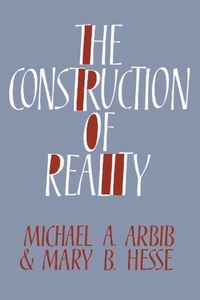
The Construction of Reality
Published on 28. November 1986
Book
Hardback
300 pages
978-0-521-32689-6 (ISBN)
Description
In this book, Michael Arbib, a researcher in artificial intelligence and brain theory, joins forces with Mary Hesse, a philosopher of science, to present an integrated account of how humans 'construct' reality through interaction with the social and physical world around them. The book is a major expansion of the Gifford Lectures delivered by the authors at the University of Edinburgh in the autumn of 1983. The authors reconcile a theory of the individual's construction of reality as a network of schemas 'in the head' with an account of the social construction of language, science, ideology and religion to provide an integrated schema-theoretic view of human knowledge. The authors still find scope for lively debate, particularly in their discussion of free will and of the reality of God. The book integrates an accessible exposition of background information with a cumulative marshalling of evidence to address fundamental questions concerning human action in the world and the nature of ultimate reality.
Reviews / Votes
"This is a book which represents a genuine attempt to develop a dealogue between world views which have too often engaged in monologues of criticism of each other" Carolyn G. Hartz, The Journal of Speculative PhilosophyMore details
Language
English
Place of publication
Cambridge
United Kingdom
Target group
Professional and scholarly
Illustrations
6 Line drawings, unspecified
Dimensions
Height: 235 mm
Width: 157 mm
Thickness: 22 mm
Weight
640 gr
ISBN-13
978-0-521-32689-6 (9780521326896)
Copyright in bibliographic data and cover images is held by Nielsen Book Services Limited or by the publishers or by their respective licensors: all rights reserved.
Schweitzer Classification
Content
Preface; 1. Posing the problem; 2. The intelligence of the artificial; 3. Schema theory; 4. Relating mind and brain; 5. Freedom; 6. Freud on psychology and religion; 7. Schemas: from the individual to the social; 8. Language, metaphor, and a new epistemology; 9. Interpretation and reality; 10. Religion as social schemas; 11. The great schemas; 12. Secular schemas; References; Author index; Subject index.