


Turkey, the Arab Spring and Beyond
1st Edition
Published on 24. August 2016
Book
Hardback
118 pages
978-1-138-64306-2 (ISBN)
Description
It has been almost five years now since a new collective consciousness of Arab masses transformed the political landscape of the Middle East and North Africa. In just a short period of time, the people of the Arab world protested against their rulers, putting an end to long-time authoritarian leaders in Tunisia, Egypt, Libya, and Yemen, while bringing others to the eve of collapse. Although the uprisings were initially successful, the people's strong will to see honour, dignity, rights, and good governance realized within their respective countries was fiercely combated by the ruling strata of these states and their strategies to ensure authoritarian survival.
The changing political landscape and the dynamic processes of the Arab Spring have caught the attention of academics as well. There is a blossoming literature being written on the Arab Spring focusing on social protests, authoritarian resilience and learning, opposition strategies, the rise of non-state actors, state failure, foreign policy, and new the geopolitical landscape. Therefore, with the desire to contribute to this literature, this edited volume aims to address the changing political atmosphere and the challenges of the emerging geopolitical order, particularly focusing on Turkish foreign policy and its response to the Arab Spring. This book was originally published as a special issue of the Journal of Balkan and Near Eastern Studies.
The changing political landscape and the dynamic processes of the Arab Spring have caught the attention of academics as well. There is a blossoming literature being written on the Arab Spring focusing on social protests, authoritarian resilience and learning, opposition strategies, the rise of non-state actors, state failure, foreign policy, and new the geopolitical landscape. Therefore, with the desire to contribute to this literature, this edited volume aims to address the changing political atmosphere and the challenges of the emerging geopolitical order, particularly focusing on Turkish foreign policy and its response to the Arab Spring. This book was originally published as a special issue of the Journal of Balkan and Near Eastern Studies.
More details
Language
English
Place of publication
London
United Kingdom
Publishing group
Taylor & Francis Ltd
Target group
College/higher education
Dimensions
Height: 246 mm
Width: 174 mm
Weight
362 gr
ISBN-13
978-1-138-64306-2 (9781138643062)
Copyright in bibliographic data and cover images is held by Nielsen Book Services Limited or by the publishers or by their respective licensors: all rights reserved.
Schweitzer Classification
Other editions
Additional editions
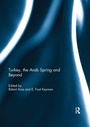
Bulent Aras | Fuat Keyman
Turkey, the Arab Spring and Beyond
Book
05/2019
1st Edition
Routledge
€47.20
Shipment within 15-20 days
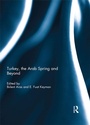
Bulent Aras | Fuat Keyman
Turkey, the Arab Spring and Beyond
E-Book
02/2018
Routledge
€41.99
Available for download
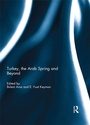
Bulent Aras | Fuat Keyman
Turkey, the Arab Spring and Beyond
E-Book
02/2018
1st Edition
Routledge
€41.99
Available for download
Persons
Buelent Aras is Professor of International Relations, Sabanci University and a global fellow, Wilson Center. He was the head of the Diplomatic Academy and Center for Strategic Research at Turkey's Ministry of Foreign Affairs. His recent publications include War in the Gardens of Babylon: Middle East after the Iraqi War (2004), Turkey and the Greater Middle East (2004) and September 11 and World Politics: American Hegemony Reconsidered (2004).
E. Fuat Keyman is Director of Istanbul Policy Center and Professor of International Relations at Sabanci University. Recent publications include Hegemony through Transformations; Democracy, Identity, and Foreign Policy in Turkey (2014), and Symbiotic Antagonism: Competing Nationalisms in Turkey (With Ayse Kadioglu; 2011).
E. Fuat Keyman is Director of Istanbul Policy Center and Professor of International Relations at Sabanci University. Recent publications include Hegemony through Transformations; Democracy, Identity, and Foreign Policy in Turkey (2014), and Symbiotic Antagonism: Competing Nationalisms in Turkey (With Ayse Kadioglu; 2011).
Content
1. Turkey, the Arab Spring and Beyond 2. Mediation as a Foreign Policy Tool in the Arab Spring: Turkey, Qatar and Iran 3. Reform and Capacity Building in the Turkish Foreign Ministry: Bridging the Gap between Ideas and Institutions 4. Practical Geopolitical Reasoning in the Turkish and Qatari Foreign Policy on the Arab Spring 5. The Impact of the Arab Spring on the Gulf Cooperation Council 6. Turkey and Iran: The Two Modes of Engagement in the Middle East 7. Turkish Foreign Policy towards the Arab Spring: Between Western Orientation and Regional Disorder