


Calling Memory Into Place
Published on 17. September 2020
Book
Hardback
264 pages
978-1-9788-0783-9 (ISBN)
Description
How can memory be mobilized for social justice? How can images and monuments counter public forgetting? And how can inherited family and cultural traumas be channeled in productive ways?
In this deeply personal work, acclaimed art historian Dora Apel examines how memorials, photographs, artworks, and autobiographical stories can be used to fuel a process of "unforgetting"-reinterpreting the past by recalling the events, people, perspectives, and feelings that get excluded from conventional histories. The ten essays in Calling Memory into Place feature explorations of the controversy over a painting of Emmett Till in the Whitney Biennial and the debates about a national lynching memorial in Montgomery, Alabama. They also include personal accounts of Apel's return to the Polish town where her Holocaust survivor parents grew up, as well as the ways she found strength in her inherited trauma while enduring treatment for breast cancer.
These essays shift between the scholarly, the personal, and the visual as different modes of knowing, and explore the intersections between racism, antisemitism, and sexism, while suggesting how awareness of historical trauma is deeply inscribed on the body. By investigating the relations among place, memory, and identity, this study shines a light on the dynamic nature of memory as it crosses geography and generations.
In this deeply personal work, acclaimed art historian Dora Apel examines how memorials, photographs, artworks, and autobiographical stories can be used to fuel a process of "unforgetting"-reinterpreting the past by recalling the events, people, perspectives, and feelings that get excluded from conventional histories. The ten essays in Calling Memory into Place feature explorations of the controversy over a painting of Emmett Till in the Whitney Biennial and the debates about a national lynching memorial in Montgomery, Alabama. They also include personal accounts of Apel's return to the Polish town where her Holocaust survivor parents grew up, as well as the ways she found strength in her inherited trauma while enduring treatment for breast cancer.
These essays shift between the scholarly, the personal, and the visual as different modes of knowing, and explore the intersections between racism, antisemitism, and sexism, while suggesting how awareness of historical trauma is deeply inscribed on the body. By investigating the relations among place, memory, and identity, this study shines a light on the dynamic nature of memory as it crosses geography and generations.
Reviews / Votes
"Apel brings it all to bear in this extraordinary book."- PopMatters"In this deeply personal and thoughtful book, Dora Apel explores what it means to recall terrible events and what is at stake in forgetting them. She shows us that artworks, memorials and monuments, however fixed they may be in their form, are also malleable in their meaning when they are mobilized by individuals, communities and governments. Whether she is writing about recent attempts to reckon with America's legacy of racial violence, the dilemmas that arise from efforts to memorialize the Holocaust, or her own struggle with cancer, Apel's approach is always lucid, empathic and moving."- Coco Fusco, Cooper Union School of Arts
"An inherently fascinating, thoughtful and thought-provoking series of insightfully informative essays on the role of memory in processing personal, social, cultural and political histories, Calling Memory into Place is an impressive and original work that is nicely illustrated throughout in full color." - Midwest Book Review
"The Best Books of 2020: Non-Fiction"- PopMatters, The Best Books of 2020: Nonfiction
The Library Cafe interview with Dora Apel- The Library Cafe
"Calling Memory into Place is written out of a deep conviction in the emancipatory and reparative potentials of memory. Building on the trauma and the resilience inherited from her mother's survival of the Holocaust, Dora Apel powerfully explores how memorials, visual artworks, and personal narratives of illness and recovery can mobilize us in the struggle for social justice."- Marianne Hirsch, co-author of School Photos in Liquid Time: Reframing Difference
More details
Language
English
Place of publication
New Brunswick NJ
United States
Product notice
Laminated cover
Illustrations
13 b-w illustrations, 62 color photographs
Dimensions
Height: 226 mm
Width: 155 mm
Thickness: 18 mm
Weight
431 gr
ISBN-13
978-1-9788-0783-9 (9781978807839)
Copyright in bibliographic data and cover images is held by Nielsen Book Services Limited or by the publishers or by their respective licensors: all rights reserved.
Schweitzer Classification
Other editions
Additional editions
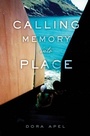
Apel Dora Apel
Calling Memory into Place
E-Book
09/2020
1st Edition
Rutgers University Press
€45.49
Available for download
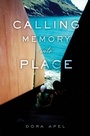
Apel Dora Apel
Calling Memory into Place
E-Book
09/2020
1st Edition
Rutgers University Press
€45.49
Available for download
Person
DORA APEL is the W. Hawkins Ferry Endowed Chair Professor Emerita in Modern and Contemporary Art History at Wayne State University in Detroit. Her many books include Imagery of Lynching: Black Men, White Women, and the Mob and Memory Effects: The Holocaust and the Art of Secondary Witnessing (both Rutgers University Press).
Content
Contents
Acknowledgments
Introduction
Part 1: Passages and Streets
1. A Memorial for Walter Benjamin
2. "Hands Up, Don't Shoot"
Part II: Memorials and Museums
3. Why We Need a National Lynching Memorial
4. "Let the World See What I Have Seen"
Part III: Hometowns and Homelands
5. Seeing What Can No Longer Be Seen
6. Borders and Walls
Part IV: Hospitals and Cemeteries
7. Sprung from the Head
8. Parallel Universes
Part V: Body and Mind
9. Reclaiming the Self
10. The Care of Others
Conclusion
Notes
Bibliography
Index
Acknowledgments
Introduction
Part 1: Passages and Streets
1. A Memorial for Walter Benjamin
2. "Hands Up, Don't Shoot"
Part II: Memorials and Museums
3. Why We Need a National Lynching Memorial
4. "Let the World See What I Have Seen"
Part III: Hometowns and Homelands
5. Seeing What Can No Longer Be Seen
6. Borders and Walls
Part IV: Hospitals and Cemeteries
7. Sprung from the Head
8. Parallel Universes
Part V: Body and Mind
9. Reclaiming the Self
10. The Care of Others
Conclusion
Notes
Bibliography
Index