

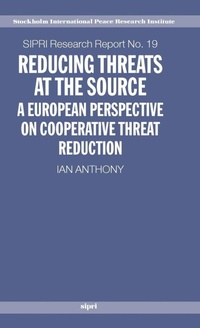
Reducing Threats at the Source
A European Perspective on Cooperative Threat Reduction
Published on 6. May 2004
Book
Hardback
136 pages
978-0-19-927177-1 (ISBN)
Description
In 2002 the Group of Eight industrialized nations - in which Canada, France, Germany, Italy, Japan, Russia, the UK, the USA and representatives of the European Union participate - formed the Global Partnership Against the Spread of Weapons and Materials of Mass Destruction. The G8 pledged to raise up to $20 billion to carry out the Global Partnership projects over a 10-year period, initially in Russia but with the intention to expand the scope of projects to include other countries. These projects will help to specify the quantities and locations of weapons and materials and ensure that stocks are held under safe and secure custody to prevent diversion to unauthorized users or inappropriate uses. If the weapons or materials are not required, this practical assistance can also help to eliminate the surplus.
The G8 initiative is only one of a number of activities sharing the same basic features: tailor-made measures jointly implemented on the territory of one state by a coalition including states, international organizations, local and regional governments, non-governmental organizations and the private sector.
This report reviews the current cooperative threat reduction activities with a particular focus on projects and approaches engaging European partners. It examines the organizing principles for cooperative threat reduction and the lessons learned from past project implementation. Finally, it examines how European countries might organize their cooperative threat reduction activities to increase their coherence and effectiveness.
The G8 initiative is only one of a number of activities sharing the same basic features: tailor-made measures jointly implemented on the territory of one state by a coalition including states, international organizations, local and regional governments, non-governmental organizations and the private sector.
This report reviews the current cooperative threat reduction activities with a particular focus on projects and approaches engaging European partners. It examines the organizing principles for cooperative threat reduction and the lessons learned from past project implementation. Finally, it examines how European countries might organize their cooperative threat reduction activities to increase their coherence and effectiveness.
More details
Series
Language
English
Place of publication
Oxford
United Kingdom
Target group
Professional and scholarly
Dimensions
Height: 222 mm
Width: 145 mm
Thickness: 11 mm
Weight
307 gr
ISBN-13
978-0-19-927177-1 (9780199271771)
Copyright in bibliographic data and cover images is held by Nielsen Book Services Limited or by the publishers or by their respective licensors: all rights reserved.
Schweitzer Classification
Other editions
Additional editions
Book
04/2004
Oxford University Press
€51.98
Shipment within 15-20 days
Person
Content
1. Introduction ; 2. The Framework for Cooperative Threat Reduction ; 3. Cooperative Threat Reduction Project Management and Implementation ; 4. Conclusions