


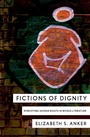
Fictions of Dignity
Embodying Human Rights in World Literature
Published on 15. January 2017
Book
Paperback/Softback
272 pages
978-1-5017-0558-8 (ISBN)
Description
Over the past fifty years, debates about human rights have assumed an increasingly prominent place in postcolonial literature and theory. Writers from Salman Rushdie to Nawal El Saadawi have used the novel to explore both the possibilities and challenges of enacting and protecting human rights, particularly in the Global South. In Fictions of Dignity, Elizabeth S. Anker shows how the dual enabling fictions of human dignity and bodily integrity contribute to an anxiety about the body that helps to explain many of the contemporary and historical failures of human rights, revealing why and how lives are excluded from human rights protections along the lines of race, gender, class, disability, and species membership. In the process, Anker examines the vital work performed by a particular kind of narrative imagination in fostering respect for human rights. Drawing on phenomenology, Anker suggests how an embodied politics of reading might restore a vital fleshiness to the overly abstract, decorporealized subject of liberal rights.
Each of the novels Anker examines approaches human rights in terms of limits and paradoxes. Rushdie's Midnight's Children addresses the obstacles to incorporating rights into a formerly colonized nation's legal culture. El Saadawi's Woman at Point Zero takes up controversies over women's freedoms in Islamic society. In Disgrace, J. M. Coetzee considers the disappointments of post-apartheid reconciliation in South Africa. And in The God of Small Things, Arundhati Roy confronts an array of human rights abuses widespread in contemporary India. Each of these literary case studies further demonstrates the relevance of embodiment to both comprehending and redressing the failures of human rights, even while those narratives refuse simplistic ideals or solutions.
Each of the novels Anker examines approaches human rights in terms of limits and paradoxes. Rushdie's Midnight's Children addresses the obstacles to incorporating rights into a formerly colonized nation's legal culture. El Saadawi's Woman at Point Zero takes up controversies over women's freedoms in Islamic society. In Disgrace, J. M. Coetzee considers the disappointments of post-apartheid reconciliation in South Africa. And in The God of Small Things, Arundhati Roy confronts an array of human rights abuses widespread in contemporary India. Each of these literary case studies further demonstrates the relevance of embodiment to both comprehending and redressing the failures of human rights, even while those narratives refuse simplistic ideals or solutions.
Reviews / Votes
Fictions of Dignity is a distinctive contribution to the growing body of scholarship concerned with the relationship between human rights and novels.- Emily Hogg (New Formations) In her analysis of 'the vocabulary of human rights,' Anker... interrogates the liberal/Enlightenment tradition that values the intellect over the body. She regards this preference, one that stretches from Plato to Descartes, as dismissive of corporeal and indigenous factors. Hence, imperialism emphasizes the 'barbarism' of the global south, patriarchy stresses the weakness of women's bodies to justify their suppression, society categorizes animals as unconscious 'carnal being[s],' and large political bodies ignore smaller interests in implementing justice. Anker discusses four works that engage these stances.... [Readers] will be intrigued and challenged by Anker's critique. Summing Up: Highly recommended.
(Choice) The passion and commitment Anker shows in taking liberalism to task for its complicity in perpetrating the very atrocities its own human rights programmes seek to end is a vital one.
(Interventions: Intl Jrnl of Postcol. Studies)
More details
Language
English
Place of publication
Ithaca
United States
Target group
Professional and scholarly
Product notice
Paperback (trade)
Dimensions
Height: 235 mm
Width: 155 mm
Thickness: 16 mm
Weight
454 gr
ISBN-13
978-1-5017-0558-8 (9781501705588)
Copyright in bibliographic data and cover images is held by Nielsen Book Services Limited or by the publishers or by their respective licensors: all rights reserved.
Schweitzer Classification
Other editions
Additional editions
E-Book
11/2012
Cornell University Press
€21.49
Available for download
Person
Elizabeth S. Anker is Associate Professor of English at Cornell University.
Content
Introduction: Constructs by Which We Live1. Bodily Integrity and Its Exclusions2. Embodying Human Rights: Toward a Phenomenology of Social Justice3. Constituting the Liberal Subject of Rights: Salman Rushdie's Midnight's Children4. Women's Rights and the Lure of Self-Determination in Nawal El Saadawi's Woman at Point Zero5. J. M. Coetzee's Disgrace: The Rights of Desire and the Embodied Lives of Animals6. Arundhati Roy's "Return to the Things Themselves": Phenomenology and the Challenge of JusticeCoda: Small Places, Close to HomeNotes
Works Cited
Index
Works Cited
Index