

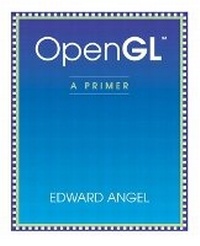
OpenGL
A Primer
Published on 18. July 2001
Book
Paperback/Softback
235 pages
978-0-201-74186-5 (ISBN)
Description
Ed Angel provides an introduction to basic OpenGL 1.2 commands in a non-mathematical manner. This primer offers coverage of a subset of the OpenGL Application Programmers Interface (API). Case studies apply the commands and examples introduced in each chapter, each of which also include a discussion of common pitfalls. The primer is intended both as a companion to a book introducing computer graphics principles, and as a stand-alone beginners' guide to OpenGL for programmers with a background in computer graphics. Ten chapters cover: an introduction; two-dimensional programs; interaction and animation; three-dimensional programs; transformations; lights and materials; bits and pixels; texture mapping; curves and surfaces; and some advanced features of OpenGL.
More details
Language
English
Place of publication
United States
Publishing group
Pearson Education (US)
Target group
College/higher education
Dimensions
Height: 235 mm
Width: 190 mm
Thickness: 11 mm
Weight
410 gr
ISBN-13
978-0-201-74186-5 (9780201741865)
Copyright in bibliographic data and cover images is held by Nielsen Book Services Limited or by the publishers or by their respective licensors: all rights reserved.
Schweitzer Classification
Other editions
New editions
Book
05/2004
2nd Edition
Pearson
€34.65
Article exhausted; check for reprint
Content
Preface.
1. Getting Started.
The OpenGL API.
Three Views of OpenGL.
OpenGL Functions.
OpenGL Versions of Extensions.
Languages.
Programming Conventions.
Compiling.
Sources.
Who Should Use this Primer.
Outline.
2. Two-Dimensional Programming in OpenGL.
A Simple Program
GLUT.
Event Loops and Callback Functions.
Drawing a Rectangle.
Changing the GLUT Defaults.
Color in OpenGL.
Coordinate System Differences Between BLUT and OpenGL.
Two-Dimensional Viewing.
Coordinate Systems and Transformations.
Second Version of a Simple Program.
Primitives and Attributes.
Polygon Types.
Color Interpolation.
Text.
Inquires and Errors.
Saving the State.
The Viewport.
3. Interaction and Animation.
The Reshape Callback.
The Idle Callback.
A Rotating Square.
Double Buffering.
Using the Keyboard.
Using the Mouse Callback.
Mouse Motion.
Menus.
The NULL Callback.
Subwindows and Multiple Windows.
Example: single_double.c.
Display Lists.
Picking and Selection Mode.
4. Basic Three-Dimensional Programming.
Cameras and Objects.
Orthographic Projects in OpenGL.
Viewing a Cube.
Locating the Camera.
Building Objects.
Hidden-Surface Removal.
GLU and GLUT Objects.
Perspective Projects.
5. Transformations.
Line-Preserving Transformations.
Homogeneous Coordinates.
The Model-View and Projection Transformations.
Translation.
Rotation.
Scaling.
Setting Matrices Directly.
Transformations and Coordinate Systems
Modeling with Transformations.
6. Lights and Materials.
Light/Material Interactions.
The Phong Model.
OpenGL Lighting.
Specifying a Light Source.
Specifying a Material
Controlling the Lighting Calculation.
Smooth Shading.
Working with Normals.
Transparency.
7. Images.
Pixels and Bitmaps.
Drawing Modes.
Reading and Writing Pixels.
Selecting Buffers.
Pixel Store Modes.
Displaying a PPM Image.
Using Luminance.
Pixel Mapping.
Pixel Zoom.
Imaging Processing in OpenGL.
8. Texture Mapping.
Texels and Textures?
Constructing a Texture Map.
Texture Coordinates.
Texture Parameters.
A Rotating Cube with Texture.
Applying Textures to Surfaces.
Borders and Sizing.
Mipmaps.
Automatic Texture Coordinate Generation.
Texture Objects.
Texture Maps for Image Manipulation.
9. Curves and Surfaces.
Parametric Curves.
Parametric Surfaces.
Bezier Curves and Surfaces.
One-Dimensional OpenGL Evaluators.
Two-Dimensional Evaluators.
An Interactive Example.
Other Types of Cures.
The Utah Teapot.
Normals and Shading.
10. Putting It Together and Moving On.
A Demo Program.
Other OpenGL Features.
Buffers.
Writing Portable, Efficient, Robust Code.
Index.
1. Getting Started.
The OpenGL API.
Three Views of OpenGL.
OpenGL Functions.
OpenGL Versions of Extensions.
Languages.
Programming Conventions.
Compiling.
Sources.
Who Should Use this Primer.
Outline.
2. Two-Dimensional Programming in OpenGL.
A Simple Program
GLUT.
Event Loops and Callback Functions.
Drawing a Rectangle.
Changing the GLUT Defaults.
Color in OpenGL.
Coordinate System Differences Between BLUT and OpenGL.
Two-Dimensional Viewing.
Coordinate Systems and Transformations.
Second Version of a Simple Program.
Primitives and Attributes.
Polygon Types.
Color Interpolation.
Text.
Inquires and Errors.
Saving the State.
The Viewport.
3. Interaction and Animation.
The Reshape Callback.
The Idle Callback.
A Rotating Square.
Double Buffering.
Using the Keyboard.
Using the Mouse Callback.
Mouse Motion.
Menus.
The NULL Callback.
Subwindows and Multiple Windows.
Example: single_double.c.
Display Lists.
Picking and Selection Mode.
4. Basic Three-Dimensional Programming.
Cameras and Objects.
Orthographic Projects in OpenGL.
Viewing a Cube.
Locating the Camera.
Building Objects.
Hidden-Surface Removal.
GLU and GLUT Objects.
Perspective Projects.
5. Transformations.
Line-Preserving Transformations.
Homogeneous Coordinates.
The Model-View and Projection Transformations.
Translation.
Rotation.
Scaling.
Setting Matrices Directly.
Transformations and Coordinate Systems
Modeling with Transformations.
6. Lights and Materials.
Light/Material Interactions.
The Phong Model.
OpenGL Lighting.
Specifying a Light Source.
Specifying a Material
Controlling the Lighting Calculation.
Smooth Shading.
Working with Normals.
Transparency.
7. Images.
Pixels and Bitmaps.
Drawing Modes.
Reading and Writing Pixels.
Selecting Buffers.
Pixel Store Modes.
Displaying a PPM Image.
Using Luminance.
Pixel Mapping.
Pixel Zoom.
Imaging Processing in OpenGL.
8. Texture Mapping.
Texels and Textures?
Constructing a Texture Map.
Texture Coordinates.
Texture Parameters.
A Rotating Cube with Texture.
Applying Textures to Surfaces.
Borders and Sizing.
Mipmaps.
Automatic Texture Coordinate Generation.
Texture Objects.
Texture Maps for Image Manipulation.
9. Curves and Surfaces.
Parametric Curves.
Parametric Surfaces.
Bezier Curves and Surfaces.
One-Dimensional OpenGL Evaluators.
Two-Dimensional Evaluators.
An Interactive Example.
Other Types of Cures.
The Utah Teapot.
Normals and Shading.
10. Putting It Together and Moving On.
A Demo Program.
Other OpenGL Features.
Buffers.
Writing Portable, Efficient, Robust Code.
Index.