

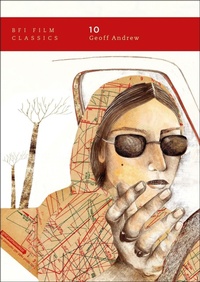
10
2nd Edition
Published on 25. March 2021
Book
Paperback/Softback
120 pages
978-1-83902-261-6 (ISBN)
Description
The Iranian director Abbas Kiarostami burst onto the international film scene in the early 1990s and was widely regarded as one of the most distinctive and talented modern-day directors. His major features - including Through the Olive Trees (1994), Taste of Cherry (1997) and The Wind Will Carry Us (1999) - are relatively modest in scale, contemplative and humanist in tone. In 2002, with 10, Kiarostami broke new ground, fixing one or two digital cameras on a car's dashboard to film ten conversations between the driver (Mania Akbari) and her various passengers. The results are astonishing: though formally rigorous, even austere, and documentary-like in its style, 10 succeeds both as emotionally affecting human drama and as a critical analysis of everyday life in modern Tehran.
In his study of the film, Geoff Andrew considers 10 within the context of Kiarostami's career, of Iranian cinema's renaissance, and of international film culture. Drawing on a number of detailed interviews he conducted with both Kiarostami and his lead actress, Andrew sheds light on the unusual methods used in making the film, on its political relevance, and on its remarkably subtle aesthetic. He also argues that 10 was an important turning-point in the career of a film-maker who was not only one of contemporary cinema's most accomplished practitioners but also one of its most radical experimentalists.
In his study of the film, Geoff Andrew considers 10 within the context of Kiarostami's career, of Iranian cinema's renaissance, and of international film culture. Drawing on a number of detailed interviews he conducted with both Kiarostami and his lead actress, Andrew sheds light on the unusual methods used in making the film, on its political relevance, and on its remarkably subtle aesthetic. He also argues that 10 was an important turning-point in the career of a film-maker who was not only one of contemporary cinema's most accomplished practitioners but also one of its most radical experimentalists.
More details
Series
Edition
2nd edition
Language
English
Place of publication
United Kingdom
Publishing group
Bloomsbury Publishing PLC
Target group
Professional and scholarly
Product notice
Paperback (trade)
Unsewn / adhesive bound
Illustrations
60 colour illus
Dimensions
Height: 186 mm
Width: 131 mm
Thickness: 10 mm
Weight
192 gr
ISBN-13
978-1-83902-261-6 (9781839022616)
Copyright in bibliographic data and cover images is held by Nielsen Book Services Limited or by the publishers or by their respective licensors: all rights reserved.
Schweitzer Classification
Other editions
Person
Geoff Andrew is a writer and lecturer on film. He is a programmer for BFI Southbank and the London Film Festival, a regular contributor to Sight & Sound magazine, and was for many years Film Editor of Time Out and Consultant Editor of the Time Out Film Guide. In addition to editing several books and contributing to numerous anthologies, Geoff has written, among others, a BFI Modern Classics volume on Kieslowski's Three Colours Trilogy, a study of the films of Nicholas Ray, and two critical dictionaries, The Film Handbook and Film Directors A-Z - The Art of the World's Greatest Film-makers. In 2009 the French government made him a Chevalier de l'Ordre des Arts et des Lettres.
Content
Acknowledgments
1. Introduction: Something Small
2. World Cinema at the Turn of the Millennium
3. Iranian Cinema: A Special Case
4. Abbas Kiarostami: A Very Special Case
5. Kiarostami and Digital: ABC Africa
6. 10
7. A Lesson for Others
8. A Lesson for Kiarostami
9. Poetry and Motion
10. Conclusion: The Start of Something Big?
Notes
Credits
1. Introduction: Something Small
2. World Cinema at the Turn of the Millennium
3. Iranian Cinema: A Special Case
4. Abbas Kiarostami: A Very Special Case
5. Kiarostami and Digital: ABC Africa
6. 10
7. A Lesson for Others
8. A Lesson for Kiarostami
9. Poetry and Motion
10. Conclusion: The Start of Something Big?
Notes
Credits