

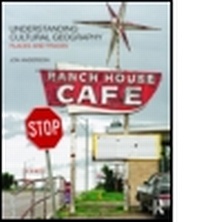
Understanding Cultural Geography
Places and Traces
1st Edition
Published on 24. September 2009
Book
Paperback/Softback
240 pages
978-0-415-43055-5 (ISBN)
Description
This new and comprehensive book offers a holistic introduction to cultural geography. It integrates the broad range of theories and practices of the discipline by arguing that the essential focus of cultural geography is place. The book builds an accessible and engaging configuration of this important concept through arguing that place should be understood as an ongoing composition of traces.
The book presents specific chapters outlining the history of cultural geography, before and beyond representation, as well as the methods and techniques of doing cultural geography. It investigates the places and traces of corporate capitalism, nationalism, ethnicity, youth culture and the place of the body. Throughout these chapters case study examples will be used to illustrate how these places are taken and made by particular cultures, examples include the Freedom Tower in New York City, the Berlin Wall, the Gaza Strip, Banksy graffiti, and anti-capitalist protest movements. The book discusses the role of power in cultural place-making, as well as the ethical dimensions of doing cultural geography.
Understanding Cultural Geography: Places and Traces offers a broad-based overview of cultural geography, ideal for students being introduced to the discipline through either undergraduate or postgraduate degree courses. The book outlines how the theoretical ideas, empirical foci and methodological techniques of cultural geography illuminate and make sense of the places we inhabit and contribute to. This is a timely synthesis that aims to incorporate a vast knowledge foundation and by doing so it will also prove invaluable for lecturers and academics alike.
The book presents specific chapters outlining the history of cultural geography, before and beyond representation, as well as the methods and techniques of doing cultural geography. It investigates the places and traces of corporate capitalism, nationalism, ethnicity, youth culture and the place of the body. Throughout these chapters case study examples will be used to illustrate how these places are taken and made by particular cultures, examples include the Freedom Tower in New York City, the Berlin Wall, the Gaza Strip, Banksy graffiti, and anti-capitalist protest movements. The book discusses the role of power in cultural place-making, as well as the ethical dimensions of doing cultural geography.
Understanding Cultural Geography: Places and Traces offers a broad-based overview of cultural geography, ideal for students being introduced to the discipline through either undergraduate or postgraduate degree courses. The book outlines how the theoretical ideas, empirical foci and methodological techniques of cultural geography illuminate and make sense of the places we inhabit and contribute to. This is a timely synthesis that aims to incorporate a vast knowledge foundation and by doing so it will also prove invaluable for lecturers and academics alike.
More details
Language
English
Place of publication
London
United Kingdom
Publishing group
Taylor & Francis Ltd
Target group
College/higher education
Product notice
Paperback (UK-B)
Illustrations
158 s/w Abbildungen, 5 s/w Tabellen, 158 s/w Photographien bzw. Rasterbilder
158 Halftones, black and white; 5 Tables, black and white; 158 Illustrations, black and white
Dimensions
Height: 248 mm
Width: 189 mm
Weight
544 gr
ISBN-13
978-0-415-43055-5 (9780415430555)
Copyright in bibliographic data and cover images is held by Nielsen Book Services Limited or by the publishers or by their respective licensors: all rights reserved.
Schweitzer Classification
Other editions
New editions
Book
03/2015
2nd Edition
Routledge
€88.19
Article exhausted; check for reprint
Additional editions
Book
09/2009
1st Edition
Routledge
€163.68
Article exhausted; check for reprint
Person
Jon Anderson is a Lecturer in Human Geography at the School of City & Regional Planning, Cardiff University. His research interests focus on the relations between identity, culture, and place, in particular the actions, practices and politics that such relations produce.
Content
1. Introduction 2. The History of Cultural Geography 3. Branching Out: Twenty-First Century Developments in the Family Tree of Cultural Geography 4. Knowing (Your) Place 5. Taking and Making Place: the Stuff of Power 6. Counter Cultures: Global, Corporate, and Anti-Capitalisms 7. The Place of Nature 8. The Place of Ethnicity 9. Senses of Place: Scales and Beliefs 10. Making and Marking New Places: The Cultural Geographies of Youth 11. (B)ordering the Body 12. Swimming in Context: Doing Cultural Geography in Practice 13. A Culturally Geographical Approach to Place