

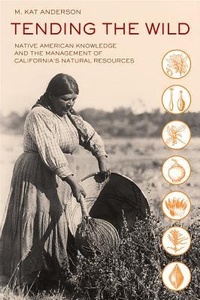
Tending the Wild
Native American Knowledge and the Management of California's Natural Resources
1st Edition
Will be published approx. on 10. October 2013
Book
Paperback/Softback
558 pages
978-0-520-28043-4 (ISBN)
Description
John Muir was an early proponent of a view we still hold today - that much of California was pristine, untouched wilderness before the arrival of Europeans. But as this groundbreaking book demonstrates, what Muir was really seeing when he admired the grand vistas of Yosemite and the gold and purple flowers carpeting the Central Valley were the fertile gardens of the Sierra Miwok and Valley Yokuts Indians, modified and made productive by centuries of harvesting, tilling, sowing, pruning, and burning. Marvelously detailed and beautifully written, Tending the Wild is an unparalleled examination of Native American knowledge and uses of California's natural resources that reshapes our understanding of native cultures and shows how we might begin to use their knowledge in our own conservation efforts. M. Kat Anderson presents a wealth of information on native land management practices gleaned in part from interviews and correspondence with Native Americans who recall what their grandparents told them about how and when areas were burned, which plants were eaten and which were used for basketry, and how plants were tended.
The complex picture that emerges from this and other historical source material dispels the hunter-gatherer stereotype long perpetuated in anthropological and historical literature. We come to see California's indigenous people as active agents of environmental change and stewardship. Tending the Wild persuasively argues that this traditional ecological knowledge is essential if we are to successfully meet the challenge of living sustainably.
The complex picture that emerges from this and other historical source material dispels the hunter-gatherer stereotype long perpetuated in anthropological and historical literature. We come to see California's indigenous people as active agents of environmental change and stewardship. Tending the Wild persuasively argues that this traditional ecological knowledge is essential if we are to successfully meet the challenge of living sustainably.
More details
Edition
First Edition
Language
English
Place of publication
Berkerley
United States
Product notice
Paperback (trade)
Illustrations
31 b-w photographs, 13 line illustrations, 3 maps, 12 tables
Dimensions
Height: 228 mm
Width: 151 mm
Thickness: 45 mm
Weight
842 gr
ISBN-13
978-0-520-28043-4 (9780520280434)
Copyright in bibliographic data and cover images is held by Nielsen Book Services Limited or by the publishers or by their respective licensors: all rights reserved.
Schweitzer Classification
Person
M. Kat Anderson is a Lecturer in the Department of Plant Sciences at the University of California, Davis; Associate Ecologist at the Agricultural Experimental Station at the University of California, Davis; and a faculty member in the Graduate Group in Ecology at the University of California, Davis. She is coeditor, with T. C. Blackburn, of Before the Wilderness: Native Californians as Environmental Managers (1993) and coeditor, with Henry T. Lewis, of Forgotten Fires: Native Americans and the Transient Wilderness by Omer C. Stewart (2002).
Content
List of Illustrations
List of Tables
Preface
Note on Languages, Territories, and Names
of California Indian Tribes
Introduction
PART I. CALIFORNIA AT CONTACT
1 Wildlife, Plants, and People
2 Gathering, Hunting, and Fishing
3 The Collision of Worlds
PART II. INDIGENOUS LAND MANAGEMENT
AND ITS ECOLOGICAL BASIS
4 Methods of Caring for the Land
5 Landscapes of Stewardship
6 Basketry: Cultivating Forbs, Sedges, Grasses, and Tules
7 From Arrows to Weirs: Cultivating Shrubs and Trees
8 California's Cornucopia: A Calculated Abundance
9 Plant Foods Aboveground: Seeds, Grains, Leaves,
and Fruits
10 Plant Foods Belowground: Bulbs, Corms, Rhizomes,
Taproots, and Tubers
PART III. REKINDLING THE OLD WAYS
11 Contemporary California Indian Harvesting and
Management Practices
12 Restoring Landscapes with Native Knowledge
Coda: Indigenous Wisdom in the Modern World
Notes
Bibliography
Index
List of Tables
Preface
Note on Languages, Territories, and Names
of California Indian Tribes
Introduction
PART I. CALIFORNIA AT CONTACT
1 Wildlife, Plants, and People
2 Gathering, Hunting, and Fishing
3 The Collision of Worlds
PART II. INDIGENOUS LAND MANAGEMENT
AND ITS ECOLOGICAL BASIS
4 Methods of Caring for the Land
5 Landscapes of Stewardship
6 Basketry: Cultivating Forbs, Sedges, Grasses, and Tules
7 From Arrows to Weirs: Cultivating Shrubs and Trees
8 California's Cornucopia: A Calculated Abundance
9 Plant Foods Aboveground: Seeds, Grains, Leaves,
and Fruits
10 Plant Foods Belowground: Bulbs, Corms, Rhizomes,
Taproots, and Tubers
PART III. REKINDLING THE OLD WAYS
11 Contemporary California Indian Harvesting and
Management Practices
12 Restoring Landscapes with Native Knowledge
Coda: Indigenous Wisdom in the Modern World
Notes
Bibliography
Index