

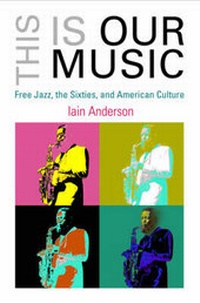
This is Our Music
Free Jazz, the Sixties, and American Culture
Published on 14. November 2006
Book
Hardback
264 pages
978-0-8122-3980-5 (ISBN)
Description
"This Is Our Music," declared saxophonist Ornette Coleman's 1960 album title. But whose music was it? At various times during the 1950s and 1960s, musicians, critics, fans, politicians, and entrepreneurs claimed jazz as a national art form, an Afrocentric race music, an extension of modernist innovation in other genres, a music of mass consciousness, and the preserve of a cultural elite. This original and provocative book explores who makes decisions about the value of a cultural form and on what basis, taking as its example the impact of 1960s free improvisation on the changing status of jazz. By examining the production, presentation, and reception of experimental music by Ornette Coleman, Cecil Taylor, John Coltrane, and others, Iain Anderson traces the strange, unexpected, and at times deeply ironic intersections between free jazz, avant-garde artistic movements, Sixties politics, and patronage networks. Anderson emphasizes free improvisation's enormous impact on jazz music's institutional standing, despite ongoing resistance from some of its biggest beneficiaries.
He concludes that attempts by African American artists and intellectuals to define a place for themselves in American life, structural changes in the music industry, and the rise of nonprofit sponsorship portended a significant transformation of established cultural standards. At the same time, free improvisation's growing prestige depended in part upon traditional highbrow criteria: increasingly esoteric styles, changing venues and audience behavior, European sanction, withdrawal from the marketplace, and the professionalization of criticism. Thus jazz music's performers and supporters-and potentially those in other arts-have both challenged and accommodated themselves to an ongoing process of cultural stratification.
He concludes that attempts by African American artists and intellectuals to define a place for themselves in American life, structural changes in the music industry, and the rise of nonprofit sponsorship portended a significant transformation of established cultural standards. At the same time, free improvisation's growing prestige depended in part upon traditional highbrow criteria: increasingly esoteric styles, changing venues and audience behavior, European sanction, withdrawal from the marketplace, and the professionalization of criticism. Thus jazz music's performers and supporters-and potentially those in other arts-have both challenged and accommodated themselves to an ongoing process of cultural stratification.
Reviews / Votes
"This Is Our Music takes us back to that moment between the fifties and the sixties when a new music called free jazz took root in the coffeehouses and nightclubs of New York City, Chicago, and Los Angeles. In this rich and evocative book, Iain Anderson meets the challenge posed by the music and follows its lead into the complex political realignments, shifting racial dynamics, and redefinition of art and entertainment that characterized the subsequent decade."--John Szwed, author of So What: The Life of Miles Davis "Historian Iain Anderson tracks the political and social meanings of jazz as the music changed hands around the world... The crooked line Anderson draws from the maverick [Cecil] Taylor (a Guggenheim Fellowship recipient) to the conservative [Wynton] Marsalis (arbiter of "What Is--and Isn't--Jazz") is the real contribution of This Is Our Music."--BookforumMore details
Series
Language
English
Place of publication
Pennsylvania
United States
Target group
College/higher education
Illustrations
23 illustrations
Dimensions
Height: 229 mm
Width: 152 mm
ISBN-13
978-0-8122-3980-5 (9780812239805)
Copyright in bibliographic data and cover images is held by Nielsen Book Services Limited or by the publishers or by their respective licensors: all rights reserved.
Schweitzer Classification
Person
Iain Anderson is Assistant Professor of History at Dana College.
Content
Introduction1. The Resurgence of Jazz in the 1950s2. Free Improvisation Challenges the Jazz Canon3. Free Jazz and Black Nationalism4. The Musicians and Their Audience5. Jazz Outside The MarketplaceEpilogueBibliographyIndexAcknowledgments