

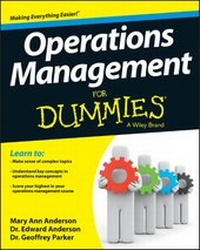
Operations Management For Dummies
Published on 16. August 2013
Book
Paperback/Softback
384 pages
978-1-118-55106-6 (ISBN)
Description
Score your highest in Operations Management
Operations management is an important skill for current and aspiring business leaders to develop and master. It deals with the design and management of products, processes, services, and supply chains. Operations management is a growing field and a required course for most undergraduate business majors and MBA candidates. Now, Operations Management For Dummies serves as an extremely resourceful aid for this difficult subject.
Tracks to a typical course in operations management or operations strategy, and covers topics such as evaluating and measuring existing systems' performance and efficiency, materials management and product development, using tools like Six Sigma and Lean production, designing new, improved processes, and defining, planning, and controlling costs of projects.
* Clearly organizes and explains complex topics
* Serves as an supplement to your Operations Management textbooks
* Helps you score your highest in your Operations Management course
Whether your aim is to earn an undergraduate degree in business or an MBA, Operations Management For Dummies is indispensable supplemental reading for your operations management course.
Operations management is an important skill for current and aspiring business leaders to develop and master. It deals with the design and management of products, processes, services, and supply chains. Operations management is a growing field and a required course for most undergraduate business majors and MBA candidates. Now, Operations Management For Dummies serves as an extremely resourceful aid for this difficult subject.
Tracks to a typical course in operations management or operations strategy, and covers topics such as evaluating and measuring existing systems' performance and efficiency, materials management and product development, using tools like Six Sigma and Lean production, designing new, improved processes, and defining, planning, and controlling costs of projects.
* Clearly organizes and explains complex topics
* Serves as an supplement to your Operations Management textbooks
* Helps you score your highest in your Operations Management course
Whether your aim is to earn an undergraduate degree in business or an MBA, Operations Management For Dummies is indispensable supplemental reading for your operations management course.
More details
Other editions
New editions
Mary Ann Anderson | Edward J. Anderson | Geoffrey Parker
Operations Management For Dummies
Book
01/2022
Wiley
€32.50
Shipment within 15-20 days
Additional editions
Mary Ann Anderson | Edward J. Anderson | Geoffrey Parker
Operations Management For Dummies
E-Book
07/2013
Wiley
€18.99
Available for download
Mary Ann Anderson | Edward J. Anderson | Geoffrey Parker
Operations Management For Dummies
E-Book
07/2013
Wiley
€18.99
Available for download
Persons
Mary Ann Anderson is a consultant in supply chain management and operations strategy. Dr. Edward Anderson is Associate Professor of Operations Management at the University of Texas McCombs School of Business. Dr. Geoffrey Parker is Professor of Management Science at the A. B. Freeman School of Business at Tulane University.
Content
Introduction 1
Part I: Getting Started with Operations Management 5
Chapter 1: Discovering the Fundamentals of Operations Management 7
Chapter 2: Defining and Evaluating Processes 19
Chapter 3: Designing Processes to Meet Goals 33
Chapter 4: Dealing with Shared Resources, Batches, and Rework 49
Chapter 5: Designing Your Process to Match Your Product or Service 67
Part II: Managing Variability and Risk 83
Chapter 6: Forecasting Demand 85
Chapter 7: Planning Capacity 99
Chapter 8: Managing Inventory 121
Chapter 9: Planning for Successful Operations 145
Chapter 10: Managing the Supply Chain 161
Part III: Improving Operations 177
Chapter 11: Becoming Lean 179
Chapter 12: Managing Quality 197
Chapter 13: Creating a Quality Organization 221
Part IV: Managing Projects 239
Chapter 14: Using Communication and Leadership Skills When Managing Projects 241
Chapter 15: Estimating and Scheduling Projects 255
Chapter 16: Responding to Risks That Threaten Your Project 277
Part V: Scaling and Globalizing Your Operations 297
Chapter 17: Considering Outsourcing 299
Chapter 18: Scaling Operations throughout the Product Life Cycle 313
Part VI: The Part of Tens 331
Chapter 19: Ten Pivotal Operations Management Developments 333
Chapter 20: Ten Mistakes That New Operations Managers Make 339
Chapter 21: Ten Traits of World-Class Operations 345
Index 351
Part I: Getting Started with Operations Management 5
Chapter 1: Discovering the Fundamentals of Operations Management 7
Chapter 2: Defining and Evaluating Processes 19
Chapter 3: Designing Processes to Meet Goals 33
Chapter 4: Dealing with Shared Resources, Batches, and Rework 49
Chapter 5: Designing Your Process to Match Your Product or Service 67
Part II: Managing Variability and Risk 83
Chapter 6: Forecasting Demand 85
Chapter 7: Planning Capacity 99
Chapter 8: Managing Inventory 121
Chapter 9: Planning for Successful Operations 145
Chapter 10: Managing the Supply Chain 161
Part III: Improving Operations 177
Chapter 11: Becoming Lean 179
Chapter 12: Managing Quality 197
Chapter 13: Creating a Quality Organization 221
Part IV: Managing Projects 239
Chapter 14: Using Communication and Leadership Skills When Managing Projects 241
Chapter 15: Estimating and Scheduling Projects 255
Chapter 16: Responding to Risks That Threaten Your Project 277
Part V: Scaling and Globalizing Your Operations 297
Chapter 17: Considering Outsourcing 299
Chapter 18: Scaling Operations throughout the Product Life Cycle 313
Part VI: The Part of Tens 331
Chapter 19: Ten Pivotal Operations Management Developments 333
Chapter 20: Ten Mistakes That New Operations Managers Make 339
Chapter 21: Ten Traits of World-Class Operations 345
Index 351