

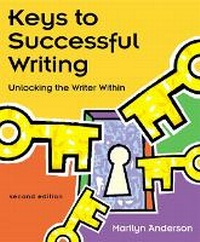
Keys to Successful Writing
With Readings
2nd Edition
Published on 1. March 2002
Book
Paperback/Softback
544 pages
978-0-321-05093-9 (ISBN)
Description
Keys to Successful Writing helps students become better writers by presenting simple, consistently applicable tools and techniques. The book's organization flows from simple to more complex essays.
The text focuses on five "keys" to successful essay writing-purpose, focus, material, structure, and style. This distinctive heuristic, developed by the author and tested in her classrooms, helps students focus on the skills and ways of thinking that will make them stronger writers. Featuring a student-friendly, highly-accessible writing style, the text presents clear, specific strategies for writing combined with student and professional models that are engaging, provocative and contemporary. An editing handbook is also included for a complete writing resource. A series of interactive writing exercises and activities and longer writing assignments give the text a predictable organizational structure that's easy to learn and teach from.
The text focuses on five "keys" to successful essay writing-purpose, focus, material, structure, and style. This distinctive heuristic, developed by the author and tested in her classrooms, helps students focus on the skills and ways of thinking that will make them stronger writers. Featuring a student-friendly, highly-accessible writing style, the text presents clear, specific strategies for writing combined with student and professional models that are engaging, provocative and contemporary. An editing handbook is also included for a complete writing resource. A series of interactive writing exercises and activities and longer writing assignments give the text a predictable organizational structure that's easy to learn and teach from.
More details
Edition
2nd edition
Language
English
Place of publication
United States
Publishing group
Pearson Education (US)
Target group
Professional and scholarly
Dimensions
Height: 235 mm
Width: 187 mm
Weight
1000 gr
ISBN-13
978-0-321-05093-9 (9780321050939)
Copyright in bibliographic data and cover images is held by Nielsen Book Services Limited or by the publishers or by their respective licensors: all rights reserved.
Schweitzer Classification
Other editions
New editions
Marilyn Anderson
Keys to Successful Writing
Book
06/2004
3rd Edition
Pearson
€58.27
Article exhausted; check for reprint
Previous edition
Marilyn Anderson
Keys to Successful Writing, Unlocking the Writer Within
Book
01/1999
Pearson
€42.15
Article exhausted; check for reprint
Content
Preface for Instructors.
Preface for Students.
I. EXPLORING THE REALM OF COLLEGE READING AND WRITING.
1. Reading, Thinking, and Writing for College.
2. Defining the Essay and the Composing Process.
3. Discovering through Prewriting.
4. Finding a Thesis and Drafting.
5. Using Body Paragraphs to Develop Essays.
6. Creating Effective Introductions and Conclusions.
7. Revising and Polishing the Essay.
8. Writing with Sources
II. EXPLORING DEVELOPMENT OPTIONS: CHOOSING PATTERNS TO FIT PURPOSE.
9. Writing about Events: Narration and Illustration.
10. Observing the World: Description and Definition.
11. Making Connections: Process and Cause/Effect.
12. Showing Relationships: Comparison/Contrast and Division/Classification.
13. Taking a Stand: Argument.
III. EXPLORING OTHER OPTIONS: A WRITER'S TOOLKIT.
Unit 1: Timed Writing
Unit 2: Portfolios
Unit 3: Application Letters and Resumes
Unit 4: Public Writing
IV. EXPLORING OTHER WRITERS: A COLLECTION OF READINGS
Thematic Contents.
College Community:
"For Equality's Sake, the SAT Should Be Abolished" Julian Weissglass.
"We're Lying: Safe Sex and White Lies in the Time of Aids" Megan Daum.
"The Path of Books and Bootstraps" Jill Leovy.
Work Community:
"Ambition" Perri Klass.
"Zipped Lips" Barbara Ehrenreich.
"Delivering the Goods" Bonnie Jo Campbell.
"The Turning Point" Craig Swanson.
"McDonald's Is Not Our Kind of Place" Amitai Etzioni.
"Darkness at Noon" Harold Krents.
"Facing Down Abusers" Im Jung Kwuon.
Civic Community:
"The Declaration of Independence" Thomas Jefferson.
"Gravity's Rainbow" Guy Trebay.
"Offering Euthanasia Can be an Act of Love" Derek Humphry.
"Who Gets to Choose?" Jean Nandi.
"The Character Question" Jason Silverman.
"American Health, Then and Now" Bryan Williams and Sharon Knight.
Writer's Community:
"A List of Topics for Writing Practice" Natalie Goldberg.
"We Are, Like, Poets" Jim Frederick.
"Normal Life Too Often Isn't Part of the News" Susan Benesch.
Family Community:
"Diary of a Child Anorexic" Lori Gottlieb.
"The Meanings of a World" Gloria Naylor.
"And Then I Went to School" Joseph H. Suina.
"Whose Eyes Are Those, Whose Nose?" Margaret Brown.
Global Community:
"The Salsa Zone" Richard Rodriguez.
"The Knife" Richard Selzer.
"When You're Meant to be Together, True Love Conquers All" Kathleen Kelleher.
Media Community:
"How to Produce a Trashy TV Talk Show: The Four Secret Ingredients" Kimberly Smith.
"In a Chat Room, You Can Be NE1" Camille Sweeney.
"Normal Life Took Often Isn't Part of the News" Susan Benesch.
V. EDITING ESSAYS: A CONCISE HANDBOOK.
Glossary.
Index.
Preface for Students.
I. EXPLORING THE REALM OF COLLEGE READING AND WRITING.
1. Reading, Thinking, and Writing for College.
2. Defining the Essay and the Composing Process.
3. Discovering through Prewriting.
4. Finding a Thesis and Drafting.
5. Using Body Paragraphs to Develop Essays.
6. Creating Effective Introductions and Conclusions.
7. Revising and Polishing the Essay.
8. Writing with Sources
II. EXPLORING DEVELOPMENT OPTIONS: CHOOSING PATTERNS TO FIT PURPOSE.
9. Writing about Events: Narration and Illustration.
10. Observing the World: Description and Definition.
11. Making Connections: Process and Cause/Effect.
12. Showing Relationships: Comparison/Contrast and Division/Classification.
13. Taking a Stand: Argument.
III. EXPLORING OTHER OPTIONS: A WRITER'S TOOLKIT.
Unit 1: Timed Writing
Unit 2: Portfolios
Unit 3: Application Letters and Resumes
Unit 4: Public Writing
IV. EXPLORING OTHER WRITERS: A COLLECTION OF READINGS
Thematic Contents.
College Community:
"For Equality's Sake, the SAT Should Be Abolished" Julian Weissglass.
"We're Lying: Safe Sex and White Lies in the Time of Aids" Megan Daum.
"The Path of Books and Bootstraps" Jill Leovy.
Work Community:
"Ambition" Perri Klass.
"Zipped Lips" Barbara Ehrenreich.
"Delivering the Goods" Bonnie Jo Campbell.
"The Turning Point" Craig Swanson.
"McDonald's Is Not Our Kind of Place" Amitai Etzioni.
"Darkness at Noon" Harold Krents.
"Facing Down Abusers" Im Jung Kwuon.
Civic Community:
"The Declaration of Independence" Thomas Jefferson.
"Gravity's Rainbow" Guy Trebay.
"Offering Euthanasia Can be an Act of Love" Derek Humphry.
"Who Gets to Choose?" Jean Nandi.
"The Character Question" Jason Silverman.
"American Health, Then and Now" Bryan Williams and Sharon Knight.
Writer's Community:
"A List of Topics for Writing Practice" Natalie Goldberg.
"We Are, Like, Poets" Jim Frederick.
"Normal Life Too Often Isn't Part of the News" Susan Benesch.
Family Community:
"Diary of a Child Anorexic" Lori Gottlieb.
"The Meanings of a World" Gloria Naylor.
"And Then I Went to School" Joseph H. Suina.
"Whose Eyes Are Those, Whose Nose?" Margaret Brown.
Global Community:
"The Salsa Zone" Richard Rodriguez.
"The Knife" Richard Selzer.
"When You're Meant to be Together, True Love Conquers All" Kathleen Kelleher.
Media Community:
"How to Produce a Trashy TV Talk Show: The Four Secret Ingredients" Kimberly Smith.
"In a Chat Room, You Can Be NE1" Camille Sweeney.
"Normal Life Took Often Isn't Part of the News" Susan Benesch.
V. EDITING ESSAYS: A CONCISE HANDBOOK.
Glossary.
Index.