

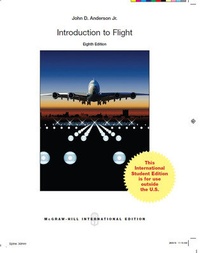
Introduction to Flight
8th Edition
Published on 16. June 2015
Book
Paperback/Softback
978-981-4636-18-6 (ISBN)
Description
Noted for its highly readable style, the new edition of this bestseller provides an updated overview of aeronautical and aerospace engineering. Introduction to Flight blends history and biography with discussion of engineering concepts, and shows the development of flight through this perspective.
Anderson covers new developments in flight, including unmanned aerial vehicles, uninhabited combat aerial vehicles, and applications of CFD in aircraft design. Many new and revised problems have been added in this edition. Chapter learning features help readers follow the text discussion while highlighting key engineering and industry applications.
Noted for its highly readable style, the new edition of this bestseller provides an updated overview of aeronautical and aerospace engineering. Introduction to Flight blends history and biography with discussion of engineering concepts, and shows the development of flight through this perspective.
Anderson covers new developments in flight, including unmanned aerial vehicles, uninhabited combat aerial vehicles, and applications of CFD in aircraft design. Many new and revised problems have been added in this edition. Chapter learning features help readers follow the text discussion while highlighting key engineering and industry applications.
Anderson covers new developments in flight, including unmanned aerial vehicles, uninhabited combat aerial vehicles, and applications of CFD in aircraft design. Many new and revised problems have been added in this edition. Chapter learning features help readers follow the text discussion while highlighting key engineering and industry applications.
Noted for its highly readable style, the new edition of this bestseller provides an updated overview of aeronautical and aerospace engineering. Introduction to Flight blends history and biography with discussion of engineering concepts, and shows the development of flight through this perspective.
Anderson covers new developments in flight, including unmanned aerial vehicles, uninhabited combat aerial vehicles, and applications of CFD in aircraft design. Many new and revised problems have been added in this edition. Chapter learning features help readers follow the text discussion while highlighting key engineering and industry applications.
More details
Other editions
New editions
John Anderson | Mary Bowden
Introduction to Flight ISE
Book
04/2021
9th Edition
McGraw-Hill Education
€73.08
Available immediately
Person
John D. Anderson, Jr., was born in Lancaster, Pennsylvania, on October 1, 1937. He attended the University of Florida, graduating in 1959 with high honors and a Bachelor of Aeronautical Engineering Degree. From 1959 to 1962, he was a Lieutenant and Task Scientist at the Aerospace Research Laboratory at Wright-Patterson Air Force Base. From 1962 to 1966, he attended the Ohio State University under the National Science Foundation and NASA Fellowships, graduating with a PhD in Aeronautical and Astronautical Engineering. In 1966, he joined the U.S. Naval Ordnance Laboratory as Chief of the Hypersonics Group. In 1973, he became Chairman of the Department of Aerospace Engineering at the University of Maryland, and since 1980 has been Professor of Aerospace Engineering at the University of Maryland. In 1982, he was designated a Distinguished Scholar/Teacher by the University. During 19861987, while on sabbatical from the University, Dr. Anderson occupied the Charles Lindbergh Chair at the National Air and Space Museum of the Smithsonian Institution. He continued with the Air and Space Museum one day each week as their Special Assistant for Aerodynamics, doing research and writing on the History of Aerodynamics. In addition to his position as Professor of Aerospace Engineering, in 1993, he was made a full faculty member of the Committee for the History and Philosophy of Science and in 1996 an affiliate member of the History Department at the University of Maryland. In 1996, he became the Glenn L. Martin Distinguished Professor for Education in Aerospace Engineering. In 1999, he retired from the University of Maryland and was appointed Professor Emeritus. He is currently the Curator for Aerodynamics at the National Air and Space Museum, Smithsonian Institution.
John D. Anderson, Jr., was born in Lancaster, Pennsylvania, on October 1, 1937. He attended the University of Florida, graduating in 1959 with high honors and a Bachelor of Aeronautical Engineering Degree. From 1959 to 1962, he was a Lieutenant and Task Scientist at the Aerospace Research Laboratory at Wright-Patterson Air Force Base. From 1962 to 1966, he attended the Ohio State University under the National Science Foundation and NASA Fellowships, graduating with a PhD in Aeronautical and Astronautical Engineering. In 1966, he joined the U.S. Naval Ordnance Laboratory as Chief of the Hypersonics Group. In 1973, he became Chairman of the Department of Aerospace Engineering at the University of Maryland, and since 1980 has been Professor of Aerospace Engineering at the University of Maryland. In 1982, he was designated a Distinguished Scholar/Teacher by the University. During 19861987, while on sabbatical from the University, Dr. Anderson occupied the Charles Lindbergh Chair at the National Air and Space Museum of the Smithsonian Institution. He continued with the Air and Space Museum one day each week as their Special Assistant for Aerodynamics, doing research and writing on the History of Aerodynamics. In addition to his position as Professor of Aerospace Engineering, in 1993, he was made a full faculty member of the Committee for the History and Philosophy of Science and in 1996 an affiliate member of the History Department at the University of Maryland. In 1996, he became the Glenn L. Martin Distinguished Professor for Education in Aerospace Engineering. In 1999, he retired from the University of Maryland and was appointed Professor Emeritus. He is currently the Curator for Aerodynamics at the National Air and Space Museum, Smithsonian Institution.
John D. Anderson, Jr., was born in Lancaster, Pennsylvania, on October 1, 1937. He attended the University of Florida, graduating in 1959 with high honors and a Bachelor of Aeronautical Engineering Degree. From 1959 to 1962, he was a Lieutenant and Task Scientist at the Aerospace Research Laboratory at Wright-Patterson Air Force Base. From 1962 to 1966, he attended the Ohio State University under the National Science Foundation and NASA Fellowships, graduating with a PhD in Aeronautical and Astronautical Engineering. In 1966, he joined the U.S. Naval Ordnance Laboratory as Chief of the Hypersonics Group. In 1973, he became Chairman of the Department of Aerospace Engineering at the University of Maryland, and since 1980 has been Professor of Aerospace Engineering at the University of Maryland. In 1982, he was designated a Distinguished Scholar/Teacher by the University. During 19861987, while on sabbatical from the University, Dr. Anderson occupied the Charles Lindbergh Chair at the National Air and Space Museum of the Smithsonian Institution. He continued with the Air and Space Museum one day each week as their Special Assistant for Aerodynamics, doing research and writing on the History of Aerodynamics. In addition to his position as Professor of Aerospace Engineering, in 1993, he was made a full faculty member of the Committee for the History and Philosophy of Science and in 1996 an affiliate member of the History Department at the University of Maryland. In 1996, he became the Glenn L. Martin Distinguished Professor for Education in Aerospace Engineering. In 1999, he retired from the University of Maryland and was appointed Professor Emeritus. He is currently the Curator for Aerodynamics at the National Air and Space Museum, Smithsonian Institution.
Content
Chapter 1The First Aeronautical EngineersChapter 2Fundamental ThoughtsChapter 3The Standard AtmosphereChapter 4Basic AerodynamicsChapter 5Airfoils, Wings, and Other Aerodynamics ShapesChapter 6Elements of Airplane PerformanceChapter 7Principles of Stability and ControlChapter 8Space Flight (Astronautics)Chapter 9PropulsionChapter 10Hypersonic VehiclesAppendix AStandard Atmosphere, SI UnitsAppendix BStandard Atmosphere, English Engineering UnitsAppendix CSymbols and Conversion FactorsAppendix DAirfoil DataAnswer KeyIndex