

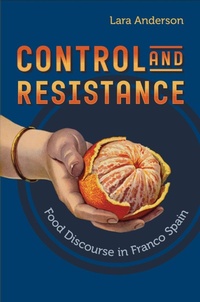
Control and Resistance
Food Discourse in Franco Spain
Published on 20. March 2020
Book
Hardback
192 pages
978-1-4875-0669-8 (ISBN)
Description
Control and Resistance reveals the various ways in which food writing of the early Franco era was a potent political tool, producing ways of eating and thinking about food that privileged patriotism over personal desire. The author examines a diverse range of official and non-official food texts to highlight how discourse helped construct and contest identities in line with the three ideological pillars of the regime: autarky, prescriptive gender roles, and monolithic nationalism. Official food discourse produced an audience with a taste for local foodstuffs, and also created a unified gastronomic space in which regional cuisines were co-opted for the purposes of culinary nationalism.
The author discusses a genre of official texts directed solely at women, which demanded women's compliance and exclusive dedication to domesticity. Alongside such examples, Control and Resistance includes texts that offered resistance to the Franco hegemony. Food texts have traditionally been viewed as apolitical because of their connections with domesticity, so they were not subject to the same degree of censorship as other published works. Accordingly, food writing was at times more capable of offering disruptive or resistant textual spaces than other forms of discourse.
The author discusses a genre of official texts directed solely at women, which demanded women's compliance and exclusive dedication to domesticity. Alongside such examples, Control and Resistance includes texts that offered resistance to the Franco hegemony. Food texts have traditionally been viewed as apolitical because of their connections with domesticity, so they were not subject to the same degree of censorship as other published works. Accordingly, food writing was at times more capable of offering disruptive or resistant textual spaces than other forms of discourse.
More details
Series
Language
English
Place of publication
Toronto
Canada
Target group
College/higher education
Professional and scholarly
Product notice
sewn/stitched
Cloth over boards
With dust jacket
Dimensions
Height: 229 mm
Width: 160 mm
Thickness: 15 mm
Weight
363 gr
ISBN-13
978-1-4875-0669-8 (9781487506698)
Copyright in bibliographic data and cover images is held by Nielsen Book Services Limited or by the publishers or by their respective licensors: all rights reserved.
Schweitzer Classification
Person
Lara Anderson is convenor of the Spanish & Latin American Studies program at the University of Melbourne, Australia.
Content
Acknowledgments
Introduction ?
Food Discourse and Francoist Spain: The State of the Scholarship
Franco and Fascism
Francoist Discourse and Control
Francoist Biopolitics and Food
Food Discourse and Resistance
Censorship in Franco's Spain: Resistance, Oversight, and Food Texts
Overview of This Book: Autarky, Gender, and Centralist Nationalism
1. Food Discourse and the Production of Autarkic Subjectivities ?
Eat More Oranges
A Taste for Rice
An Appetite for Culinary Patriotism
Food Shortages and Culinary Abundance
No Place at the Table for Hunger
Pro-official Cookbooks in Times of Hunger
Providing an Account of Hunger in Cookbooks
Francoist Food Discourse: Autarky, Hunger, and Culinary Patriotism
2. Beyond the Kitchen: Food Texts, Gender, and Compliance in Franco Spain ?
Writing Women Back Into the Kitchen
Constructing Subservient Subjectivities through Cookbooks
Cookery Instruction and the Authority of the Seccion Femenina
The Authority of Modernity
Ana Maria Herrera and Manual de cocina: The Invisible Author
Seccion Femenina Cookery Manuals and the Professional Domestic
The Gendering of Gastronomy: Seccion Femenina and La Marquesa de Parabere
Breaking the Mould: Non-official Cookbooks
Mi recetario de cocina: Sarrau's Authorial Persona Emerges
La futura ama de casa: Constructing a Modern Spanish Womanhood
A Broader Narrative of Franco-Era Cookbooks: Obedience and Resistance
3. A Recipe for Spain: The Production of a Unified Gastronomic?
Space and the Gendering of Gastronomy
Establishing the Borders of Spanish Food Culture
The Gendering of Gastronomy and Food Discourse
The Production of a Unified Gastronomic Space
The Male Gastronome and National Unity: Erasing Regional Difference
Guia gastronomica de Espana: The Eradication of Regional Diversity and the Exclusion of Women
Cookbooks and Regional Ingredients in the National Recipe
Isabel de Trevis and the Authority of Male Gastronomes
Domenech's Food Discourse and Nationalism
Regional Cuisines: Minimized and Co-opted ?
Conclusion
Notes
Works Cited
Index
Introduction ?
Food Discourse and Francoist Spain: The State of the Scholarship
Franco and Fascism
Francoist Discourse and Control
Francoist Biopolitics and Food
Food Discourse and Resistance
Censorship in Franco's Spain: Resistance, Oversight, and Food Texts
Overview of This Book: Autarky, Gender, and Centralist Nationalism
1. Food Discourse and the Production of Autarkic Subjectivities ?
Eat More Oranges
A Taste for Rice
An Appetite for Culinary Patriotism
Food Shortages and Culinary Abundance
No Place at the Table for Hunger
Pro-official Cookbooks in Times of Hunger
Providing an Account of Hunger in Cookbooks
Francoist Food Discourse: Autarky, Hunger, and Culinary Patriotism
2. Beyond the Kitchen: Food Texts, Gender, and Compliance in Franco Spain ?
Writing Women Back Into the Kitchen
Constructing Subservient Subjectivities through Cookbooks
Cookery Instruction and the Authority of the Seccion Femenina
The Authority of Modernity
Ana Maria Herrera and Manual de cocina: The Invisible Author
Seccion Femenina Cookery Manuals and the Professional Domestic
The Gendering of Gastronomy: Seccion Femenina and La Marquesa de Parabere
Breaking the Mould: Non-official Cookbooks
Mi recetario de cocina: Sarrau's Authorial Persona Emerges
La futura ama de casa: Constructing a Modern Spanish Womanhood
A Broader Narrative of Franco-Era Cookbooks: Obedience and Resistance
3. A Recipe for Spain: The Production of a Unified Gastronomic?
Space and the Gendering of Gastronomy
Establishing the Borders of Spanish Food Culture
The Gendering of Gastronomy and Food Discourse
The Production of a Unified Gastronomic Space
The Male Gastronome and National Unity: Erasing Regional Difference
Guia gastronomica de Espana: The Eradication of Regional Diversity and the Exclusion of Women
Cookbooks and Regional Ingredients in the National Recipe
Isabel de Trevis and the Authority of Male Gastronomes
Domenech's Food Discourse and Nationalism
Regional Cuisines: Minimized and Co-opted ?
Conclusion
Notes
Works Cited
Index