

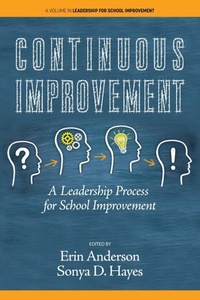
Continuous Improvement
A Leadership Process for School Improvement
Published on 8. September 2023
Book
Paperback/Softback
484 pages
979-8-88730-370-3 (ISBN)
Description
Through this book, we seek to describe improvement science in action for educators, schools, districts, universities, and communities. This book is a venue for improvement research in education focused on the application of improvement science in educational settings. Improvement science requires extensive engagement in rigorous work to implement sustainable change at a systemic level. As the editors of this volume for the Leadership in School Improvement SIG book series, we hope that these chapters, written by researchers, practitioners, and leaders engaged in improvement science will help others begin their own improvement processes to achieve desired, equitable, and sustainable results for student success.
Reviews / Votes
Continuous Improvement: A Leadership Process for School Improvement brings together an impressive group of fieldleading improvement scholars, with deep connections to educational practice, to provide a powerful vision for what equity-centered improvement science looks like in action. The stories of improvement, partnership, and critical enabling conditions provide theoretically sound and practically useful guidance for anyone seeking to transform education organizations in service of more equitable learning opportunities for students."" - Jennifer Lin Russell, Vanderbilt Peabody College""This is a moment of empowerment in education, with movements for social justice and continuous improvement providing motivations and methods to interrogate, disrupt, and rebuild education systems to support the holistic development of all students. This essential book provides compelling accounts of what it looks like - and what is possible - when educational professionals, researchers, and other stakeholders come together to seize this moment."" - Donald Peurach, University of Michigan's School of Education and Carnegie Foundation
More details
Series
Language
English
Place of publication
United States
Publishing group
Emerald Publishing Inc
Target group
Professional and scholarly
Dimensions
Height: 234 mm
Width: 156 mm
Thickness: 26 mm
Weight
728 gr
ISBN-13
979-8-88730-370-3 (9798887303703)
Copyright in bibliographic data and cover images is held by Nielsen Book Services Limited or by the publishers or by their respective licensors: all rights reserved.
Schweitzer Classification
Other editions
Additional editions
E-Book
09/2023
1st Edition
IAP - Information Age Publishing
€80.60
Available for download
Content
Foreword: A Field Is Building; Anthony S. Bryk.
Introduction.
Section I: Stories Of Improvement.
Chapter 1. Towards Synergistic Critical Race Improvement Science; Kris DeFilippis.
Chapter 2. Joyful, Powerful Mathematics for All: Schoolwide Lesson Study to Support Teaching Through Problem-solving; Catherine Lewis, Shelley Friedkin, Nora Houseman, Sara Liebert, Norma Ming, and Akihiko Takahashi.
Chapter 3. Continuous Improvement in STEM Education: Collaboration Among Four Partners to Co-Design an Innovative and Equitable STEM School; Jeanna R. Wieselmann, Annie Wright, and Stephanie Knight.
Chapter 4. Leveraging Collaborative Teacher Leadership for Equitable School Transformation; Wesley Henry and Adam Swinney.
Chapter 5. Building Leadership Capacity for School-Based Reform in the Arab Region: The TAMAM model; Rima Karami, Yusra Khattab, and Rola Katerji.
Chapter 6. Building Capacity to Lead Instructional Improvement in a Title I Middle School; Rebecca A. Thessin and Briana Bostic.
Section II: Enabling Conditions For Improvement.
Chapter 7. ImproveCrit: Using Critical Race Theory to Guide Continuous Improvement; Brandi Hinnant-Crawford, Ericka Lytle Lett, and Shamella Cromartie.
Chapter 8. Building Capacity for Continuous Improvement: Iterating to Center Racial Equity in a PK-8 Community School; Anne Garrison Wilhelm, Dana Stoltz Gray, and Erin O. Crosby.
Chapter 9. Sustaining Continuous School Improvement: A Framework for Transformative Organizations; Erin Anderson, Kathleen M. W. Cunningham, and Jayson W. Richardson.
Chapter 10. Attending to Role Identities Within Continuous Improvement; Alison Fox Resnick.
Chapter 11. Developing Enabling Conditions for Continuous Improvement: Building Foundational Team Habits of Mind; Elizabeth Zumpe and Corrine Aramburo.
Chapter 12. How Coaches Support Improvement Teams: Challenges and Considerations; Edit Khachatryan, Barbara Shreve, and Jonathan Eckert.
Chapter 13. Assessing Leadership Skills and Organizational Conditions for Continuous Improvement: Two Approaches; Chad R. Lochmiller and Margaret Terry Orr.
Chapter 14. Integrating Improvement Science Into Leadership Preparation Programs: Enduring Challenges and Promising Strategies; Maxwell M. Yurkofsky, Edwin N. Bonney, and Sarah A. Capello.
Section III: Partnering For Improvement.
Chapter 15. The National Education Association Community Schools Institute: Developing Cultures of Equity and Innovation in Public Schools Across the United States; Linda Mayger and Kathleen Provinzano.
Chapter 16. Ensuring Success for Research-Practice Partnerships: Strategies and Conditions; Linda Bendikson and Frauke Meyer.
Chapter 17. How Research-Practice Partnerships Learn to Develop Goals for Math and Identify Local Problems of Practice; Benjamin Michael Superfine, Craig De Voto, Alison Castro Superfine, Shelby Cosner, and Ahreum Han.
Chapter 18. Constructing a Good Fit: Improvement Team Leads' Perspectives on Fitting Improvement Work to Their Sites; H. Alix Gallagher, Leah Faw, Danielle Jordan, Kiley O'Meara, and Benjamin Cottingham.
Chapter 19. From Initiation to Dissolution: Learning from the Unsuccessful Launch of Networked Improvement; Jennifer Karnopp and Chad Lochmiller.
Chapter 20. A Tale of Two University-School Improvement Hubs: An Ecological View of Hub and Hub Leader Development; Sarah Zuckerman and Kristen Campbell Wilcox.
Chapter 21. Exploring the Boundary Space in Partnerships for Continuous Improvement and Leadership; Manuelito Biag, Louis M. Gomez, and David G. Imig.
Chapter 22. Designing the EdD for Transformative Change; Margaret Terry Orr and Elizabeth Leisy Stosich.
About the Contributors.
Introduction.
Section I: Stories Of Improvement.
Chapter 1. Towards Synergistic Critical Race Improvement Science; Kris DeFilippis.
Chapter 2. Joyful, Powerful Mathematics for All: Schoolwide Lesson Study to Support Teaching Through Problem-solving; Catherine Lewis, Shelley Friedkin, Nora Houseman, Sara Liebert, Norma Ming, and Akihiko Takahashi.
Chapter 3. Continuous Improvement in STEM Education: Collaboration Among Four Partners to Co-Design an Innovative and Equitable STEM School; Jeanna R. Wieselmann, Annie Wright, and Stephanie Knight.
Chapter 4. Leveraging Collaborative Teacher Leadership for Equitable School Transformation; Wesley Henry and Adam Swinney.
Chapter 5. Building Leadership Capacity for School-Based Reform in the Arab Region: The TAMAM model; Rima Karami, Yusra Khattab, and Rola Katerji.
Chapter 6. Building Capacity to Lead Instructional Improvement in a Title I Middle School; Rebecca A. Thessin and Briana Bostic.
Section II: Enabling Conditions For Improvement.
Chapter 7. ImproveCrit: Using Critical Race Theory to Guide Continuous Improvement; Brandi Hinnant-Crawford, Ericka Lytle Lett, and Shamella Cromartie.
Chapter 8. Building Capacity for Continuous Improvement: Iterating to Center Racial Equity in a PK-8 Community School; Anne Garrison Wilhelm, Dana Stoltz Gray, and Erin O. Crosby.
Chapter 9. Sustaining Continuous School Improvement: A Framework for Transformative Organizations; Erin Anderson, Kathleen M. W. Cunningham, and Jayson W. Richardson.
Chapter 10. Attending to Role Identities Within Continuous Improvement; Alison Fox Resnick.
Chapter 11. Developing Enabling Conditions for Continuous Improvement: Building Foundational Team Habits of Mind; Elizabeth Zumpe and Corrine Aramburo.
Chapter 12. How Coaches Support Improvement Teams: Challenges and Considerations; Edit Khachatryan, Barbara Shreve, and Jonathan Eckert.
Chapter 13. Assessing Leadership Skills and Organizational Conditions for Continuous Improvement: Two Approaches; Chad R. Lochmiller and Margaret Terry Orr.
Chapter 14. Integrating Improvement Science Into Leadership Preparation Programs: Enduring Challenges and Promising Strategies; Maxwell M. Yurkofsky, Edwin N. Bonney, and Sarah A. Capello.
Section III: Partnering For Improvement.
Chapter 15. The National Education Association Community Schools Institute: Developing Cultures of Equity and Innovation in Public Schools Across the United States; Linda Mayger and Kathleen Provinzano.
Chapter 16. Ensuring Success for Research-Practice Partnerships: Strategies and Conditions; Linda Bendikson and Frauke Meyer.
Chapter 17. How Research-Practice Partnerships Learn to Develop Goals for Math and Identify Local Problems of Practice; Benjamin Michael Superfine, Craig De Voto, Alison Castro Superfine, Shelby Cosner, and Ahreum Han.
Chapter 18. Constructing a Good Fit: Improvement Team Leads' Perspectives on Fitting Improvement Work to Their Sites; H. Alix Gallagher, Leah Faw, Danielle Jordan, Kiley O'Meara, and Benjamin Cottingham.
Chapter 19. From Initiation to Dissolution: Learning from the Unsuccessful Launch of Networked Improvement; Jennifer Karnopp and Chad Lochmiller.
Chapter 20. A Tale of Two University-School Improvement Hubs: An Ecological View of Hub and Hub Leader Development; Sarah Zuckerman and Kristen Campbell Wilcox.
Chapter 21. Exploring the Boundary Space in Partnerships for Continuous Improvement and Leadership; Manuelito Biag, Louis M. Gomez, and David G. Imig.
Chapter 22. Designing the EdD for Transformative Change; Margaret Terry Orr and Elizabeth Leisy Stosich.
About the Contributors.