

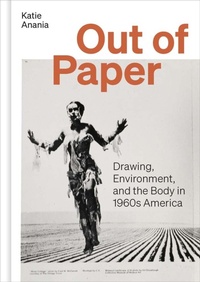
Out of Paper
Drawing, Environment, and the Body in 1960s America
Published on 24. September 2024
Book
Hardback
256 pages
978-0-300-27223-9 (ISBN)
Description
A dynamic look at how artists used paper to radically redefine the relationship between the body and its surroundings, and to propose new conceptions of ecology
From sketches created inside pants pockets to paper-strewn performances that took cues from protests and riots, the work on paper in the 1960s acted as a mobile, flexible connective tissue between the body and the world around it. In this book, Katie Anania reveals how artists Carolee Schneemann, William Anastasi, Richard Tuttle, Robert Morris, and Charles White harnessed this historically intimate medium during a period in which Americans were becoming urgently concerned with identity, consumer culture, the overreach of state power, and the rapidly deteriorating natural world. Her reexamination of drawing shows how the omnipresence of paper facilitated artists' critiques of dominant systems, from modern throwaway culture to bureaucracy to colonial violence.
Engaging a wide range of actions-such as recycling, recording, cutting, planning, and erasing-Anania offers fresh insights into paper's role not merely as a preparatory medium but one essential to the histories of performance, minimalist, conceptual, and land art. Out of Paper uses materiality studies, social history, and feminist art historical methods to situate paper as a major conduit for thought in the postwar United States.
From sketches created inside pants pockets to paper-strewn performances that took cues from protests and riots, the work on paper in the 1960s acted as a mobile, flexible connective tissue between the body and the world around it. In this book, Katie Anania reveals how artists Carolee Schneemann, William Anastasi, Richard Tuttle, Robert Morris, and Charles White harnessed this historically intimate medium during a period in which Americans were becoming urgently concerned with identity, consumer culture, the overreach of state power, and the rapidly deteriorating natural world. Her reexamination of drawing shows how the omnipresence of paper facilitated artists' critiques of dominant systems, from modern throwaway culture to bureaucracy to colonial violence.
Engaging a wide range of actions-such as recycling, recording, cutting, planning, and erasing-Anania offers fresh insights into paper's role not merely as a preparatory medium but one essential to the histories of performance, minimalist, conceptual, and land art. Out of Paper uses materiality studies, social history, and feminist art historical methods to situate paper as a major conduit for thought in the postwar United States.
Reviews / Votes
"Out of Paper is a bracing papercut that reveals what has too often been overlooked."-Stephanie Straine, Burlington ContemporaryShortlisted for the Charles C. Eldredge Prize, sponsored by the Smithsonian American Art Museum
"Anania develops beautiful close readings of paper-based works to show how the materiality of paper was the site of drawing's most critical interventions into art's history and broader social discourses in the 1960s and beyond."-Natilee Harren, author of Fluxus Forms: Scores, Multiples, and the Eternal Network
"Out of Paper offers a lively and absorbing analysis of paper's myriad connotations in a period of political turmoil, insidious bureaucracy, and dawning awareness of ecological crisis."-Anna Lovatt, author of Drawing Degree Zero: The Line from Minimal to Conceptual Art
More details
Language
English
Place of publication
United States
Target group
College/higher education
Product notice
Cloth over boards
Illustrations
57 color + 54 b-w illus.
Dimensions
Height: 261 mm
Width: 187 mm
Thickness: 25 mm
Weight
1012 gr
ISBN-13
978-0-300-27223-9 (9780300272239)
Copyright in bibliographic data and cover images is held by Nielsen Book Services Limited or by the publishers or by their respective licensors: all rights reserved.
Schweitzer Classification
Person
Katie Anania is assistant professor of art history at the University of Nebraska, Lincoln.