

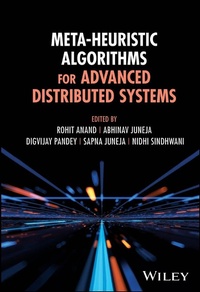
Meta-Heuristic Algorithms for Advanced Distributed Systems
1st Edition
Published on 1. March 2024
Book
Hardback
464 pages
978-1-394-18806-2 (ISBN)
Description
Discover a collection of meta-heuristic algorithms for distributed systems in different application domains
Meta-heuristic techniques are increasingly gaining favor as tools for optimizing distributed systems-generally, to enhance the utility and precision of database searches. Carefully applied, they can increase system effectiveness, streamline operations, and reduce cost. Since many of these techniques are derived from nature, they offer considerable scope for research and development, with the result that this field is growing rapidly.
Meta-Heuristic Algorithms for Advanced Distributed System offers an overview of these techniques and their applications in various distributed systems. With strategies based on both global and local searching, it covers a wide range of key topics related to meta-heuristic algorithms. Those interested in the latest developments in distributed systems will find this book indispensable.
Meta-Heuristic Algorithms for Advanced Distributed System readers will also find:
Analysis of security issues, distributed system design, stochastic optimization techniques, and more
Detailed discussion of meta-heuristic techniques such as the genetic algorithm, particle swam optimization, and many others
Applications of optimized distribution systems in healthcare and other key industries
Meta-Heuristic Algorithms for Advanced Distributed System is ideal for academics and researchers studying distributed systems, their design, and their applications.
Meta-heuristic techniques are increasingly gaining favor as tools for optimizing distributed systems-generally, to enhance the utility and precision of database searches. Carefully applied, they can increase system effectiveness, streamline operations, and reduce cost. Since many of these techniques are derived from nature, they offer considerable scope for research and development, with the result that this field is growing rapidly.
Meta-Heuristic Algorithms for Advanced Distributed System offers an overview of these techniques and their applications in various distributed systems. With strategies based on both global and local searching, it covers a wide range of key topics related to meta-heuristic algorithms. Those interested in the latest developments in distributed systems will find this book indispensable.
Meta-Heuristic Algorithms for Advanced Distributed System readers will also find:
Analysis of security issues, distributed system design, stochastic optimization techniques, and more
Detailed discussion of meta-heuristic techniques such as the genetic algorithm, particle swam optimization, and many others
Applications of optimized distribution systems in healthcare and other key industries
Meta-Heuristic Algorithms for Advanced Distributed System is ideal for academics and researchers studying distributed systems, their design, and their applications.
More details
Language
English
Place of publication
New York
United States
Target group
Professional and scholarly
Dimensions
Height: 230 mm
Width: 154 mm
Thickness: 28 mm
Weight
635 gr
ISBN-13
978-1-394-18806-2 (9781394188062)
Copyright in bibliographic data and cover images is held by Nielsen Book Services Limited or by the publishers or by their respective licensors: all rights reserved.
Schweitzer Classification
Other editions
Additional editions
Rohit Anand | Abhinav Juneja | Digvijay Pandey
Meta-Heuristic Algorithms for Advanced Distributed Systems
E-Book
03/2024
1st Edition
Wiley
€118.99
Available for download
Rohit Anand | Abhinav Juneja | Digvijay Pandey
Meta-Heuristic Algorithms for Advanced Distributed Systems
E-Book
03/2024
1st Edition
Wiley
€118.99
Available for download
Persons
Rohit Anand, PhD, Is an Assistant Professor in the Department of Electronics and Communication Engineering at G. B. Pant DSEU Okhla-1 Campus (formerly G. B. Pant Engineering College), Government of NCT of Delhi, New Delhi, India. He has more than 21 years of teaching experience. He is a Life Member of the Indian Society for Technical Education (ISTE) and holds 4 patents.
Abhinav Juneja, PhD, is a Professor at the KIET Group of Institutions, Ghaziabad, India. He has also worked as Associate Director & Professor at BMIET, Sonepat, India. He has more than 20 years of teaching experience.
Digvijay Pandey, PhD, works in the Department of Technical Education, Kanpur, Government of Uttar Pradesh, India. He has more than 12 years of experience in the fields of industry and teaching. He holds 5 patents.
Sapna Juneja, PhD, is a Professor in KIET Group of Institutions, Ghaziabad, India. She has more than 17 years of teaching experience.
Nidhi Sindhwani, PhD, is an Assistant Professor in Amity Institute of Information Technology, Amity University, Noida, India. She has more than 17 Years of teaching experience. She is a Life Member of the Indian Society for Technical Education (ISTE) and a Member of IEEE. She holds 4 patents.
Abhinav Juneja, PhD, is a Professor at the KIET Group of Institutions, Ghaziabad, India. He has also worked as Associate Director & Professor at BMIET, Sonepat, India. He has more than 20 years of teaching experience.
Digvijay Pandey, PhD, works in the Department of Technical Education, Kanpur, Government of Uttar Pradesh, India. He has more than 12 years of experience in the fields of industry and teaching. He holds 5 patents.
Sapna Juneja, PhD, is a Professor in KIET Group of Institutions, Ghaziabad, India. She has more than 17 years of teaching experience.
Nidhi Sindhwani, PhD, is an Assistant Professor in Amity Institute of Information Technology, Amity University, Noida, India. She has more than 17 Years of teaching experience. She is a Life Member of the Indian Society for Technical Education (ISTE) and a Member of IEEE. She holds 4 patents.
Content
Chapter 1: The Future of Business Management with the Power of Distributed Systems and Computing
Chapter 2: Applications of Optimised Distributed Systems in Healthcare.
Chapter 3: The Impact of Distributed Computing on Data Analytics and Business Insights.
Chapter 4: MACHINE LEARNING AND ITS APPLICATION IN EDUCATIONAL AREA.
Chapter 5: Approaches and Methodologies for the Distributed Systems: Threats, Challenges, and Future Directions.
Chapter 6: Efficient driven approaches related to Meta-Heuristic Algorithms using Machine Learning Techniques.
Chapter 7: Security and Privacy issues in Distributed Healthcare system- A Survey.
Chapter 8: Implementation and Analysis of Proposed Model in a Distributed e-Healthcare System.
Chapter 9: Implementation and Analysis of Proposed Model in a Distributed e-Healthcare System.
Chapter 10: Advances in Education Policy through the Integration of Distributed Computing Approaches.
Chapter 11: Revolutionizing Data Management and Security with the Power of Blockchain and Distributed System.
Chapter 12: Enhancing Business Development, Ethics, and Governance with the Adoption of Distributed Systems.
Chapter 13: Leveraging Distribution Systems for Advanced Fraud Detection and Prevention in Finance.
Chapter 14: Advances in E-commerce through the Integration of Distributed Computing Approaches.
Chapter 15: The Impact of Distributed Computing on Online Shopping and Consumer Experience.
Chapter 16: Wireless Sensor Based IoT System with Distributed Optimization for Healthcare.
Chapter 17: Optimizing Financial Transactions and Processes through the Power of Distributed Systems.
Chapter 18: Leveraging Distributed Systems for Improved Market Intelligence and Customer Segmentation.
Chapter 19: The Future of Financial Crime Prevention and Cybersecurity with Distributed Systems and Computing Approaches.
Chapter 20: Innovations in Distributed Computing for Enhanced Risk Management in Finance.
Chapter 21: Leveraging Blockchain and Distributed Systems for Improved Supply Chain Traceability and Transparency.
Chapter 22: Advances in Resource Management through the Integration of Distributed Computing Approaches.
Chapter 2: Applications of Optimised Distributed Systems in Healthcare.
Chapter 3: The Impact of Distributed Computing on Data Analytics and Business Insights.
Chapter 4: MACHINE LEARNING AND ITS APPLICATION IN EDUCATIONAL AREA.
Chapter 5: Approaches and Methodologies for the Distributed Systems: Threats, Challenges, and Future Directions.
Chapter 6: Efficient driven approaches related to Meta-Heuristic Algorithms using Machine Learning Techniques.
Chapter 7: Security and Privacy issues in Distributed Healthcare system- A Survey.
Chapter 8: Implementation and Analysis of Proposed Model in a Distributed e-Healthcare System.
Chapter 9: Implementation and Analysis of Proposed Model in a Distributed e-Healthcare System.
Chapter 10: Advances in Education Policy through the Integration of Distributed Computing Approaches.
Chapter 11: Revolutionizing Data Management and Security with the Power of Blockchain and Distributed System.
Chapter 12: Enhancing Business Development, Ethics, and Governance with the Adoption of Distributed Systems.
Chapter 13: Leveraging Distribution Systems for Advanced Fraud Detection and Prevention in Finance.
Chapter 14: Advances in E-commerce through the Integration of Distributed Computing Approaches.
Chapter 15: The Impact of Distributed Computing on Online Shopping and Consumer Experience.
Chapter 16: Wireless Sensor Based IoT System with Distributed Optimization for Healthcare.
Chapter 17: Optimizing Financial Transactions and Processes through the Power of Distributed Systems.
Chapter 18: Leveraging Distributed Systems for Improved Market Intelligence and Customer Segmentation.
Chapter 19: The Future of Financial Crime Prevention and Cybersecurity with Distributed Systems and Computing Approaches.
Chapter 20: Innovations in Distributed Computing for Enhanced Risk Management in Finance.
Chapter 21: Leveraging Blockchain and Distributed Systems for Improved Supply Chain Traceability and Transparency.
Chapter 22: Advances in Resource Management through the Integration of Distributed Computing Approaches.