

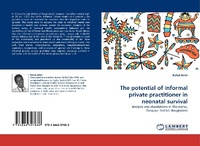
The Potential of Informal Private Practitioner in Neonatal Survival
Analysis and elucidations in Khansama, Dinajpur District, Bangladesh
Published on 18. May 2011
Book
Paperback/Softback
64 pages
978-3-8443-9768-0 (ISBN)
Description
In Khansama sub-district of Bangladesh, neonatal mortality remains high at 29 per 1,000 live births Informal private health care providers are popular sources of treatment for newborn, but this important cadre is ignored. This study aims to explore the roles of informal health care providers in health care delivery system for neonates. Analysis of the current status of neonatal health, care-seeking behavior and the capabilities of the different healthcare providers was done. Result shows that the informal rural private practitioners play a major role in health service delivery and in the care of the newborn. These providers are part of the community and perceived by the community to be more accessible, more sensitive to client needs and more willing to spend time with their clients. Incorporation, motivation, negotiation/contract, regulation, recognition, and provision of appropriate training to these informal private service providers may improve neonatal survival in particular and the health of the whole population in general.
More details
Language
English
Place of publication
Germany
Product notice
Paperback (trade)
Unsewn / adhesive bound
Dimensions
Height: 220 mm
Width: 150 mm
Thickness: 5 mm
Weight
113 gr
ISBN-13
978-3-8443-9768-0 (9783844397680)
Copyright in bibliographic data and cover images is held by Nielsen Book Services Limited or by the publishers or by their respective licensors: all rights reserved.
Schweitzer Classification
Person
Se graduó como médico (M.B.B.S) en 1999; y completó una maestría en salud pública (MPH) en SIR de Bangladesh y en gestión y política de sistemas de salud de Bélgica en 2004 y 2008, respectivamente. Tiene más de ocho años de experiencia en programas de salud pública en contextos tanto urbanos como rurales de Bangladesh y Timor-Leste.