

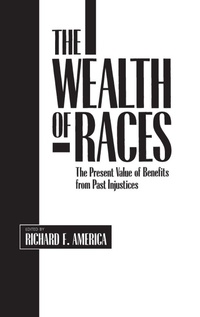
The Wealth of Races
The Present Value of Benefits from Past Injustices
Published on 24. August 1990
Book
Hardback
240 pages
978-0-313-25753-7 (ISBN)
Description
This collection of essays examines the question of how injustices of the past affect entire groups of people today and outlines the current beneficiaries of these injustices. Although discriminatory practices can be based on ethnicity, religion, and gender, this book focuses on one important type--racial discrimination--and deals with the way it affects both blacks and whites. The authors address the question from different perspectives and, although there is no real consensus as to what extent unjust enrichments currently exist because of past discrimination, the focus of several essays is on the need to systematically and equitably redistribute wealth. In beginning to explore these questions, the volume addresses the larger issues of how the costs and benefits of past practices can be measured and how historical injustices should affect current public policy matters.
The volume is organized in a straightforward manner intended to create an integrated discussion. An introductory essay charts the development of the project and offers a summary and critique of each essay. The first section explores the issue of slavery and current policy and considers the caution required when developing policy based on disputed models and assumptions. The second section examines the economic impact of slavery and discrimination on the functioning of the labor market. In the final section, some of the implications of redistribution policies are considered in relation to the various cost and benefit analyses. A final essay and conclusion sum up the study and outline the broad policy setting in which this work can take place. The book will be an important resource for courses in history, sociology, and public policy and an important addition to public and university libraries.
The volume is organized in a straightforward manner intended to create an integrated discussion. An introductory essay charts the development of the project and offers a summary and critique of each essay. The first section explores the issue of slavery and current policy and considers the caution required when developing policy based on disputed models and assumptions. The second section examines the economic impact of slavery and discrimination on the functioning of the labor market. In the final section, some of the implications of redistribution policies are considered in relation to the various cost and benefit analyses. A final essay and conclusion sum up the study and outline the broad policy setting in which this work can take place. The book will be an important resource for courses in history, sociology, and public policy and an important addition to public and university libraries.
More details
Series
Language
English
Place of publication
United States
Publishing group
Bloomsbury Publishing Plc
Target group
College/higher education
Professional and scholarly
Interest Age: From 7 to 17 years
Product notice
Laminated cover
Dimensions
Height: 234 mm
Width: 156 mm
Thickness: 14 mm
Weight
515 gr
ISBN-13
978-0-313-25753-7 (9780313257537)
Copyright in bibliographic data and cover images is held by Nielsen Book Services Limited or by the publishers or by their respective licensors: all rights reserved.
Schweitzer Classification
Person
RICHARD F. AMERICA is a policy analyst in Washington, D.C. He is coauthor of Moving Ahead: Black Managers in American Businessand author of Developing the Afro-American Economy.
Content
Introduction
Overview and Summary
Forty Acres and a Mule: Placing a Price Tag on Oppression
Economic History and the Current Benefits and Costs of Slavery
Past History and Current Policy: The Legacy of Slavery
Who Pays for Slavery?
An Appraisal of the Estimated Rates of Slave Exploitation
Slavery and the Economics of Discrimination
Black Labor in the American Economy since Emancipation: What Are the Legacies of History?
A Calculation and Comparison of the Current Benefits of Slavery and an Analysis of Who Benefits
Estimated Present Value of Income Diverted during Slavery
Black Exploitation and White Benefits: The Civil War Income Revolution
Slave Exploitation in Neoclassical Economics: Criticism and an Alternative Direction
Achieving Racial Equality through Restitution
Racial Inequality and Reparations
An Illustrative Estimate: The Present Value of the Benefits from Racial Discrimination, 1929-1969
Income Transfers: Are They Compensation for Past Discrimination?
The Social Debt to Blacks: A Case for Affirmative Action
What Was Lost: The Cost of Slavery and Discrimination for Blacks
Achieving Parity through Reparations
Conclusions
Selected Bibliography
Index
Overview and Summary
Forty Acres and a Mule: Placing a Price Tag on Oppression
Economic History and the Current Benefits and Costs of Slavery
Past History and Current Policy: The Legacy of Slavery
Who Pays for Slavery?
An Appraisal of the Estimated Rates of Slave Exploitation
Slavery and the Economics of Discrimination
Black Labor in the American Economy since Emancipation: What Are the Legacies of History?
A Calculation and Comparison of the Current Benefits of Slavery and an Analysis of Who Benefits
Estimated Present Value of Income Diverted during Slavery
Black Exploitation and White Benefits: The Civil War Income Revolution
Slave Exploitation in Neoclassical Economics: Criticism and an Alternative Direction
Achieving Racial Equality through Restitution
Racial Inequality and Reparations
An Illustrative Estimate: The Present Value of the Benefits from Racial Discrimination, 1929-1969
Income Transfers: Are They Compensation for Past Discrimination?
The Social Debt to Blacks: A Case for Affirmative Action
What Was Lost: The Cost of Slavery and Discrimination for Blacks
Achieving Parity through Reparations
Conclusions
Selected Bibliography
Index