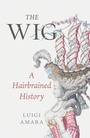
The Wig
A Hairbrained History
Published on 12. October 2020
Book
Hardback
256 pages
978-1-78914-346-1 (ISBN)
Description
Whether in a court room or a dressing room, wigs come in many forms, and represent many things: from power, to sexuality, to parody, to health, to self-identity, to disguise. Wigs are present at parties and in chemotherapy rooms, in pop music and contemporary art. In this witty and eloquent book, Luigi Amara reflects on the curious history of the wig, and along the way takes a sideways look at Western civilization.
Amara illuminates how the wig has starred throughout history, from ancient Egypt to the court of Louis XIV, and from British courtrooms to drag shows today. Containing many striking and unusual images, the book appeals to a wide audience, from those interested in the history of fashion to philosophy, art, culture and aesthetics.
Amara illuminates how the wig has starred throughout history, from ancient Egypt to the court of Louis XIV, and from British courtrooms to drag shows today. Containing many striking and unusual images, the book appeals to a wide audience, from those interested in the history of fashion to philosophy, art, culture and aesthetics.
Reviews / Votes
[Explores] the wig's silly, sexy, and serious strains in a collection of fanciful short essays . . . It's clear that for Amara, the wig is an excuse to ponder, wander, and lose himself to flights of fancy. * Hyperallergic * The Wig: A Hairbrained History covers the many topics connected to these artificial hairdos. Armara transmits his fascination for the wig not only through the written word, but also through an array of images. By exploring this subject through the lens of numerous novels and films, including characters from both ancient and contemporary times, Amara tackles this neglected fashion element with very diverse references . . . this study is well written. With this book, the author demonstrates realpassion for his subject. The variety of sources covered is especially relevant . . . an interesting enquiry and gives an overall
picture of the long and multi faceted story of the wig. * The Journal of Dress History * The reader may find that all objects, when inspected in this way, display a wider cultural resonance. The real question, then, is whether that resonance is as important as the writer believes. Amara makes some ambitious claims . . . An interesting and enjoyable study. * TLS * With the precision of a Renaissance collector, Amara has written a book as wonderful and impressive as the old cabinets of curiosities. From Andy Warhol to Andre Agassi, the collection exposed in The Wig makes us smile and laugh with amazement, while we reflect on how shaky identity is. * Carlos Fonseca, Lecturer in Latin American Literature and Culture, Trinity College, Cambridge, and author of 'Natural History' (2020) * A clever and illuminating take on the world of wigs. A book every hairdresser should have in their collection. * Isaac Davidson, hairstylist, wig designer and founder of Wigbar * In this smart and humorous account of the history of the wig, Luigi Amara proves he's not afraid of frivolity, using it to dig deep into the history of our ideas and costumes. * Juan Pablo Villalobos, author of 'I Don't Expect Anyone to Believe Me' (2020) and 'Down the Rabbit Hole' (2011) *
More details
Language
English
Place of publication
London
United Kingdom
Illustrations
70 illustrations, 20 in colour
Dimensions
Height: 223 mm
Width: 143 mm
Thickness: 22 mm
Weight
568 gr
ISBN-13
978-1-78914-346-1 (9781789143461)
Copyright in bibliographic data and cover images is held by Nielsen Book Services Limited or by the publishers or by their respective licensors: all rights reserved.
Schweitzer Classification
Other editions
Additional editions