

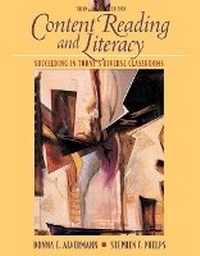
Content Reading and Literacy
Succeeding in Today's Diverse Classrooms
3rd Edition
Published on 1. March 2002
Book
Hardback
400 pages
978-0-205-32742-3 (ISBN)
Description
The third edition of this student-centered text is grounded in its in-depth and integrated attention to the content literacy needs of students from diverse cultural and language backgrounds.
In this new edition, Alvermann and Phelps have added emphasis to the issues of struggling readers, technology, writing across the curriculum, and a social constructionist framework for learning. Connected with major research and theoretical frameworks, the text provides concepts and strategies for practical use in today's diverse classrooms.
In this new edition, Alvermann and Phelps have added emphasis to the issues of struggling readers, technology, writing across the curriculum, and a social constructionist framework for learning. Connected with major research and theoretical frameworks, the text provides concepts and strategies for practical use in today's diverse classrooms.
More details
Edition
3rd edition
Language
English
Place of publication
United States
Publishing group
Pearson Education (US)
Target group
Professional and scholarly
Dimensions
Height: 240 mm
Width: 196 mm
Thickness: 26 mm
Weight
907 gr
ISBN-13
978-0-205-32742-3 (9780205327423)
Copyright in bibliographic data and cover images is held by Nielsen Book Services Limited or by the publishers or by their respective licensors: all rights reserved.
Schweitzer Classification
Other editions
New editions
Donna E. Alvermann | Stephen F. Phelps
Content Reading and Literacy
Succeeding in Today's Diverse Classrooms
Book
08/2004
4th Edition
Pearson
€93.03
Article is exhausted; no reprint
Previous edition

Donna E. Alvermann | Stephen F. Phelps
Content Reading and Literacy
Succeeding in Today's Diverse Classrooms
Book
11/1997
2nd Edition
Pearson
€74.46
Article exhausted; check for reprint
Content
Each Chapter concludes with a "Summary," "Suggested Readings," and "References."
1. Content Literacy and the Reading Process
Assumptions Underlying Content Teaching.
What It Means to Be Literate.
The New Literacy Studies.
The Reading Process.
2. Language, Diversity, and Culture.
Language as a Vehicle for Teaching and Learning Content.
Diversity in Language and Learning.
Teaching and Learning in Culturally Diverse Classrooms.
Culturally Responsive. Professional Growth.
3. Creating a Favorable Learning Environment.
Affective Characteristics.
Forms of Grouping.
4. Planning for Content Literacy.
Instructional Decision Making.
Planning and Educational Technology.
Structured Frameworks for Content Literacy Lessons.
Beyond the Daily Plan: Unit Planning.
5. Assessment of Students and Textbooks.
Assessing Students.
Assessing Textbooks.
6. Preparing to Read.
The Role of Prior Knowledge.
Assessing and Building Prior Knowledge.
Activating Prior Knowledge with Prereading Guides.
7. Reading to Learn.
How Students Learn.
Constructing Meaning with Text.
Questions and Questioning.
Sensing and Responding to Text Structure.
8. Integrating Reading, Listening, and Speaking.
Increasing Vocabulary and Conceptual Growth.
Learning Words and Concepts.
How Students Learn Vocabulary.
Teaching Vocabulary.
Developing Students' Independence.
Reinforcing Vocabulary.
9. Responding to Reading.
Engaging Students Through Discussion.
Guiding Student Reflection.
Promoting Critical Literacy.
10. Writing Across the Curriculum.
What Content Teachers Need to Know About Writing.
Writing Activities for Content Areas.
Writing to Inquire.
Responding to Student Writing.
11. Studying and Study Strategies.
Prerequisites for Effective Studying.
Developing Reading Fluency.
Preparing for Tests.
Using Study Strategies.
12. Developing Lifetime Readers: Literature in Content Area Classes.
Benefits of Using Literature in Content Areas.
Encouraging Responses to Literature.
Integrating Literature into Content Areas.
Developing Awareness of Diversity through Literature.
1. Content Literacy and the Reading Process
Assumptions Underlying Content Teaching.
What It Means to Be Literate.
The New Literacy Studies.
The Reading Process.
2. Language, Diversity, and Culture.
Language as a Vehicle for Teaching and Learning Content.
Diversity in Language and Learning.
Teaching and Learning in Culturally Diverse Classrooms.
Culturally Responsive. Professional Growth.
3. Creating a Favorable Learning Environment.
Affective Characteristics.
Forms of Grouping.
4. Planning for Content Literacy.
Instructional Decision Making.
Planning and Educational Technology.
Structured Frameworks for Content Literacy Lessons.
Beyond the Daily Plan: Unit Planning.
5. Assessment of Students and Textbooks.
Assessing Students.
Assessing Textbooks.
6. Preparing to Read.
The Role of Prior Knowledge.
Assessing and Building Prior Knowledge.
Activating Prior Knowledge with Prereading Guides.
7. Reading to Learn.
How Students Learn.
Constructing Meaning with Text.
Questions and Questioning.
Sensing and Responding to Text Structure.
8. Integrating Reading, Listening, and Speaking.
Increasing Vocabulary and Conceptual Growth.
Learning Words and Concepts.
How Students Learn Vocabulary.
Teaching Vocabulary.
Developing Students' Independence.
Reinforcing Vocabulary.
9. Responding to Reading.
Engaging Students Through Discussion.
Guiding Student Reflection.
Promoting Critical Literacy.
10. Writing Across the Curriculum.
What Content Teachers Need to Know About Writing.
Writing Activities for Content Areas.
Writing to Inquire.
Responding to Student Writing.
11. Studying and Study Strategies.
Prerequisites for Effective Studying.
Developing Reading Fluency.
Preparing for Tests.
Using Study Strategies.
12. Developing Lifetime Readers: Literature in Content Area Classes.
Benefits of Using Literature in Content Areas.
Encouraging Responses to Literature.
Integrating Literature into Content Areas.
Developing Awareness of Diversity through Literature.