

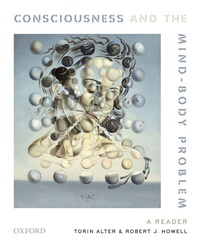
Consciousness and The Mind-Body Problem
A Reader
1st Edition
Published on 17. November 2011
Book
Paperback/Softback
400 pages
978-0-19-973924-0 (ISBN)
Description
Over the past three decades, the challenge that conscious experience poses to physicalism--the widely held view that the universe is a completely physical system--has provoked a growing debate in philosophy of mind studies and given rise to a great deal of literature on the subject.
Ideal for courses in consciousness and the philosophy of mind, Consciousness and The Mind-Body Problem: A Reader presents thirty-three classic and contemporary readings, organized into five sections that cover the major issues in this debate: the challenge for physicalism, physicalist responses, alternative responses, the significance of ignorance, and mental causation. Edited by Torin Alter and Robert J. Howell, the volume features work from such leading figures as Karen Bennett, Ned Block, David J. Chalmers, Frank Jackson, Colin McGinn, David Papineau, and many others. It is enhanced by a thorough general introduction by the editors, which explains "the hard problem of consciousness"--the question of how any physical phenomenon could give rise to conscious experience. The introduction also provides historical and conceptual background and explains how the consciousness/mind-body problem is related to such theories as the identity theory, dualism, and functionalism. In addition, accessible introductions outline the themes and readings contained in each section.
Ideal for courses in consciousness and the philosophy of mind, Consciousness and The Mind-Body Problem: A Reader presents thirty-three classic and contemporary readings, organized into five sections that cover the major issues in this debate: the challenge for physicalism, physicalist responses, alternative responses, the significance of ignorance, and mental causation. Edited by Torin Alter and Robert J. Howell, the volume features work from such leading figures as Karen Bennett, Ned Block, David J. Chalmers, Frank Jackson, Colin McGinn, David Papineau, and many others. It is enhanced by a thorough general introduction by the editors, which explains "the hard problem of consciousness"--the question of how any physical phenomenon could give rise to conscious experience. The introduction also provides historical and conceptual background and explains how the consciousness/mind-body problem is related to such theories as the identity theory, dualism, and functionalism. In addition, accessible introductions outline the themes and readings contained in each section.
Reviews / Votes
"An extremely well-conceived collection. One of the book's greatest strengths is the editors' choice to organize it around one of the most important problems in contemporary theorizing about consciousness--the hard problem of consciousness--and the central treatments of that problem. This book has the potential to be used in a very wide range of courses. It will have a wide readership and be a great resource for those of us who work and teach in the philosophyof mind."--Kevin Sharpe, Saint Cloud State University
More details
Language
English
Place of publication
New York
United States
Target group
College/higher education
Undergrad courses in Philosophy of Mind and Consciousness
Dimensions
Height: 235 mm
Width: 191 mm
Thickness: 21 mm
Weight
741 gr
ISBN-13
978-0-19-973924-0 (9780199739240)
Copyright in bibliographic data and cover images is held by Nielsen Book Services Limited or by the publishers or by their respective licensors: all rights reserved.
Schweitzer Classification
Persons
Torin Alter is Professor of Philosophy at the University of Alabama.
Robert J. Howell is Associate Professor of Philosophy at Southern Methodist University.
Robert J. Howell is Associate Professor of Philosophy at Southern Methodist University.
Content
I. THE CHALLENGE FOR PHYSICALISM; II. PHYSICALIST RESPONSES; A. A PRIORI PHYSICALISM; B. POSTERIORI PHYSICALISM; C. REPRESENTATIONALISM; III. ALTERNATIVE RESPONSES; IV. THE SIGNIFICANCE OF IGNORANCE; V. MENTAL CAUSATION