


The Fragmenting Family
Published on 28. August 2008
Book
Paperback/Softback
270 pages
978-0-19-954870-5 (ISBN)
Description
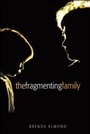
Brenda Almond throws down a timely challenge to the liberal consensus about personal relationships. She maintains that the traditional family is fragmenting in Western societies, and that this fragmentation is a cause of serious social problems.
Behind this phenomenon Almond finds a new ideology according to which the family is seen no longer as a natural procreative unit, but rather as a social construction, a set of legal and social relationships. She gives an urgent warning about the danger of legal changes which weaken the contractual status of marriage and discount genetic and biological parenthood. These changes threaten the parent-child link which is fundamental to human life.
The Fragmenting Family challenges widespread beliefs about commitment and freedom in partnerships and parenthood. Almond urges that we reconsider our attitudes to sex and reproduction in order to strengthen our most important social institution, the family, which is the key to ensuring healthy relationships between parents and children and a secure upbringing for the citizens of the future.
Anyone who is concerned about how the framework of society is changing, anyone who has to face difficult personal decisions about parenthood or family relationships, will find this book compelling. It may disturb deep convictions, or offer an unwelcome message; but it is compassionate as well as controversial.
Behind this phenomenon Almond finds a new ideology according to which the family is seen no longer as a natural procreative unit, but rather as a social construction, a set of legal and social relationships. She gives an urgent warning about the danger of legal changes which weaken the contractual status of marriage and discount genetic and biological parenthood. These changes threaten the parent-child link which is fundamental to human life.
The Fragmenting Family challenges widespread beliefs about commitment and freedom in partnerships and parenthood. Almond urges that we reconsider our attitudes to sex and reproduction in order to strengthen our most important social institution, the family, which is the key to ensuring healthy relationships between parents and children and a secure upbringing for the citizens of the future.
Anyone who is concerned about how the framework of society is changing, anyone who has to face difficult personal decisions about parenthood or family relationships, will find this book compelling. It may disturb deep convictions, or offer an unwelcome message; but it is compassionate as well as controversial.
More details
Language
English
Place of publication
Oxford
United Kingdom
Target group
College/higher education
Professional and scholarly
Dimensions
Height: 215 mm
Width: 138 mm
Thickness: 15 mm
Weight
347 gr
ISBN-13
978-0-19-954870-5 (9780199548705)
Copyright in bibliographic data and cover images is held by Nielsen Book Services Limited or by the publishers or by their respective licensors: all rights reserved.
Schweitzer Classification
Other editions
Additional editions
Person
Brenda Almond is Emeritus Professor of Moral and Social Philosophy of the University of Hull and Vice-President of the Society for Applied Philosophy. She has served on the Human Genetics Commission and with the Human Fertilization and Embryology Authority in the United Kingdom and her books include The Philosophical Quest (Penguin, 1990) and Exploring Ethics: A Traveller's Tale (Blackwell, 1998).
Content
PART I. UNDERSTANDING FAMILY: PHILOSOPHY'S CONTRIBUTION; PART II. SHAPING FAMILIES: SCIENCE'S CONTRIBUTION; PART III. NEW FRONTIERS: FAMILY, LAW AND POLITICS; PART IV. PRESERVING IDENTITIES: A FUTURE FOR THE FAMILY?