

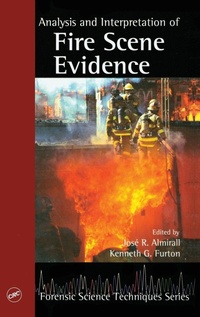
Analysis and Interpretation of Fire Scene Evidence
1st Edition
Published on 11. February 2004
Book
Hardback
272 pages
978-0-8493-7885-0 (ISBN)
Description
Ongoing advances in arson detection tools and techniques increase the importance of scientific evidence in related court proceedings. In order to assemble an airtight case, investigators and forensic scientists need a resource that assists them in properly conducting the chemical analysis and interpretation of physical evidence found at scenes of suspected arson.
Analysis and Interpretation of Fire Scene Evidence introduces the techniques that determine the presence of ignitable liquid residues (ILRs) at fire scenes. It bridges the disciplines of investigation and forensic chemistry, enabling effective communication during critical periods of evidence detection, collection, packaging, and transport.
The initial chapters are written from an investigator's perspective, allowing forensic specialists to understand fire dynamics, ignition, heat transfer, and investigations. Later chapters include a comparison of the use of canines versus new detection techniques, and an examination of laboratory facilities, equipment, and procedures that are essential to organizing a new lab or upgrading an existing one.
By detailing the methods used to identify potential evidence at the scene of suspected arson fires, this volume also benefits attorneys and judges in preparing for prosecution and defense of arson cases.
Analysis and Interpretation of Fire Scene Evidence introduces the techniques that determine the presence of ignitable liquid residues (ILRs) at fire scenes. It bridges the disciplines of investigation and forensic chemistry, enabling effective communication during critical periods of evidence detection, collection, packaging, and transport.
The initial chapters are written from an investigator's perspective, allowing forensic specialists to understand fire dynamics, ignition, heat transfer, and investigations. Later chapters include a comparison of the use of canines versus new detection techniques, and an examination of laboratory facilities, equipment, and procedures that are essential to organizing a new lab or upgrading an existing one.
By detailing the methods used to identify potential evidence at the scene of suspected arson fires, this volume also benefits attorneys and judges in preparing for prosecution and defense of arson cases.
More details
Series
Language
English
Place of publication
Bosa Roca
United States
Publishing group
Taylor & Francis Inc
Target group
Professional and scholarly
Academic, Professional, and Professional Practice & Development
Illustrations
126 s/w Abbildungen, 48 s/w Photographien bzw. Rasterbilder, 8 s/w Tabellen
8 Tables, black and white; 48 Halftones, black and white; 126 Illustrations, black and white
Dimensions
Height: 240 mm
Width: 161 mm
Thickness: 20 mm
Weight
593 gr
ISBN-13
978-0-8493-7885-0 (9780849378850)
Copyright in bibliographic data and cover images is held by Nielsen Book Services Limited or by the publishers or by their respective licensors: all rights reserved.
Schweitzer Classification
Other editions
Additional editions
Jose R. Almirall | Kenneth G. Furton
Analysis and Interpretation of Fire Scene Evidence
E-Book
02/2004
1st Edition
CRC Press
€244.99
Available for download
Jose R. Almirall | Kenneth G. Furton
Analysis and Interpretation of Fire Scene Evidence
E-Book
02/2004
1st Edition
CRC Press
€244.99
Available for download
Persons
Jose R. Almirall, Kenneth G. Furton
Content
Fire Dynamics. Fire Scene Investigation: An Introduction for Chemists. Detection of Ignitable Liquid Residues in Fire Scenes; Accelerant Detection Canine (ADC) Teams and other Field Tests. Essential Tools for the Analytical Laboratory; Facilities, Equipment and Standard Operating Procedures. Analytical Methods for the Detection and Characterization of Ignitable Liquid Residues from Fire Debris. The ASTM Methods for the Analysis of Fire Debris Evidence; Isolation, Chemical Analysis and Classification. The Interpretation of Data Generated from Fire Debris Examination; Report Writing and Testimony. New Developments and Quality Assurance in Fire Debris Analysis.