

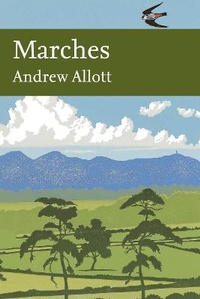
Marches
Published on 1. September 2011
Book
Hardback
448 pages
978-0-00-724816-2 (ISBN)
Description
A complete natural history and the first large-scale survey of this unique part of the country.
The borderland between England and Wales has long been a region of contention. Its distinctive geography, wedged roughly between Welsh mountains and English river beds has not only isolated this rural, sparsely-populated slice of land, but created a unique identity.
Stretching along the bordering counties with England - Cheshire, Shropshire and Herefordshire - the Welsh Marches are made up of a mixture of mountains and moorlands, farms and wooded river valleys. The natural history of the region is like most parts of the British Isles - inextricably linked to the activities of man across many thousands of years.
Andrew Allott brings together a wealth of material in the latest New Naturalist volume, much of which is published here for the first time. Presenting the first large-scale survey of this unique part of the country, he offers a complete natural history of the area, covering the hills, fossils, ice ages, meres, mosses, forests, streams and rivers, whilst also focusing on man's impact on the region, the changing wildlife, the impact of agriculture and the consequences of past and present industrial action.
The borderland between England and Wales has long been a region of contention. Its distinctive geography, wedged roughly between Welsh mountains and English river beds has not only isolated this rural, sparsely-populated slice of land, but created a unique identity.
Stretching along the bordering counties with England - Cheshire, Shropshire and Herefordshire - the Welsh Marches are made up of a mixture of mountains and moorlands, farms and wooded river valleys. The natural history of the region is like most parts of the British Isles - inextricably linked to the activities of man across many thousands of years.
Andrew Allott brings together a wealth of material in the latest New Naturalist volume, much of which is published here for the first time. Presenting the first large-scale survey of this unique part of the country, he offers a complete natural history of the area, covering the hills, fossils, ice ages, meres, mosses, forests, streams and rivers, whilst also focusing on man's impact on the region, the changing wildlife, the impact of agriculture and the consequences of past and present industrial action.
Reviews / Votes
'Highly informative [...] an essential guide for the budding naturalist.' South Wales ArgusPraise for other regional New Naturalist volumes:
Wye Valley by George Peterken
'The definitive guide to one of Britain's most unspoilt rivers ... the introduction is impressive and lyrical, the descriptions of the river and its valley beautiful.'
BBC Wildlife
The Isles of Scilly by Rosemary Parslow
'This is a fully rounded and wonderfully detailed natural history of England's only ocean archipelago. It works on several levels, as a guide, as a wildlife encyclopaedia and as a lyrical celebration of a special place. Rosemary Parslow has written a classic book to add to the remarkable swell of New Naturalist masterpieces in recent years.'
British Wildlife
More details
Series
Language
English
Place of publication
London
United Kingdom
Publishing group
HarperCollins Publishers
Illustrations
(200 colour photos)
Dimensions
Height: 222 mm
Width: 155 mm
Thickness: 37 mm
Weight
1132 gr
ISBN-13
978-0-00-724816-2 (9780007248162)
Copyright in bibliographic data and cover images is held by Nielsen Book Services Limited or by the publishers or by their respective licensors: all rights reserved.
Schweitzer Classification
Other editions
Additional editions
Person
Andrew Allott studied botany at Pembroke College, Oxford and is currently Head of Biology at Shrewsbury School (Charles Darwin's former school). He has written a biology textbook for OUP, published in 2001. He lives in Shropshire and has an active interest in ecology.