

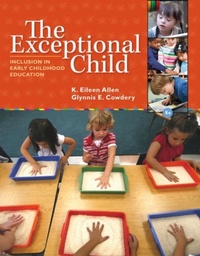
The Exceptional Child
Inclusion in Early Childhood Education
8th Edition
Published on 1. January 2014
Book
Paperback/Softback
624 pages
978-1-285-43237-3 (ISBN)
Description
Filled with classic and current research about all aspects of educating young children with special needs, THE EXCEPTIONAL CHILD: INCLUSION IN EARLY CHILDHOOD EDUCATION, 8th Edition, discusses key approaches and tools needed to provide an optimal setting for young exceptional children with special needs and their families. Many checklists and forms are included for use within the classroom to aid teachers and caregivers in developing a developmentally appropriate environment. The book's friendly and easy-to-use format is useful whether you are an educator or parent/caregiver.
Reviews / Votes
SECTION 1: EARLY INTERVENTION AND PUBLIC POLICY. 1. An Inclusive Approach to Early Education. 2. Federal Legislation: Early Intervention and Prevention. 3. Inclusive Programs for Young Children. Section 1 Wrap Up: Early Intervention & Public Policy. SECTION 2: LIKENESSES AND DIFFERENCES AMONG CHILDREN. 4. Normal and Exceptional Development. 5. Developmental Disabilities: Causes and Classifications. 6. Sensory Impairments: Hearing and Vision. 7. Physical Disabilities and Health Problems. 8. Learning and Behavior Disorders. Section 2 Wrap Up: Likenesses and Differences Among Children. SECTION 3: PLANNING FOR INCLUSION. 9. Partnership with Families. 10. Assessment and the IFSP/IEP Process. 11. Characteristics of Effective Teachers in Inclusive Programs. Section 3 Wrap Up: Planning for Inclusion. SECTION 4: IMPLEMENTING INCLUSIVE EARLY CHILDHOOD PROGRAMS. 12. The Developmental-Behavioral Approach. 13. Arranging the Learning Environment. 14. Facilitating Self-Care, Adaptive, and Independence Skills. 15. Facilitating Social Development. 16. Facilitating Speech, Language, and Communication Skills. 17. Facilitating Pre-Academic and Cognitive Learning. 18. Managing Challenging Behaviors. 19. Planning Transitions to Support Inclusion. Section 4 Wrap Up: Implementing Inclusive Early Childhood Programs. Appendix A: Culminating Activities. Appendix B: Skill Profile (0-72 Months). Appendix C: Sources of Information, Support, and Training Material for Teachers and Parents of Children with Developmental Disabilities. Appendix D: Early Learning and Developmental Diversity. Appendix E: Sample IFSP Form. Glossary. References. Index.More details
Edition
8th edition
Language
English
Place of publication
Belmont, CA
United States
Publishing group
Cengage Learning, Inc
Target group
Professional and scholarly
College/higher education
Dimensions
Height: 276 mm
Width: 218 mm
Thickness: 21 mm
Weight
1364 gr
ISBN-13
978-1-285-43237-3 (9781285432373)
Copyright in bibliographic data and cover images is held by Nielsen Book Services Limited or by the publishers or by their respective licensors: all rights reserved.
Schweitzer Classification
Other editions
New editions
Eileen Allen | Glynnis Cowdery
The Exceptional Child: Inclusion in Early Childhood Education
Book
04/2021
9th Edition
Wadsworth Publishing Co Inc
€84.50
Shipment within 15-20 days
Persons
Eileen K. Allen, professor emerita, University of Kansas, spent 30 years as a professor of child development and early childhood education at the University of Washington in Seattle and the University of Kansas at Lawrence. Throughout her career, Professor Allen was active in national and international organizations focused on the development of young children and their families, including the National Association for the Education of Young Children (NAEYC), the Commission on Early Childhood Teacher Education, the Council for Exceptional Children and the National Association of Early Childhood Teacher Educators (NAECTE). Glynnis Edwards Cowdery has more than 25 years of experience in the early childhood education field as a teacher, program director and inclusion facilitator.
Content
SECTION 1: EARLY INTERVENTION AND PUBLIC POLICY.
1. An Inclusive Approach to Early Education.
2. Federal Legislation: Early Intervention and Prevention.
3. Inclusive Programs for Young Children.
Section 1 Wrap Up: Early Intervention & Public Policy.
SECTION 2: LIKENESSES AND DIFFERENCES AMONG CHILDREN.
4. Normal and Exceptional Development.
5. Developmental Disabilities: Causes and Classifications.
6. Sensory Impairments: Hearing and Vision.
7. Physical Disabilities and Health Problems.
8. Learning and Behavior Disorders.
Section 2 Wrap Up: Likenesses and Differences Among Children.
SECTION 3: PLANNING FOR INCLUSION.
9. Partnership with Families.
10. Assessment and the IFSP/IEP Process.
11. Characteristics of Effective Teachers in Inclusive Programs.
Section 3 Wrap Up: Planning for Inclusion.
SECTION 4: IMPLEMENTING INCLUSIVE EARLY CHILDHOOD PROGRAMS.
12. The Developmental-Behavioral Approach.
13. Arranging the Learning Environment.
14. Facilitating Self-Care, Adaptive, and Independence Skills.
15. Facilitating Social Development.
16. Facilitating Speech, Language, and Communication Skills.
17. Facilitating Pre-Academic and Cognitive Learning.
18. Managing Challenging Behaviors.
19. Planning Transitions to Support Inclusion.
Section 4 Wrap Up: Implementing Inclusive Early Childhood Programs.
Appendix A: Culminating Activities.
Appendix B: Skill Profile (0-72 Months).
Appendix C: Sources of Information, Support, and Training Material for Teachers and Parents of Children with Developmental Disabilities.
Appendix D: Early Learning and Developmental Diversity.
Appendix E: Sample IFSP Form.
Glossary.
References.
Index.
1. An Inclusive Approach to Early Education.
2. Federal Legislation: Early Intervention and Prevention.
3. Inclusive Programs for Young Children.
Section 1 Wrap Up: Early Intervention & Public Policy.
SECTION 2: LIKENESSES AND DIFFERENCES AMONG CHILDREN.
4. Normal and Exceptional Development.
5. Developmental Disabilities: Causes and Classifications.
6. Sensory Impairments: Hearing and Vision.
7. Physical Disabilities and Health Problems.
8. Learning and Behavior Disorders.
Section 2 Wrap Up: Likenesses and Differences Among Children.
SECTION 3: PLANNING FOR INCLUSION.
9. Partnership with Families.
10. Assessment and the IFSP/IEP Process.
11. Characteristics of Effective Teachers in Inclusive Programs.
Section 3 Wrap Up: Planning for Inclusion.
SECTION 4: IMPLEMENTING INCLUSIVE EARLY CHILDHOOD PROGRAMS.
12. The Developmental-Behavioral Approach.
13. Arranging the Learning Environment.
14. Facilitating Self-Care, Adaptive, and Independence Skills.
15. Facilitating Social Development.
16. Facilitating Speech, Language, and Communication Skills.
17. Facilitating Pre-Academic and Cognitive Learning.
18. Managing Challenging Behaviors.
19. Planning Transitions to Support Inclusion.
Section 4 Wrap Up: Implementing Inclusive Early Childhood Programs.
Appendix A: Culminating Activities.
Appendix B: Skill Profile (0-72 Months).
Appendix C: Sources of Information, Support, and Training Material for Teachers and Parents of Children with Developmental Disabilities.
Appendix D: Early Learning and Developmental Diversity.
Appendix E: Sample IFSP Form.
Glossary.
References.
Index.