

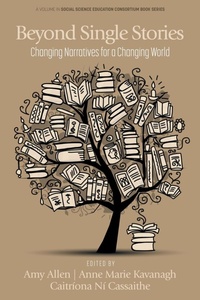
Beyond Single Stories
Changing Narratives for a Changing World
Published on 9. February 2024
Book
Paperback/Softback
264 pages
979-8-88730-508-0 (ISBN)
Description
Every social studies curriculum tells a story. It is increasingly apparent that new stories are needed to guide us through the multiple and intersecting crises that have come to define our times. This accessible volume supports student teachers, teachers, and teacher educators to engage critically with the stories that social studies curricula tell and neglect to tell, particularly those that relate and contribute to the root causes of contemporary social and ecological injustices.
A balanced and inclusive curriculum necessitates a broad range of stories and perspectives, not just the master narratives of dominant groups. Incorporating a range of pedagogical approaches and spanning a diversity of themes, from representations of Africa in Chinese textbooks, to slavery and the American civil rights movement, to refugees and the role of indigenous knowledge systems in addressing climate breakdown, this volume includes and creatively engages with previously marginalized and silenced stories and perspectives. Both practical and theoretical in its approach, it seeks to provoke, meaningfully support, and inspire educators to incorporate alternative stories or counter-narratives into their social studies teaching.
This unique volume is essential reading for student teachers, teachers, teacher educators as well as anyone interested in inspiring children and young people to be open-minded, critically engaged, and empathetic agents of change, committed to addressing realworld social and ecological injustices.
A balanced and inclusive curriculum necessitates a broad range of stories and perspectives, not just the master narratives of dominant groups. Incorporating a range of pedagogical approaches and spanning a diversity of themes, from representations of Africa in Chinese textbooks, to slavery and the American civil rights movement, to refugees and the role of indigenous knowledge systems in addressing climate breakdown, this volume includes and creatively engages with previously marginalized and silenced stories and perspectives. Both practical and theoretical in its approach, it seeks to provoke, meaningfully support, and inspire educators to incorporate alternative stories or counter-narratives into their social studies teaching.
This unique volume is essential reading for student teachers, teachers, teacher educators as well as anyone interested in inspiring children and young people to be open-minded, critically engaged, and empathetic agents of change, committed to addressing realworld social and ecological injustices.
More details
Series
Language
English
Place of publication
United States
Publishing group
Emerald Publishing Inc
Target group
Professional and scholarly
Dimensions
Height: 234 mm
Width: 156 mm
Thickness: 14 mm
Weight
406 gr
ISBN-13
979-8-88730-508-0 (9798887305080)
Copyright in bibliographic data and cover images is held by Nielsen Book Services Limited or by the publishers or by their respective licensors: all rights reserved.
Schweitzer Classification
Other editions
Additional editions
Amy Allen | Anne Marie Kavanagh | Caitríona Ní Cassaithe
Beyond Single Stories
Changing Narratives for a Changing World
E-Book
02/2024
1st Edition
IAP - Information Age Publishing
€80.60
Available for download
Content
Introduction: Disrupting Single Narratives Through the Power of Story; Amy Allen, Anne Marie Kavanagh, and Caitri-ona Ni- Cassaithe.
Section I: National History, Controversial Issues, And Historical Thinking.
Chapter 1. Disrupting a Single Story About Refugees Through Teaching About An Gorta Mo r, the Great Hunger in Ireland; Heidi J. Torres.
Chapter 2. Navigating the Turbulent Waters of National History Teaching in Quebec: Addressing and Problematizing Controversial Issues Historically; David Lefrancois and Marc-Andre Ethier.
Chapter 3. Student Teaching Controversial Irish History in England Versus Northern Ireland: Context, Identity, and Emotion; Judith L. Pace.
Chapter 4. One Story Does Not Fit All: Ethnic Studies and Civic Counter Narratives in Elementary Social Studies; Abigail L. Stebbins.
Section II: Indigeneity, Agency, And Placebased Education.
Chapter 5. Seeing the World Through Alternative Eyes: Using Indigenous Stories and Knowledge to Teach About Socio-Ecological Issues; Anne Marie Kavanagh and Caitri-ona Ni- Cassaithe.
Chapter 6. An Ecological Future: Hearing the Voice of the Natural World in Our Collective Story; B. Scott Durham.
Chapter 7. Multiple Perspectives and Place-Based Education as a Catalyst for Social Change; Amy Allen.
Chapter 8. Trail of Tears, Redondo, Land Rights, and Boarding Schools: Centering Indigenous Perspectives to Move Beyond Single Stories; Karen Guerrero, Melissa Mercado, Ashley Alarcon, and Margarita Jimenez-Silva.
Section III: Eurocentrism, Whiteness, Textbooks, And Standards.
Chapter 9. Simplistic, Romanticized, and Eurocentric: The Narratives of Africa and Black History in a Chinese History Textbook; Chenyu Li.
Chapter 10. How Do We Center Equity? Examining the Stories Teachers Tell in Elementary Social Studies Classrooms; Tracy C. Rock, Laura K. Handler, and Patti Brooks.
Chapter 11. Whose Greatest Story is Ever Told: Historical Agency in Evangelical Christian American History Textbooks; Anne Aydinian-Perry, Matthew T. Missias, Dean P. Vesperman, and Whitney G. Blankenship.
Chapter 12. Crafting Standards While Attempting to Move Beyond the Single-Story; Daniel T. Bordwell.
About the Editors.
About the Contributors.
Section I: National History, Controversial Issues, And Historical Thinking.
Chapter 1. Disrupting a Single Story About Refugees Through Teaching About An Gorta Mo r, the Great Hunger in Ireland; Heidi J. Torres.
Chapter 2. Navigating the Turbulent Waters of National History Teaching in Quebec: Addressing and Problematizing Controversial Issues Historically; David Lefrancois and Marc-Andre Ethier.
Chapter 3. Student Teaching Controversial Irish History in England Versus Northern Ireland: Context, Identity, and Emotion; Judith L. Pace.
Chapter 4. One Story Does Not Fit All: Ethnic Studies and Civic Counter Narratives in Elementary Social Studies; Abigail L. Stebbins.
Section II: Indigeneity, Agency, And Placebased Education.
Chapter 5. Seeing the World Through Alternative Eyes: Using Indigenous Stories and Knowledge to Teach About Socio-Ecological Issues; Anne Marie Kavanagh and Caitri-ona Ni- Cassaithe.
Chapter 6. An Ecological Future: Hearing the Voice of the Natural World in Our Collective Story; B. Scott Durham.
Chapter 7. Multiple Perspectives and Place-Based Education as a Catalyst for Social Change; Amy Allen.
Chapter 8. Trail of Tears, Redondo, Land Rights, and Boarding Schools: Centering Indigenous Perspectives to Move Beyond Single Stories; Karen Guerrero, Melissa Mercado, Ashley Alarcon, and Margarita Jimenez-Silva.
Section III: Eurocentrism, Whiteness, Textbooks, And Standards.
Chapter 9. Simplistic, Romanticized, and Eurocentric: The Narratives of Africa and Black History in a Chinese History Textbook; Chenyu Li.
Chapter 10. How Do We Center Equity? Examining the Stories Teachers Tell in Elementary Social Studies Classrooms; Tracy C. Rock, Laura K. Handler, and Patti Brooks.
Chapter 11. Whose Greatest Story is Ever Told: Historical Agency in Evangelical Christian American History Textbooks; Anne Aydinian-Perry, Matthew T. Missias, Dean P. Vesperman, and Whitney G. Blankenship.
Chapter 12. Crafting Standards While Attempting to Move Beyond the Single-Story; Daniel T. Bordwell.
About the Editors.
About the Contributors.