

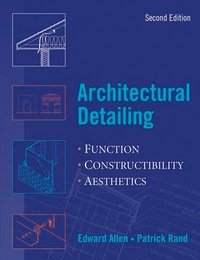
Architectural Detailing
Function - Constructibility - Aesthetics
1st Edition
Published on 10. November 2006
Book
Paperback/Softback
336 pages
978-0-471-48817-0 (ISBN)
Description
The updated and revised edition of the bestselling, cornerstone guide
Architectural Detailing, Second Edition is the revised and expanded industry standard on architectural detailing. This Second Edition is revised to address sustainability and updated to reflect the International Building Code(r). It maintains its reputation for delivering reliable, insightful information on such topics as how to design details that will be water- and airtight, control the flows of heat and water vapor, adjust to all kinds of movement, age gracefully, be easy to construct, and still look good.
Conveniently organized by the three major concerns of the detailer--function, constructibility, and aesthetics--Architectural Detailing, Second Edition features:
* Richly illustrated examples of detail design, case studies, and practical exercises
* Many new and revised patterns showing form, constructibility, and aesthetics
* Everything a student or professional needs to design details that work
Architectural Detailing, Second Edition is the revised and expanded industry standard on architectural detailing. This Second Edition is revised to address sustainability and updated to reflect the International Building Code(r). It maintains its reputation for delivering reliable, insightful information on such topics as how to design details that will be water- and airtight, control the flows of heat and water vapor, adjust to all kinds of movement, age gracefully, be easy to construct, and still look good.
Conveniently organized by the three major concerns of the detailer--function, constructibility, and aesthetics--Architectural Detailing, Second Edition features:
* Richly illustrated examples of detail design, case studies, and practical exercises
* Many new and revised patterns showing form, constructibility, and aesthetics
* Everything a student or professional needs to design details that work
Reviews / Votes
"Allen and Rand keep their attention on what adds up to make a great space while including sustainability and the International Building code to this edition. Their concise patterns control water and air leakage, control heat and sound flow, accommodate movement, provide structural support, allow for mechanical and electrical services, maintain health and safety, consider the life cycle of the building, and ensure construction through ease of assembly, efficient use of construction resources, and judicious use of aesthetically satisfying but forgiving details." (Book News, February 2008)More details
Other editions
New editions
Book
04/2016
3rd Edition
Wiley
€89.90
Article exhausted; check for reprint
Persons
EDWARD ALLEN, FAIA, has been a faculty member at Yale University and the Massachusetts Institute of Technology and has frequently lectured and taught at other institutions across the United States over the past thirty years. He is the bestselling author of The Architect's Studio Companion, Shaping Structures: Statics, Fundamentals of Residential Construction, and Fundamentals of Building Construction, all published by Wiley.
PATRICK RAND, AIA, is Distinguished Professor of Architecture at North Carolina State University. He maintains an active practice and conducts research regarding construction materials.
PATRICK RAND, AIA, is Distinguished Professor of Architecture at North Carolina State University. He maintains an active practice and conducts research regarding construction materials.
Content
Introduction.
PART I: DETAIL PATTERNS.
Section 1: Function.
Chapter 1 Controlling Water Leakage.
Wash.
Overlap.
Overhang and Drip.
Drain and Weep.
Unobstructed Drainage.
Cold Roof.
Foundation Drainage.
Moisture Break.
Capillary Break.
Labyrinth.
Rainscreen Assembly.
Upstand.
Sealant Joints and Gaskets.
Chapter 2 Controlling Air Leakage.
Air Barrier Surface.
Weatherstripped Crack.
Chapter 3 Controlling Heat Flow.
Thermal Insulation.
Thermal Break.
Multiple Glazing.
White and Bright Surfaces.
Reflective Glazing.
Reflective Surface and Airspace.
Outside-Insulated Thermal Mass.
Chapter 4 Controlling Water Vapor.
Warm Interior Surfaces.
Warm-Side Vapor Retarder.
Vapor Ventilation.
Condensate Drainage.
Chapter 5 Controlling Sound.
Airtight, Heavy, Limp Partition.
Cushioned Floor.
Quiet Attachments.
Sound-Absorbing Surfaces.
Chapter 6 Accommodating Movement.
Seasoning and Curing.
Vertical-Grain Lumber.
Equalizing Cross Grain.
Relieved Back.
Foundation Below Frost Line.
Structure/Enclosure Joint.
Abutment Joint.
Expansion Joint.
Control Joint.
Sliding Joint.
Building Separation Joint.
Chapter 7 Providing Structural Support.
Small Structures.
Chapter 8 Providing Passages for Mechanical and Electrical Services.
Vertical Chase.
Horizontal Plenum.
Chapter 9 Health and Safety.
Safe Footing.
Fall Protection.
Safe Edges.
Safe Glazing.
Nontoxic Materials.
Fire-Safe Materials.
Fire-Resistant Assemblies.
Barrier-Free Design.
Chapter 10 Providing for the Aging of the Building.
Life Cycle.
Expected Life.
Surfaces That Age Gracefully.
Repairable Surfaces.
Cleanable Surfaces.
Maintenance Access.
Dry Wood.
Similar Metals.
Less Absorbent Materials.
Robust Assemblies.
Building Armor.
Section 2: Constructibility.
Chapter 11 Ease of Assembly.
Uncut Units.
Minimum Number of Parts.
Parts That are Easy to Handle.
Repetitious Assembly.
Simulated Assemblies.
Observable Assemblies.
Accessible Connections.
Installation Clearance.
Nonconflicting Systems.
Chapter 12 Forgiving Details.
Dimensional Tolerance.
Sliding Fit.
Adjustable Fit.
Reveal.
Butt Joint.
Clean Edge.
Progressive Finish.
Forgiving Surface.
Chapter 13 Efficient Use of Construction.
Factory and Site.
Rehearsing the Construction Sequence.
Off-the-Shelf Parts.
Local Skills and Customs.
Refining the Detail.
All-Weather Construction.
Pride of Craftsmanship.
Accepted Standards.
Section 3: Aesthetics.
Chapter 14 Aesthetics.
Contributive Details.
Timeless Features.
Hierarchy of Refinement.
Intensification and Ornamentation.
Formal Transitions.
Composing the Detail.
PART II: DETAIL DEVELOPMENT.
Section 1: Applying the Detail Patterns.
Chapter 15 Detailing a Building in Wood Light Framing.
Chapter 16 Detailing a Building in Architectural Concrete.
Chapter 17 Detailing a Brick Facing on a Concrete Frame.
Section 2: Getting Started.
Appendices.
Appendix A: The Detailer's Reference Shelf.
Appendix B: Formulating Exercises for Self-Study or Classroom Use.
Index.
PART I: DETAIL PATTERNS.
Section 1: Function.
Chapter 1 Controlling Water Leakage.
Wash.
Overlap.
Overhang and Drip.
Drain and Weep.
Unobstructed Drainage.
Cold Roof.
Foundation Drainage.
Moisture Break.
Capillary Break.
Labyrinth.
Rainscreen Assembly.
Upstand.
Sealant Joints and Gaskets.
Chapter 2 Controlling Air Leakage.
Air Barrier Surface.
Weatherstripped Crack.
Chapter 3 Controlling Heat Flow.
Thermal Insulation.
Thermal Break.
Multiple Glazing.
White and Bright Surfaces.
Reflective Glazing.
Reflective Surface and Airspace.
Outside-Insulated Thermal Mass.
Chapter 4 Controlling Water Vapor.
Warm Interior Surfaces.
Warm-Side Vapor Retarder.
Vapor Ventilation.
Condensate Drainage.
Chapter 5 Controlling Sound.
Airtight, Heavy, Limp Partition.
Cushioned Floor.
Quiet Attachments.
Sound-Absorbing Surfaces.
Chapter 6 Accommodating Movement.
Seasoning and Curing.
Vertical-Grain Lumber.
Equalizing Cross Grain.
Relieved Back.
Foundation Below Frost Line.
Structure/Enclosure Joint.
Abutment Joint.
Expansion Joint.
Control Joint.
Sliding Joint.
Building Separation Joint.
Chapter 7 Providing Structural Support.
Small Structures.
Chapter 8 Providing Passages for Mechanical and Electrical Services.
Vertical Chase.
Horizontal Plenum.
Chapter 9 Health and Safety.
Safe Footing.
Fall Protection.
Safe Edges.
Safe Glazing.
Nontoxic Materials.
Fire-Safe Materials.
Fire-Resistant Assemblies.
Barrier-Free Design.
Chapter 10 Providing for the Aging of the Building.
Life Cycle.
Expected Life.
Surfaces That Age Gracefully.
Repairable Surfaces.
Cleanable Surfaces.
Maintenance Access.
Dry Wood.
Similar Metals.
Less Absorbent Materials.
Robust Assemblies.
Building Armor.
Section 2: Constructibility.
Chapter 11 Ease of Assembly.
Uncut Units.
Minimum Number of Parts.
Parts That are Easy to Handle.
Repetitious Assembly.
Simulated Assemblies.
Observable Assemblies.
Accessible Connections.
Installation Clearance.
Nonconflicting Systems.
Chapter 12 Forgiving Details.
Dimensional Tolerance.
Sliding Fit.
Adjustable Fit.
Reveal.
Butt Joint.
Clean Edge.
Progressive Finish.
Forgiving Surface.
Chapter 13 Efficient Use of Construction.
Factory and Site.
Rehearsing the Construction Sequence.
Off-the-Shelf Parts.
Local Skills and Customs.
Refining the Detail.
All-Weather Construction.
Pride of Craftsmanship.
Accepted Standards.
Section 3: Aesthetics.
Chapter 14 Aesthetics.
Contributive Details.
Timeless Features.
Hierarchy of Refinement.
Intensification and Ornamentation.
Formal Transitions.
Composing the Detail.
PART II: DETAIL DEVELOPMENT.
Section 1: Applying the Detail Patterns.
Chapter 15 Detailing a Building in Wood Light Framing.
Chapter 16 Detailing a Building in Architectural Concrete.
Chapter 17 Detailing a Brick Facing on a Concrete Frame.
Section 2: Getting Started.
Appendices.
Appendix A: The Detailer's Reference Shelf.
Appendix B: Formulating Exercises for Self-Study or Classroom Use.
Index.