

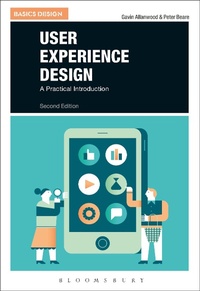
User Experience Design
A Practical Introduction
2nd Edition
Published on 30. May 2019
Book
Paperback/Softback
176 pages
978-1-350-02170-9 (ISBN)
Description
Applicable to a wide spectrum of design activity, this book offers an ideal first step, clearly explaining fundamental concepts and methods to apply when designing for the user experience.
Covering essential topics from user research and experience design to aesthetics, standards and prototyping, User Experience Design explains why user-centered methods are now essential to ensuring the success of a wide range of design projects.
This second edition includes important new topics including; digital service standards, onboarding and scenario mapping. There are now 12 hands-on activities designed to help you start exploring basic UX tasks such as visualising the user journey and recognising user interface patterns.
Filled with straightforward explanations and examples from around the world, this book is an essential primer for students and non-designers needing an introduction to contemporary UX thinking and common approaches. Designed specifically for newcomers to UX Design, the companion website offers extra material for hands-on activities, templates, industry interviews, contributor notes and sources of guidance for those seeking to start a career in the industry.
Covering essential topics from user research and experience design to aesthetics, standards and prototyping, User Experience Design explains why user-centered methods are now essential to ensuring the success of a wide range of design projects.
This second edition includes important new topics including; digital service standards, onboarding and scenario mapping. There are now 12 hands-on activities designed to help you start exploring basic UX tasks such as visualising the user journey and recognising user interface patterns.
Filled with straightforward explanations and examples from around the world, this book is an essential primer for students and non-designers needing an introduction to contemporary UX thinking and common approaches. Designed specifically for newcomers to UX Design, the companion website offers extra material for hands-on activities, templates, industry interviews, contributor notes and sources of guidance for those seeking to start a career in the industry.
Reviews / Votes
Gavin and Peter offer fundamental and practical insights into design thinking for those of us passionate about crafting experiences for people. * Daniel Yates, Product Designer at ThoughtWorks, Australia * The authors do a great job at breaking down the core parts of UX and making them easily digestible. A worthy addition to the bookshelf of anyone looking to break into the field of UX. * Chris Gibbons, Principal UX Developer at Auto Trader, UK *More details
Series
Edition
2nd edition
Language
English
Place of publication
London
United Kingdom
Publishing group
Bloomsbury Publishing PLC
Illustrations
200 colour illus
Dimensions
Height: 231 mm
Width: 161 mm
Thickness: 12 mm
Weight
393 gr
ISBN-13
978-1-350-02170-9 (9781350021709)
Copyright in bibliographic data and cover images is held by Nielsen Book Services Limited or by the publishers or by their respective licensors: all rights reserved.
Schweitzer Classification
Other editions
Additional editions
E-Book
05/2019
1st Edition
Bloomsbury Visual Arts
€28.49
Available for download
E-Book
05/2019
1st Edition
Bloomsbury Visual Arts
€28.49
Available for download
Persons
Gavin Allanwood is a UX freelancer and educator based in northwest England, UK.
Peter Beare is a learning technologist and content developer at London Metropolitan University, UK.
Peter Beare is a learning technologist and content developer at London Metropolitan University, UK.
Content
Overview
Introduction
1.
What is User Experience Design? - Designing interactive experiences - Life's experiences - Activity #1 - The Big Picture - Scenario - Hints - Roles in User Experience Design (UX) - Today's Multidisciplinary Teams - Methods and background - Stakeholders - Activity #2 - Designing for others - Activity
2.
Users - User research - The user's world - Co-experience - Activity #3 - Listening and learning - Emotional Responses - Memory - Fallibility - Expectation - Motivation - Activity #4 - The journey concept - Outcomes
3.
Experience Design - Competitive advantage - Brands - Productivity - Activity #5 - Quantifying sentiment - Fun - Usability - Simplicity - Challenge - Feedback - Gestalt Theory - Semiotics - Narrative - Constraints - Activity #6 - Recognizing intuition - Outcomes
4.
Design Process - The life of a project - User involvement - Personas - Scenarios - Activity #7 - Scenario Mapping - Design requirements - Communication and planning - Design Standards - Digital Service Standards - Activity #8 - A Design Problem - Conclusion
5.
Design Constraints - Aesthetics - Meeting the requirements - Semantic Design - Design patterns - Activity #9 - Recognising UI patterns - Layout - Responsive Design - Image - Type - Accessibility - Activity #10 - Onboarding
6.
Mindset and Toolset - Platforms and technologies - Communications and Organisations - Empathy - Ideation - Problem Solving - The first right solution - Activity #11 - Visualising Data - Maps and flows - Working with users - Prototypes - Mock-ups - Activity #12 - Simple Prototyping - Evaluating tools and resources - Choice - Conclusion
Further Reading
Books
Websites
Introduction
1.
What is User Experience Design? - Designing interactive experiences - Life's experiences - Activity #1 - The Big Picture - Scenario - Hints - Roles in User Experience Design (UX) - Today's Multidisciplinary Teams - Methods and background - Stakeholders - Activity #2 - Designing for others - Activity
2.
Users - User research - The user's world - Co-experience - Activity #3 - Listening and learning - Emotional Responses - Memory - Fallibility - Expectation - Motivation - Activity #4 - The journey concept - Outcomes
3.
Experience Design - Competitive advantage - Brands - Productivity - Activity #5 - Quantifying sentiment - Fun - Usability - Simplicity - Challenge - Feedback - Gestalt Theory - Semiotics - Narrative - Constraints - Activity #6 - Recognizing intuition - Outcomes
4.
Design Process - The life of a project - User involvement - Personas - Scenarios - Activity #7 - Scenario Mapping - Design requirements - Communication and planning - Design Standards - Digital Service Standards - Activity #8 - A Design Problem - Conclusion
5.
Design Constraints - Aesthetics - Meeting the requirements - Semantic Design - Design patterns - Activity #9 - Recognising UI patterns - Layout - Responsive Design - Image - Type - Accessibility - Activity #10 - Onboarding
6.
Mindset and Toolset - Platforms and technologies - Communications and Organisations - Empathy - Ideation - Problem Solving - The first right solution - Activity #11 - Visualising Data - Maps and flows - Working with users - Prototypes - Mock-ups - Activity #12 - Simple Prototyping - Evaluating tools and resources - Choice - Conclusion
Further Reading
Books
Websites