

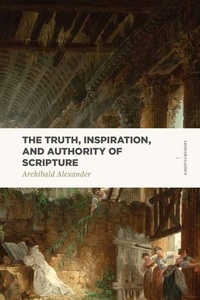
Truth, Inspiration, and Authority of Scripture
Published on 21. January 2017
Book
Paperback/Softback
278 pages
978-1-57799-787-0 (ISBN)
Description
This book, originally published in 1836 as Evidences of the Authenticity, Inspiration, and Canonical Authority of Holy Scripture, contains Archibald Alexander's defense of God's role in the inspiration of Scripture. Alexander devotes time to defending the truth of Scripture, the veracity of miracles, the fulfillment of prophecy, and the credibility of the Gospels, firmly supporting the view that the revelation of God in the Bible is neither improbable nor unreasonable.
Lexham Classics are beautifully typeset new editions of classic works. Each book has been carefully transcribed from the original texts, ensuring an accurate representation of the writing as the author intended it to be read.
Lexham Classics are beautifully typeset new editions of classic works. Each book has been carefully transcribed from the original texts, ensuring an accurate representation of the writing as the author intended it to be read.
More details
Language
English
Place of publication
Bellingham
United States
Target group
Professional and scholarly
Product notice
Paperback (trade)
Unsewn / adhesive bound
Dimensions
Height: 226 mm
Width: 152 mm
Thickness: 15 mm
Weight
68 gr
ISBN-13
978-1-57799-787-0 (9781577997870)
Copyright in bibliographic data and cover images is held by Nielsen Book Services Limited or by the publishers or by their respective licensors: all rights reserved.
Schweitzer Classification
Other editions
Additional editions
Archibald Archibald
Truth, Inspiration, and Authority of Scripture
E-Book
01/2017
Lexham Press
€8.49
Available for download
Person
Archibald Alexander (1772-1851) was an American educator and theologian. He was President of Hampton-Sydney College (Virginia) and later became pastor of Pine Street Presbyterian Church in Philadelphia. However, he is most well-known for founding Princeton Theological Seminary, where he served as principal and professor until his death in 1851. Today he is considered the first of the great Princeton theologians.