

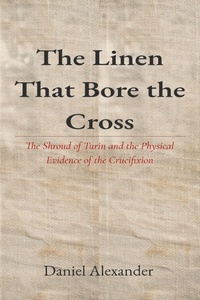
The Linen That Bore the Cross
The Shroud of Turin and the Physical Evidence of the Crucifixion
Published on 3. March 2026
Book
Paperback/Softback
106 pages
979-8-2955-6158-0 (ISBN)
Description
Some objects should not exist.
This one does.
The Shroud of Turin is one of the most studied and contested artifacts in human history. For over a century, scientists, historians, and skeptics have attempted to explain it as art, accident, or medieval fabrication. None of those explanations have survived sustained examination.
The Linen That Bore the Cross approaches the Shroud without sermons, symbolism, or appeals to belief. It examines the cloth as physical evidence-documenting the injuries recorded on its surface, the mechanics of Roman crucifixion reflected in the body it bears, and the scientific anomalies that continue to resist dismissal.
The image on the Shroud is not paint.
The bloodstains follow physiological rules.
The wounds align precisely with known methods of execution.
This book does not attempt to prove faith or close debate. It asks a quieter, more unsettling question: What do we do with an object that behaves exactly like the burial cloth of a crucified man-yet refuses every ordinary explanation?
Written with restraint and respect for doubt, this is a forensic examination of a body that should still be there-but isn't.
More details
Person
Daniel Alexander is an American writer of narrative nonfiction and fiction whose work explores legacy, memory, and the hidden costs of progress. His writing often focuses on place-particularly towns, communities, and institutions shaped by silence, displacement, and unresolved history.He approaches nonfiction as a listener and researcher rather than a polemicist, blending historical record with lived experience to tell stories that resist simplification. His work favors restraint over spectacle, allowing people and places to speak for themselves.Alexander lives and writes in Alabama.